



- Русский
- English
- Português
Best CRM for Small Business in 2026: 10 CRMs Ranked by How Much Data Entry They Remove

The best CRM for small business in 2026, for a B2B team that doesn't want reps typing data in, is Salesflare: at $29 per seat on annual billing it builds contacts and account history from Gmail or Outlook, the calendar and email signatures. For a free start, take Attio or HubSpot; for heavy calling, Close.
Most rankings count features. This one checks what the CRM records on its own on the cheapest paid plan and what that plan costs per seat, because email sync or enrichment sits on the entry plan at one vendor and two tiers up at another. Plans and prices were checked on official sites on October 30, 2026.
Contents:
- Best CRM for small business: the short answer
- Why auto-capture is the criterion that matters
- How we scored: 6 criteria and weights
- Best CRM software for small B2B teams: comparison table
- The 10 best CRMs for small B2B teams in 2026
- Which CRM to pick if your priorities differ
- Why ASCN.ai: an AI agent on top of your CRM
- FAQ
- Bottom line
Best CRM for small business: the short answer
For a B2B sales team of 2 to 50 people, the pick depends on which manual work you want gone:
- Best overall for B2B teams that hate data entry: Salesflare — email, calendar, signatures and enrichment from $29 per seat.
- Best free start with auto-sync: Attio — free for up to 3 seats with contact syncing and enrichment.
- Best free CRM with marketing in the same system: HubSpot — free for up to 2 users.
- Best for LinkedIn and WhatsApp selling: folk — WhatsApp sync on the entry plan.
- Best if your team already lives in monday.com: monday CRM — the CRM runs on the same boards.
- Lowest price per seat with deep customization: Zoho CRM — Standard at $14.
- Best for heavy calling and SMS: Close — built-in phone, calls logged as you make them.
- Best for Google Workspace-only teams: Copper — capture works inside Gmail and Calendar.
Salesforce Starter and Pipedrive fit narrower cases, covered in how to choose.
Why auto-capture is the criterion that matters
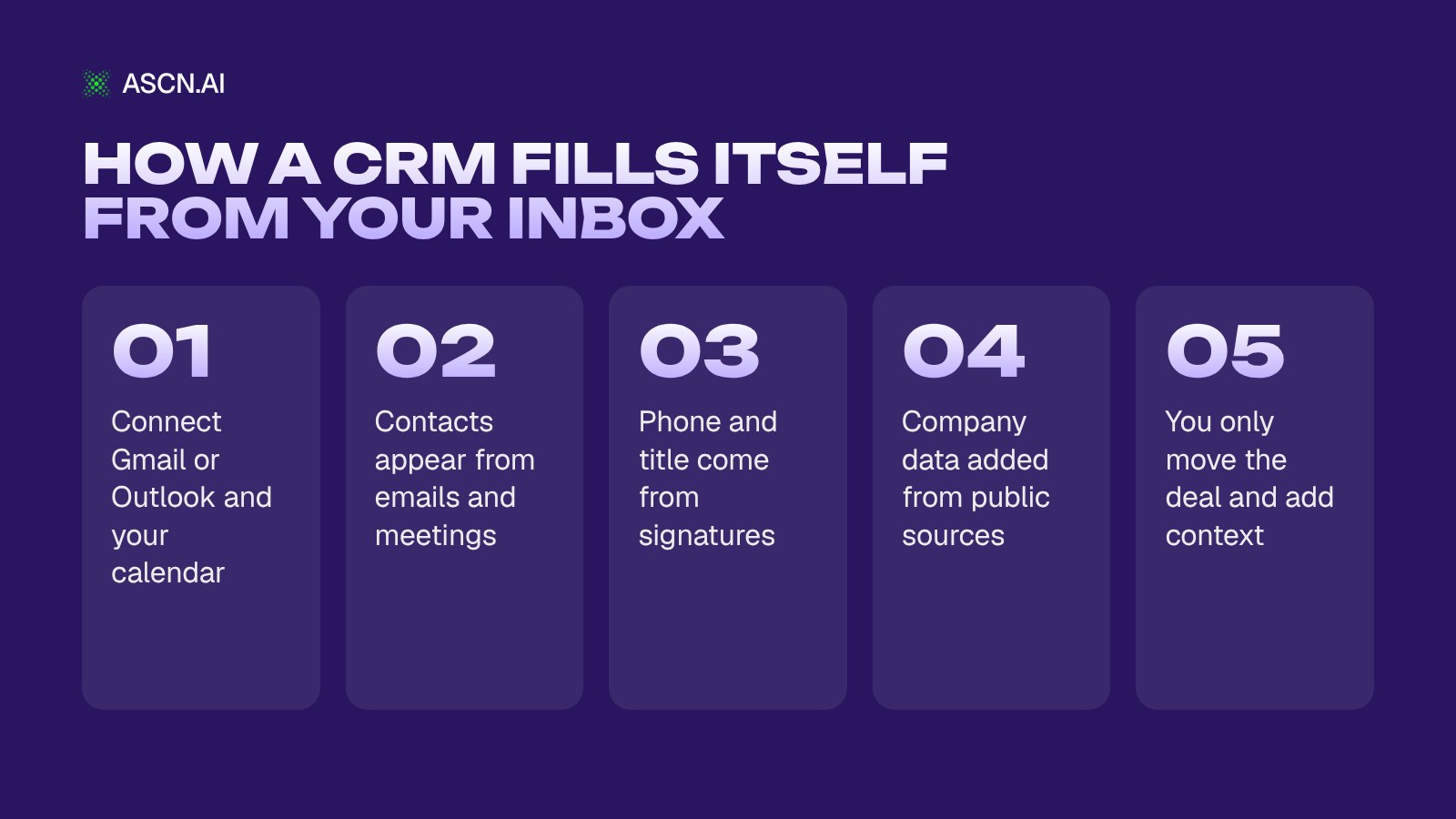
A CRM goes stale because reps don't copy emails, meetings and phone numbers into it, not because the software is weak. Auto-capture removes that copying, and it draws on five sources:
- Email sync: people you write to become contacts, and threads land on the account.
- Calendar: meetings and attendees appear on the timeline.
- Signature parsing: phone, job title and address are read from the email footer.
- Enrichment from public data: company size, logo and social profiles, usually found from the company domain.
- Call logging: from the phone's call history or from calling built into the CRM.
Some things stay manual in every CRM here. LinkedIn messages (Salesflare asks you to copy them into notes), WhatsApp and Telegram chats (folk syncs WhatsApp, the others don't advertise messenger sync), moving a deal between stages, and what the client agreed to on a call all remain with the rep.
Vendors switch the five sources on at different plans, so an entry price alone tells you little until you know which sources it buys. If you are deciding what else in the sales routine to automate, see the tasks a sales manager can hand off to AI.
How we scored: 6 criteria and weights
Each CRM got a 1–5 rating on six weighted criteria, and the score is the sum of weight × rating / 5, out of 100. Auto-capture on the entry paid plan weighs the most, 30 points.
| Criterion | Weight | What we checked | Fact or our assessment |
|---|---|---|---|
| K1. Auto-capture on the entry paid plan | 30 | Email, calendar, signatures, calls, enrichment | Fact |
| K2. Works where reps work | 15 | Gmail/Outlook sidebar, LinkedIn, mobile | Our assessment |
| K3. Price per seat with K1 included | 20 | Cheapest plan where K1 works | Fact |
| K4. Setup without an admin | 15 | Trial without card, onboarding, clear plans | Our assessment |
| K5. AI and openness to agents | 10 | Built-in AI, API, Claude/ChatGPT, MCP | Fact |
| K6. Pipeline, reminders, reports | 10 | Pipeline, follow-ups, forecast, dashboards | Our assessment |
Facts come from official websites, pricing and help pages, checked October 30, 2026; prices are USD per seat per month on annual billing. A tie goes to the CRM with the higher K1 rating. K5 is there because a CRM with an API or an official connector can be read and updated by an AI agent, as explained in how AI agents connect to CRMs through APIs.
No vendor paid for placement, and there are no affiliate links in this article. ASCN.ai, the publisher, is an AI agent platform, not a CRM, so it isn't ranked. If your weights differ, go to which CRM to pick if your priorities differ.
| CRM | K1 (30) | K2 (15) | K3 (20) | K4 (15) | K5 (10) | K6 (10) | Score |
|---|---|---|---|---|---|---|---|
| 1. Salesflare | 5 | 5 | 5 | 5 | 4 | 4 | 96 |
| 2. Attio | 4 | 3 | 4 | 4 | 5 | 4 | 79 |
| 3. HubSpot | 3 | 4 | 4 | 5 | 5 | 4 | 79 |
| 4. folk | 4 | 4 | 4 | 4 | 4 | 3 | 78 |
| 5. monday CRM | 3 | 3 | 4 | 4 | 5 | 4 | 73 |
| 6. Zoho CRM | 3 | 3 | 5 | 3 | 4 | 4 | 72 |
| 7. Salesforce Starter | 4 | 3 | 3 | 3 | 4 | 4 | 70 |
| 8. Close | 3 | 3 | 3 | 4 | 5 | 4 | 69 |
| 9. Copper | 4 | 3 | 3 | 4 | 2 | 3 | 67 |
| 10. Pipedrive | 2 | 3 | n/s* | 4 | 4 | 5 | 51/80* |
*Price not scored: we couldn't verify pipedrive.com/pricing. Third-party trackers list Growth, the first plan with email sync, at about $39 per seat billed annually. At that price it would score 3/5 and 63 overall, still 10th.
Best CRM software for small B2B teams: comparison table
The ten CRMs in ranking order, with the cheapest paid plan and what it captures without your reps. Monthly prices and limits are in the reviews below.
| CRM | Best for | Entry paid plan* | Free plan / trial | Auto-capture on entry plan | Score |
|---|---|---|---|---|---|
| Salesflare | B2B teams in Gmail/Outlook | $29 | 30-day trial, no card | Email, calendar, signatures, enrichment | 96 |
| Attio | Flexible data, free start | $35 (Plus) | Free, up to 3 seats | Email/calendar sync, enrichment | 79 |
| HubSpot | Free start, sales + marketing | $20 (Starter)† | Free, up to 2 users | Email tracking; enrichment on credits | 79 |
| folk | LinkedIn and WhatsApp selling | $24 | 14-day trial, no card | Email, calendar, WhatsApp, enrichment | 78 |
| monday CRM | Teams on monday.com | $12 (Basic) | 14-day trial, no card | Comms timeline from Standard | 73 |
| Zoho CRM | Low seat price | $14 | Free, 3 users | Enrichment, Gmail/Outlook | 72 |
| Salesforce Starter | Growing into Salesforce | $25 | 30-day trial | Emails, events, contacts sync | 70 |
| Close | Calls and SMS | $35 (Essentials) | 14-day trial, no card | Calls/SMS via built-in phone | 69 |
| Copper | Google Workspace teams | $23 | Free start, no card | Google contacts, calls, SMS | 67 |
| Pipedrive | Visual pipeline discipline | from ~$14‡ | 14-day trial | Email sync from Growth | n/s |
*Per seat per month, billed annually; official pricing pages checked October 30, 2026. †HubSpot standard price; new customers were offered $7 billed annually or $10 monthly at the time of checking. ‡Third-party trackers, not verified on pipedrive.com — check pipedrive.com/pricing.
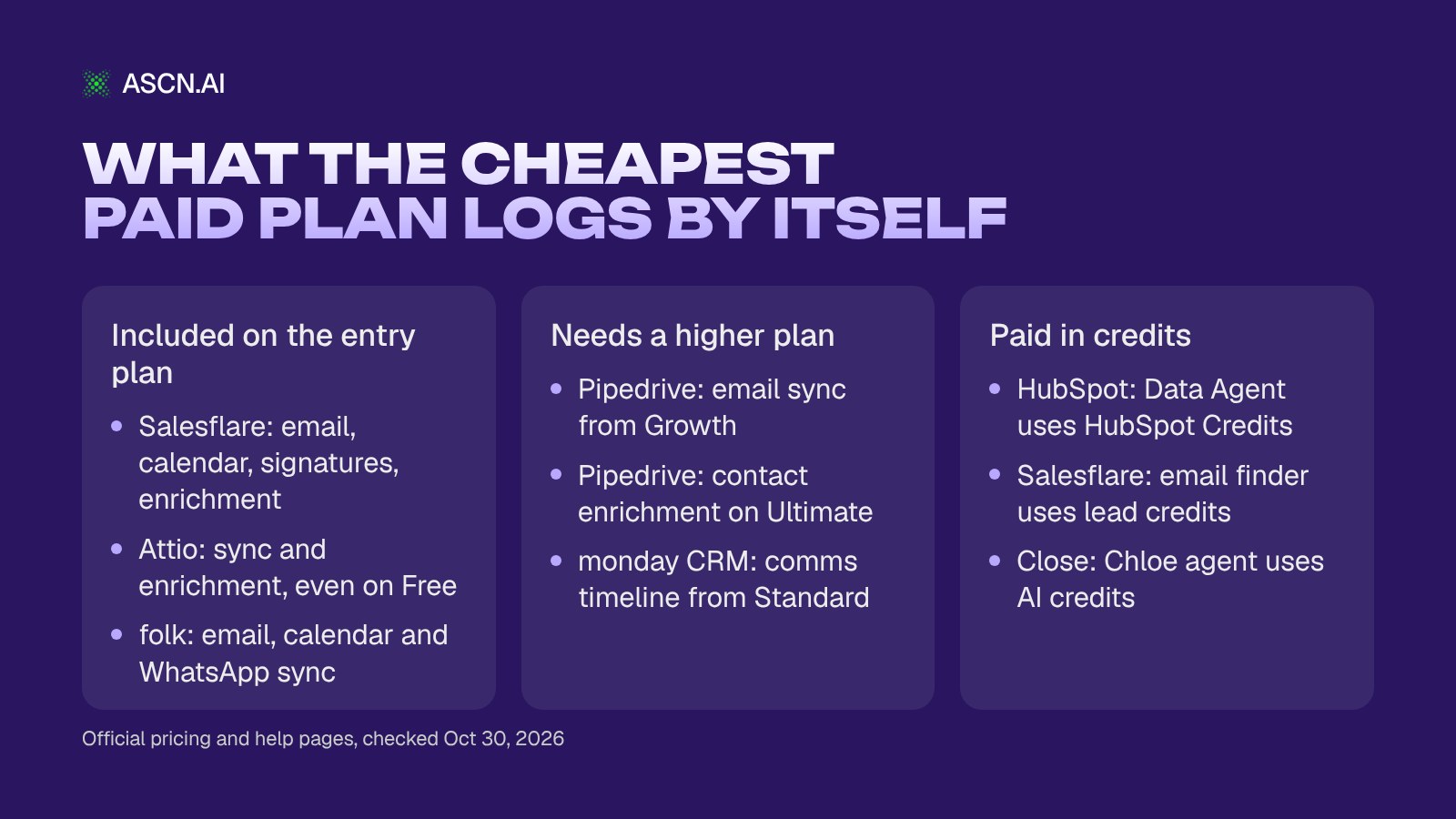
Read the price and auto-capture columns together: at monday CRM and Pipedrive the automatic part starts one or more plans above the entry price, and at HubSpot enrichment runs on a monthly credit budget.
The 10 best CRMs for small B2B teams in 2026
Salesflare leads by 17 points. Places 2 to 4 are within one point of each other, so for them the "Best for" line says more than the score.
1. Salesflare
Best for: B2B sales teams of 2 to 50 people working in Gmail or Outlook, with no CRM admin.
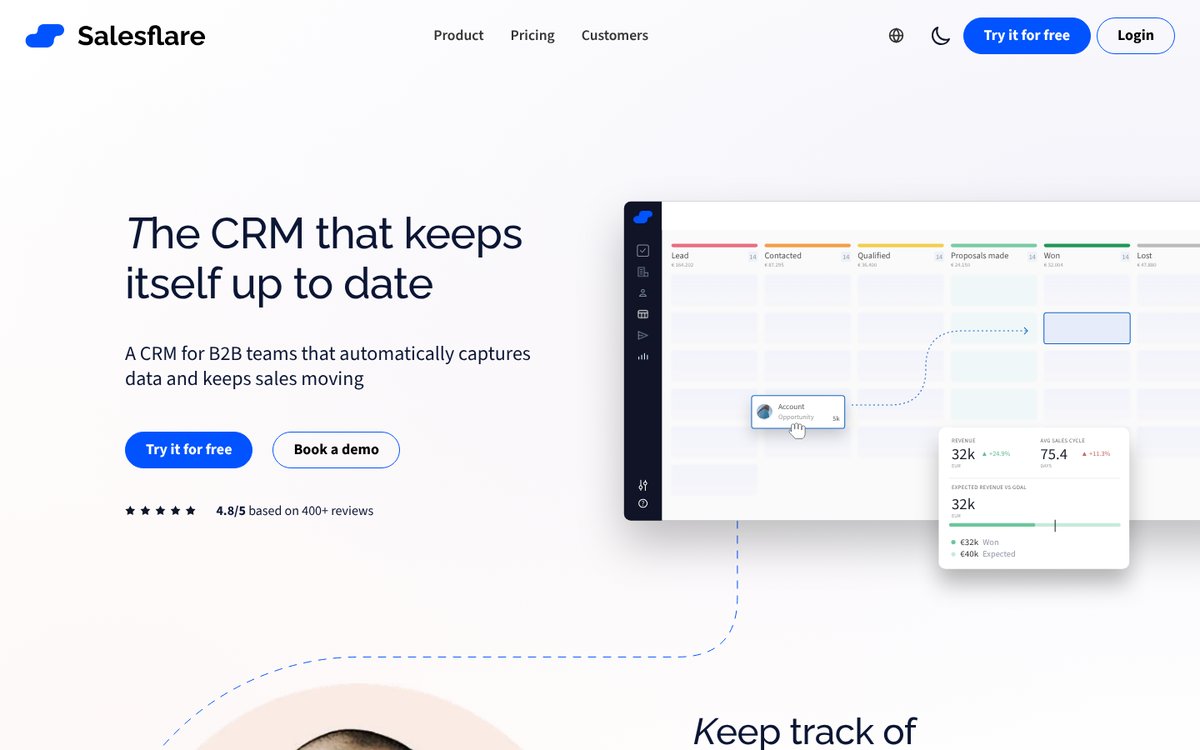
Salesflare calls itself "the CRM that keeps itself up to date", and the mechanism is concrete. After you connect Google Workspace, Microsoft 365 or iCloud, it creates contacts from people you email and meet, suggests accounts you already talk to, and reads phone, title, social profiles and address from signatures. Given a company website, it adds size, addresses, phones and logo from public data. The account timeline gathers emails, meetings, calls and notes (how email sync works).
Calls log automatically on Android; on iOS and the web, when you dial from Salesflare. The entry Growth plan already includes the Gmail and Outlook sidebar, a LinkedIn side panel in Chrome, mobile apps, a business card scanner and open, click and site-visit tracking. AI summaries and next-step suggestions are on all plans, and a REST API, Zapier, Make and official Claude and ChatGPT connectors cover automation.
Price (salesflare.com/pricing): Growth $29 per seat annually or $39 monthly; Pro $49/$64 adds custom dashboards and multi-step email workflows; Enterprise $99/$124 with a 5-user minimum. No free plan, a 30-day trial without a card, free onboarding.
Limits: B2B only, so not for B2C or e-commerce. No WhatsApp or Telegram sync, LinkedIn messages go into notes by hand, no built-in dialer. Emails found through LinkedIn cost lead credits, 5 a month on Growth.
Our score: 96/100. The most complete set of auto-capture sources on an entry paid plan in this list, with sidebar and mobile apps at no extra cost.
2. Attio
Best for: startups and B2B teams that want a flexible data model and a free start.
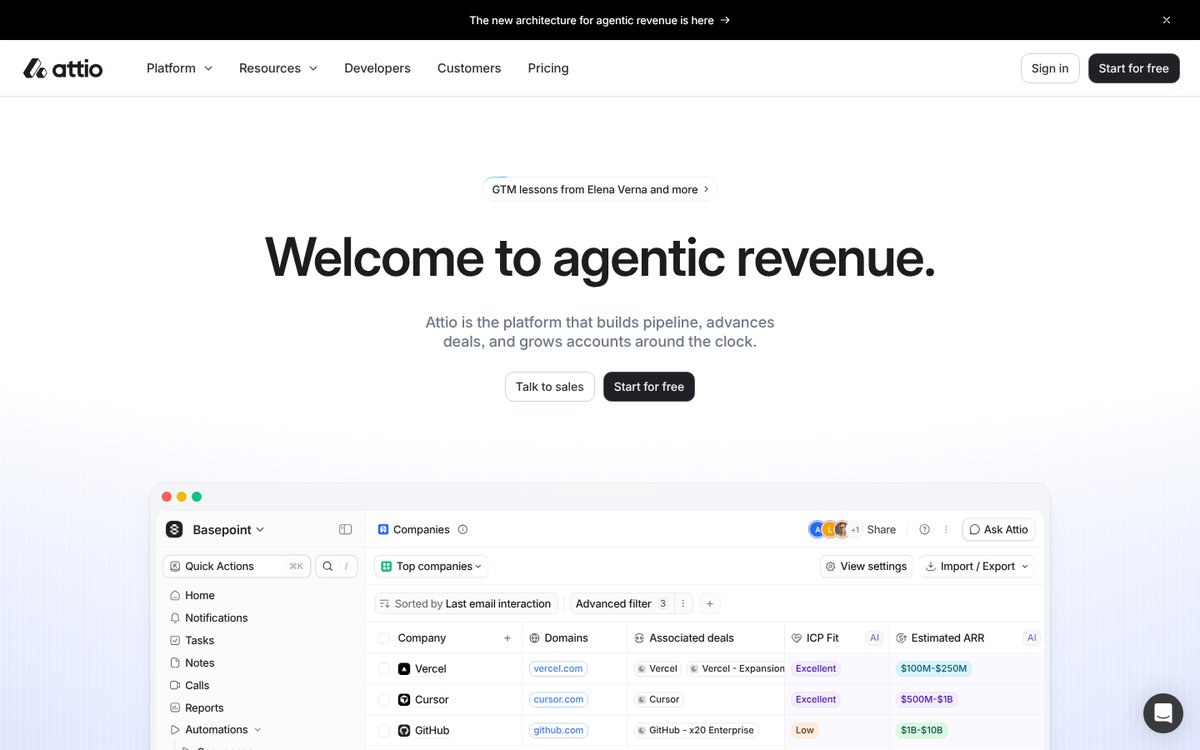
Attio's Free plan syncs email and calendar in real time and enriches records automatically, for up to 3 seats with no card. Companies get a description, logo, social links, employee count, ARR and funding; people are enriched too, and communication intelligence shows first and last interaction and connection strength.
Plus is $35 per seat annually ($44 monthly) for up to 10 seats; Pro at $79/$99 adds call intelligence, sequences, permissions and advanced reports; Enterprise is on request (attio.com/pricing). The feature list includes Ask Attio, AI agents, API and webhooks, an App SDK and an MCP server; check which plan carries the MCP server.
Limits: Free allows 3 reports and 200 emails a month, each user syncs one mailbox on Free and Plus, and the flexible model needs objects and attributes set up first, so setup gets 4, not 5.
Our score: 79/100. Tied with HubSpot, placed higher on auto-capture.
3. HubSpot
Best for: a free start, and teams that want marketing and sales in one system.
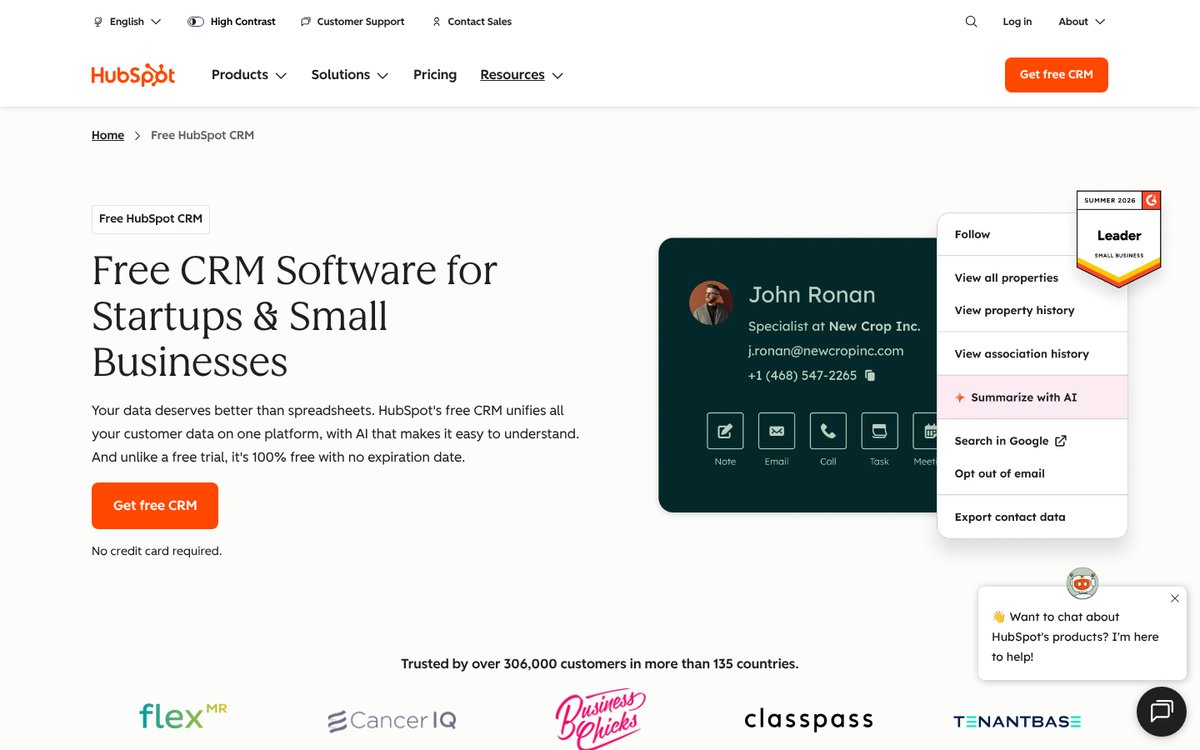
HubSpot's free CRM covers up to 2 users and 1,000 contacts, no card. Its auto-capture is about email: the HubSpot Sales extension for Gmail, Outlook and Office 365 gives unlimited free email tracking and can log an email to the matching contact. Enrichment is handled by the Data Agent, which "updates CRM data using CRM and web information" and spends HubSpot Credits.
Sales Hub Starter lists at $20 per seat with 500 credits a month (hubspot.com/pricing); at the time of checking, new customers were offered $7 annually or $10 monthly. Professional is $90–100 per seat plus $1,500 onboarding. AI includes Breeze Assistant and the Prospecting, Data and Customer agents.
Limits: enrichment depends on the credit budget, and moving to Professional adds both a higher seat price and paid onboarding.
Our score: 79/100. The strongest free start for teams that also run marketing in the same tool.
4. folk
Best for: small teams, agencies and founders who sell through LinkedIn and WhatsApp.
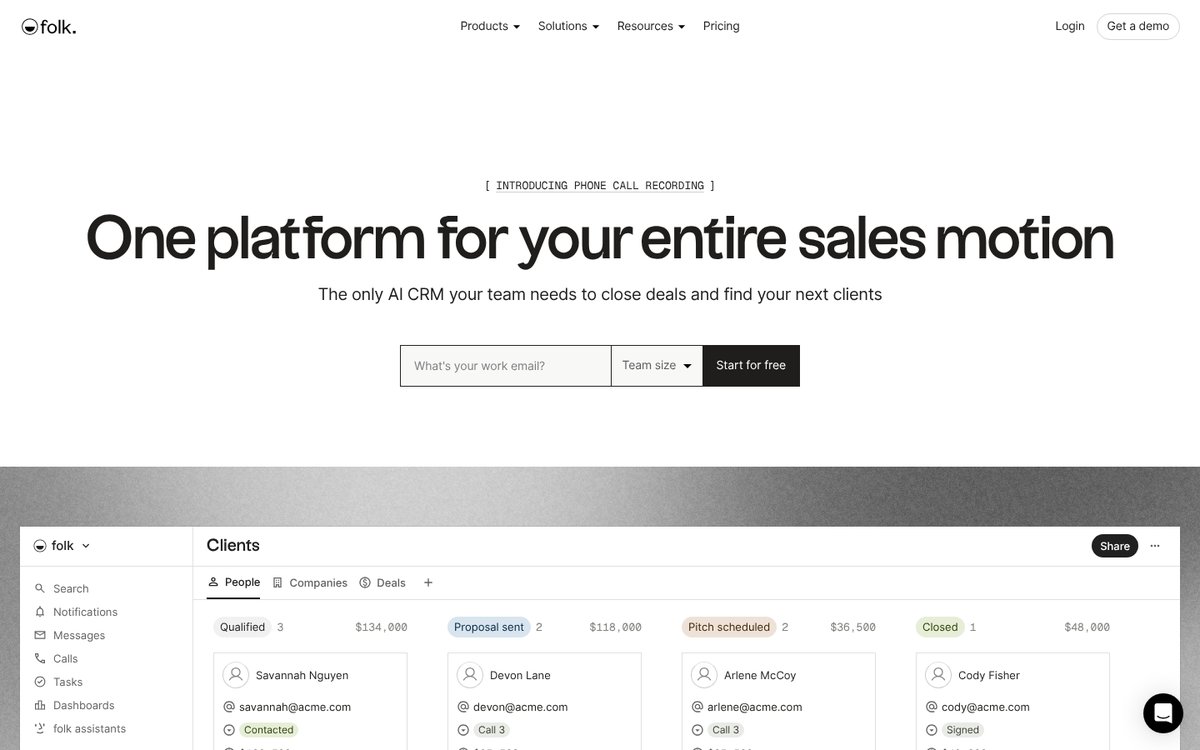
folk is the only CRM here that lists WhatsApp sync on its entry plan. Standard, $24 per member annually or $30 monthly, includes email, calendar and WhatsApp sync, a LinkedIn extension, contact enrichment, email campaigns, AI assistants and Magic fields. The feature table also shows a mobile app, MCP, Zapier and Make (folk.app/pricing).
Premium at $48/$60 adds custom objects and deals, sequences, roles, dashboards and API access. The 14-day trial needs no card.
Limits: deals as an object, dashboards and the API start on Premium, so pipeline and reporting on Standard are thinner than in the top three (3 of 5 on K6).
Our score: 78/100. Strong capture, including the messenger most B2B CRMs skip.
5. monday CRM
Best for: teams that already run work in monday.com, or who like a CRM built on boards.
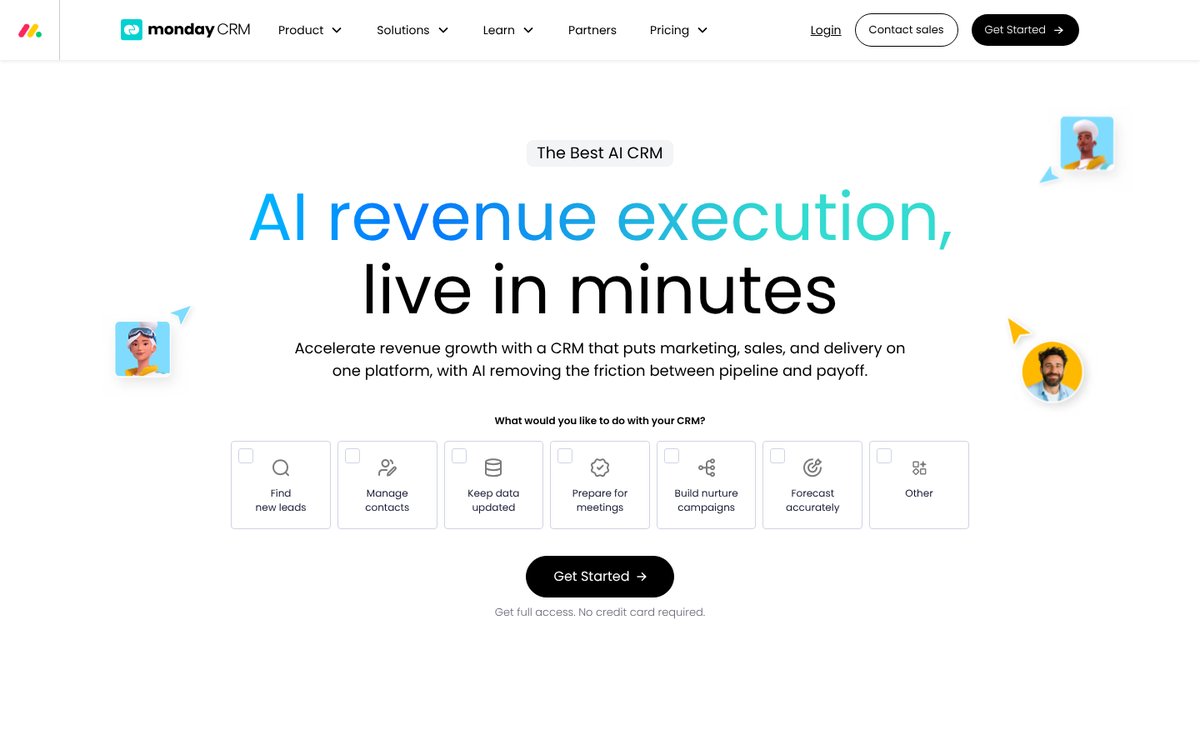
Auto-capture starts on Standard, where every email, call, meeting and note lands in one timeline that updates automatically. Standard also brings AI agents: an outreach caller, a lead sourcer that finds and enriches leads, meeting prep, an AI notetaker, plus Sidekick.
Prices with 10 seats selected (monday.com/crm/pricing): Basic $12 annually ($18 monthly), Standard $17 ($25), Pro $28 ($41). Trial: 14 days, no card.
Limits: Basic has no automatic timeline and caps active contacts and deals at 1,000. Check the minimum seat bundle before budgeting a small team.
Our score: 73/100. Full marks on AI, but capture sits one plan above the entry price.
6. Zoho CRM
Best for: the lowest price per seat with deep customization.
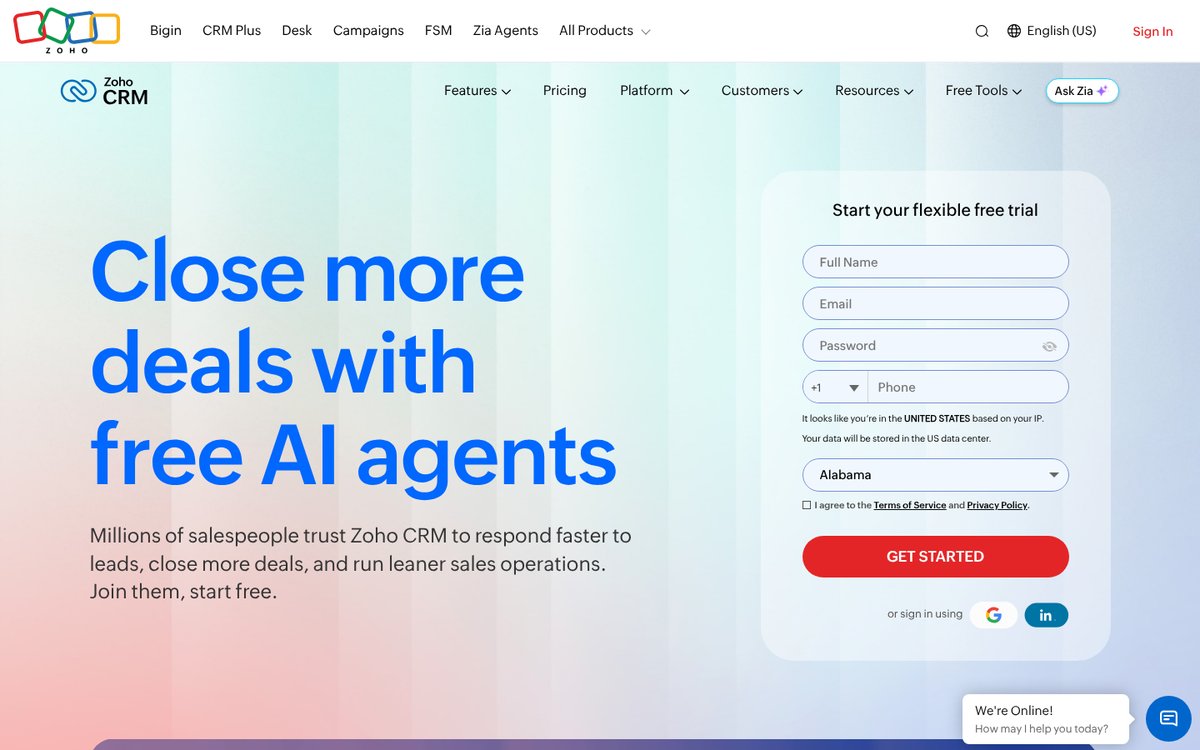
Zoho CRM is free for 3 users. Standard, $14 per user annually ($20 monthly), includes data enrichment and Gmail and Outlook integration. Professional at $23/$35 adds AI agents and predictive intelligence, Enterprise at $40/$50 adds extended Zia AI, and Ultimate is $52/$65 (Zoho CRM pricing). Bigin, Zoho's simpler CRM, starts at $7 annually.
Limits: five editions plus Bigin make choosing a plan a task of its own, and the trial length isn't stated, so setup gets 3. Extended Zia starts on Enterprise.
Our score: 72/100. The best price in the list, with less capture on the entry plan than the top four.
7. Salesforce Starter Suite
Best for: teams that expect to grow into the Salesforce ecosystem.
Starter Suite is $25 per user per month, billed monthly or annually (salesforce.com/sales/pricing). It covers leads, accounts, contacts and opportunities, sales flows, lead routing and email marketing, and, in Salesforce's words, "AI automatically syncs emails, events, and contacts", which earns it 4 on auto-capture. The 30-day trial covers up to 10 users. Pro Suite is $100 annually, and the table also lists a $0 Free Suite without stated limits.
Limits: Starter opens a wide platform, and in our assessment it takes more setup than Salesflare or folk.
Our score: 70/100. Sensible if Salesforce is where you expect to end up.
8. Close
Best for: inside sales teams that make many calls and send SMS.
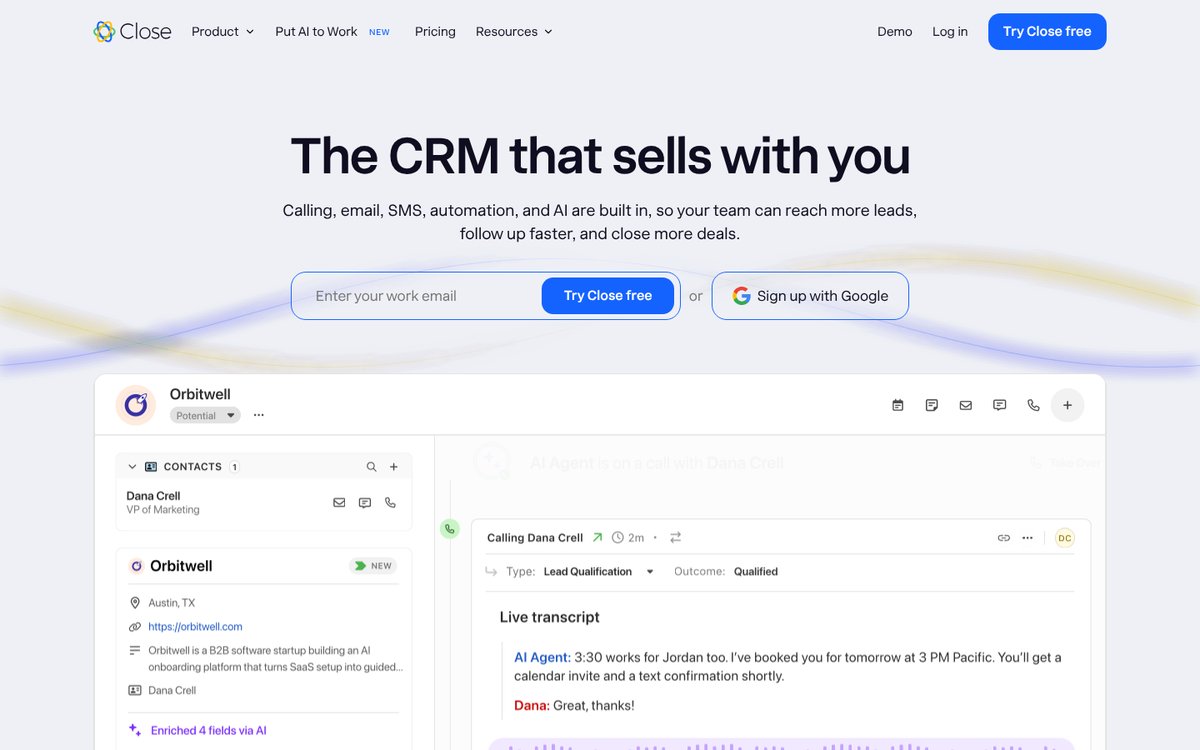
Close builds calling, email and SMS into the CRM, with calls and texts at cost (about $0.02 a minute, numbers from about $1 a month), so calls are logged as you make them. Chloe, its AI agent, calls leads, qualifies them, books meetings, updates the CRM and enriches data on AI credits, 500 to 2,000 per user by plan. Call Assistant is $50 a month per organization plus $0.02 a minute.
Solo, $9 annually ($19 monthly), is for one user with no workflows, so for a team Essentials at $35/$49 is the real entry. Growth is $99/$109, Scale $139/$149 (close.com/pricing). Trial: 14 days, no card.
Limits: automatic contact capture from your mailbox isn't described on the site; auto-logging centers on Close's own phone and SMS.
Our score: 69/100. The strongest AI in the list, but this ranking weighs email-side capture over calling.
9. Copper
Best for: teams that run entirely on Google Workspace.
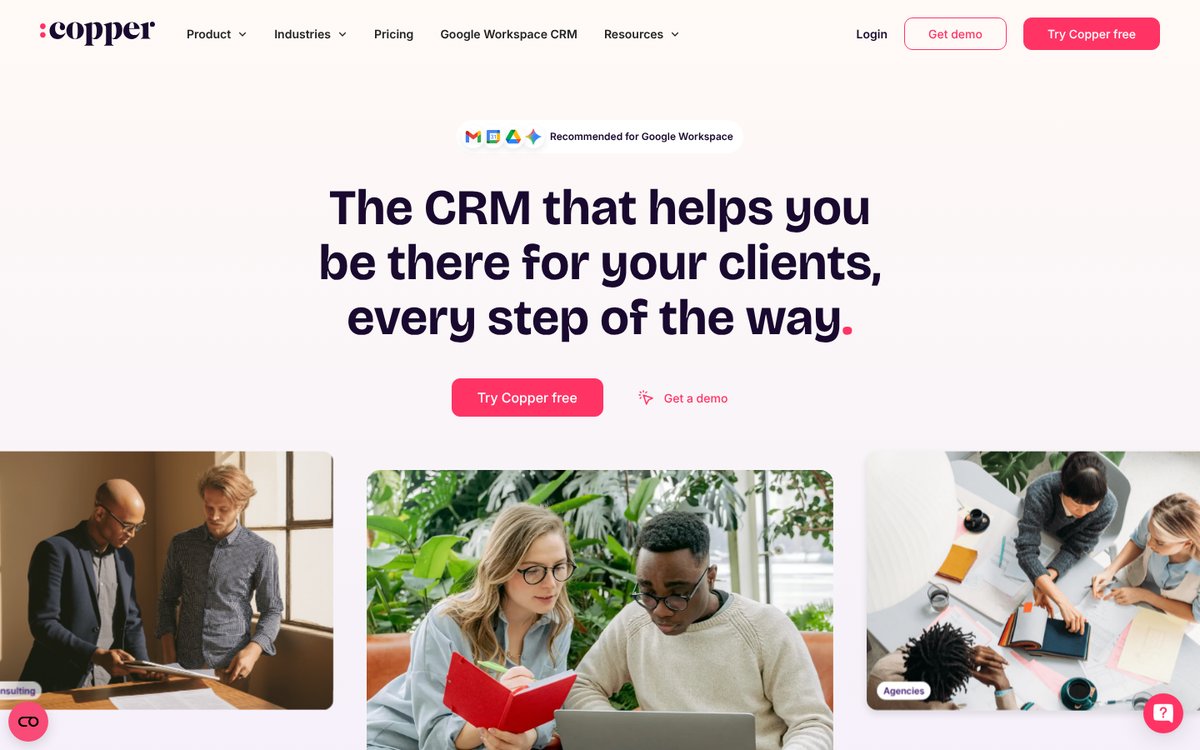
Copper calls itself a Google Workspace CRM, and its capture works inside Google: a Chrome extension in Gmail and Google Calendar, Google Contact Sync for people you talk to, automatic logging of calls and SMS, and one-click adds from LinkedIn. Its AI generates and rewrites emails.
Basic is $23 annually ($29 monthly) with up to 2,500 contacts and contact enrichment; Professional at $59/$69 allows 15,000 contacts and adds workflows, reports and integrations; Business is $99/$134 (copper.com/pricing). You can start free without a card.
Limits: Outlook isn't described on the site, and integrations start on Professional.
Our score: 67/100. Good capture for Google-only teams, with the lowest AI and openness rating here.
10. Pipedrive
Best for: sales teams with a set process who want a visual pipeline and activity discipline. Pipedrive names its own sweet spot as B2B, sales-led SMBs of about 11–50 employees.
Price: from ~$14 per seat per month billed annually (according to third-party trackers; check pipedrive.com/pricing). Pipedrive's own materials confirm four plans (Lite, Growth, Premium, Ultimate), a 14-day trial, and unlimited contacts, deals and an open API on every plan.
Auto-capture depends on the plan, per the plan comparison on support.pipedrive.com (updated September 3, 2026): calendar sync on all plans, email sync and tracking from Growth, organization enrichment from Premium, contact enrichment only on Ultimate. AI reaches every plan: the AI import assistant, a card scanner and Nova, which prepares pre-call briefs, records and transcribes calls and drafts CRM updates you confirm in one click.
Our score: 51 of 80 on five criteria; price not scored (see the note under the score table). The best pipeline and activity tools in the list, but email capture doesn't start on the entry plan.
Which CRM to pick if your priorities differ
If auto-capture isn't your top priority, the leader changes: a free plan points to Attio or HubSpot, calling to Close, a Google-only stack to Copper.
| Situation | Pick | Why |
|---|---|---|
| You need a free plan | Attio, HubSpot, Zoho | Free for 3, 2, 3 users |
| Lots of calls and SMS | Close | Built-in phone, logged calls |
| Google Workspace only | Copper | Works inside Gmail, Calendar |
| Already on monday.com | monday CRM | Same boards and account |
| Selling via LinkedIn, WhatsApp | folk | WhatsApp sync on Standard |
| Growing into enterprise | Salesforce Starter | Upgrade path inside Salesforce |
| Pipeline discipline first | Pipedrive | Best pipeline score |
| B2C, e-commerce, tickets | None of the top five | Built for B2B sales |
The B2C row includes Salesflare, which is built only for B2B. If you want something that does sales work rather than records it, compare AI employees for sales.
Test any shortlisted CRM the same way: connect your own mailbox and calendar on day one of the trial, work normally for a week, then count the contacts, meetings and company details that appeared without anyone typing them. That number is a better guide than any score here, ours included.
Why ASCN.ai: an AI agent on top of your CRM
ASCN.ai is not a CRM and isn't ranked here; it is a platform for AI agents that do the work around a CRM and write the result back. Even perfect auto-capture only records: someone still prepares the call, sends the follow-up, sorts inbound requests and updates the card afterwards.
Per the ASCN documentation, Gmail and Google Calendar connect natively, and an agent can analyze incoming mail, draft replies and send a briefing before each meeting. The docs include an example skill, crm-update, that updates a client card after a call or email, and a "personal CRM from email" use case. HubSpot is in the list of 3,000+ integrations, though the docs don't describe what the agent does there. Any other CRM, Salesflare included (it has a public REST API), connects through its API with the key in Settings → Secrets and keys, or through an MCP server in Brain → Connections → Additional connections → + Add.
If your only goal is to stop copying emails into the CRM, a CRM from the list above is enough and you don't need an agent. An agent makes sense where work starts after the record exists. See how AI agents work with a CRM, an AI CRM agent on ASCN, and the email-to-data pattern in parsing dealer orders from email.
To try it, start with the Sales Researcher template, which builds a brief on a company and contact before a B2B call and runs on the Free plan of ASCN Agent. Teams that don't need a full CRM yet can use AI CRM in Google Sheets, which turns short chat messages into deal rows.
FAQ
What is the best CRM for a small business in 2026?
It depends on which manual work you want to remove. For a B2B team in Gmail or Outlook that wants the CRM to fill itself, Salesflare scored highest in our ranking, 96 out of 100, from $29 per seat billed annually. For a free start, Attio or HubSpot fit better; for heavy calling and SMS, Close.
Is there a free CRM that logs emails automatically?
Yes. Attio Free syncs email and calendar and enriches records for up to 3 seats. HubSpot Free covers up to 2 users and 1,000 contacts and tracks emails for free through its Gmail and Outlook extension, logging them to contacts. Salesflare has no free plan; it offers a 30-day trial without a card.
How much does a small business CRM cost per user?
Entry paid plans in this list cost $12–35 per seat per month billed annually: monday CRM Basic $12, Zoho Standard $14, HubSpot Starter $20 list price, Salesforce Starter $25, Salesflare Growth $29, Attio Plus $35. Check which plan actually includes email sync and enrichment; at some vendors it is the second or third tier.
Can a CRM fill itself in from Gmail or Outlook?
Partly. After you connect the mailbox and calendar, CRMs such as Salesflare, Attio and folk create contacts from emails and meetings, read details from signatures and enrich companies from public data. Deal stages, call outcomes and most messenger chats still need a person. If your mail isn't on Google or Microsoft, confirm support before buying.
Is Salesflare a good fit for B2C or e-commerce?
No. Salesflare describes itself as a CRM for small and medium-sized businesses selling B2B, and its auto-capture is built around email, meetings and company accounts. It doesn't advertise store, ticketing or messenger sync features. For B2C or e-commerce, look at CRMs designed around messengers and online store integrations instead.
Can I connect ChatGPT or Claude to my CRM?
Some CRMs make it direct. Salesflare is in the official Claude and ChatGPT connector directories, where you can look up and update accounts, contacts and deals. Attio and folk list an MCP server in their feature tables. Any CRM with an API can also be connected to an AI agent, as described in the ASCN.ai section above.
Bottom line
Choose a CRM by what it fills in on the plan you will actually buy, not by the feature list of its top tier. For a small B2B team in Gmail or Outlook, that is Salesflare: email, calendar, signatures and enrichment are all on the $29 Growth plan. Check it the same way as any CRM here, by connecting your own mailbox during the trial and counting what appears without you. If the work after the record, call prep and follow-ups, is what fills your week, an AI agent on ASCN.ai can take it on top of the CRM.
AI for Sales Managers: 8 Weekly Tasks to Hand Off and Where AI Gets It Wrong
Best AI Employees in 2026: 8 Platforms Ranked by Price, Channels and Roles
AI Agent for Wholesale Orders: Parsing Dealer Emails
Integrations for AI Agents: Top Platforms, CRMs, and API Solutions
ASCN.AI — Your Innovative AI CRM Agent
AI Agents for CRM: What They Are and How They Automate Your Business