



- Русский
- English
- Português
AI Chatbot for E-commerce Customer Support Powered by GPT
In 2026, manual support is a liability. Discover how GPT-4 powered AI agents are scaling online stores 24/7, managing returns, and boosting conversion rates by 61% through seamless CRM and blockchain integration.

Gone are the days when you needed to conduct tedious manual searches on the internet for responses to common customer queries or spend invaluable time on the phone answering customer service inquiries yourself. Technology has dramatically improved. By 2026, the AI Chatbot based on GPT will no longer be just a luxury; it will be a foundation for eCommerce Support that meets the demands of today's customers.
"The last eight years have seen us test 43 ways to automate support solutions for both the Crypto & E-commerce industries. Without proper context, more than 70% of the inquiries go unanswered. Through our testing, we found that a properly configured GPT chatbot can independently address 85% of those unanswered inquiries, and responds to all requests at least 10 times faster."
AI Chatbots For The E-Commerce Industry
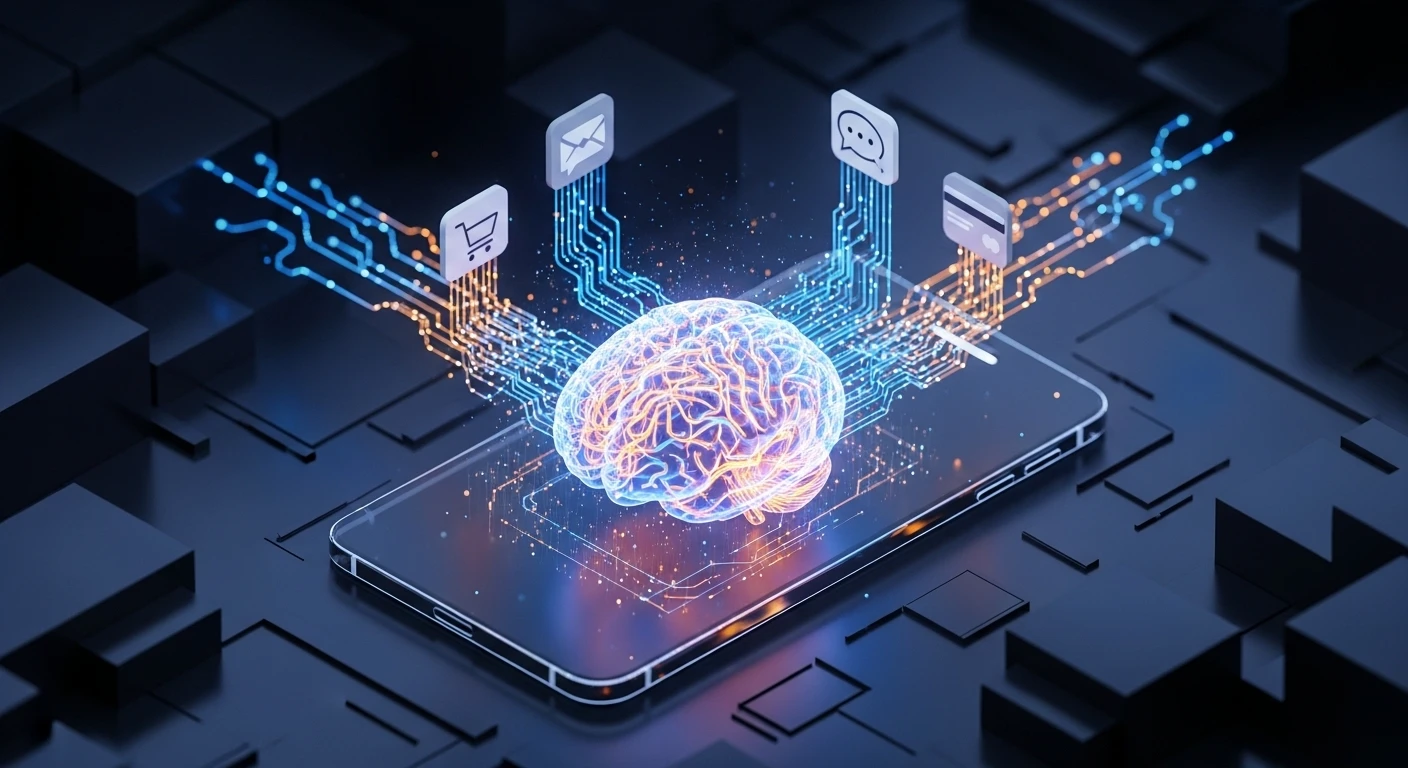
An AI Chatbot is an Automated Software Agent, that uses LLM (Large Language Models) to respond to customer requests in either text or voice format. Unlike traditional script-based bots; GPT Models are able to understand natural language and the context of a conversation, enabling them to produce accurate responses.
The three main functions of a Chatbot within the eCommerce industry are as follows: Answering Frequently Asked Questions (Technical Support, Consultation), Escalating complex cases to human support representatives and Collecting, analyzing and utilizing data to enhance service quality.
GPT (Generative Pre-trained Transformer) is a type of neural network, developed and trained on an extremely large amount of text data. Currently, the most advanced version of the GPT model (GPT-3.5) has 175 billion parameters, with GPT-4 likely utilizing over 1 trillion parameters; however, OpenAI has yet to disclose exact figures. With this type of training and technology, these models don't just recognize words, they also comprehend user intent and generate human-like responses that are coherent and meaningful. According to the 2025 Gartner Research Publication, it is estimated that by 2027, one in four organisations will be using chatbots as their main support channel (in comparison to less than 2% of companies that do currently use chatbots as their main support channel in 2022). As well as this, according to the 2025 Zendesk Customer Experience Trends Report, it has been observed that 70% of customers prefer using chat when an inquiry can be answered within one or two minutes, as opposed to making a phone call.
"GPT's chatbots are helping to change the way businesses approach customer support; they have significantly reduced the workload on support agents and have drastically improved response times."
The Impact of GPT on the Quality of Customer Support
There are several areas where GPT technology has improved the quality of customer support. Below is a short list of ways in which GPT technology has improved the communication between customers and companies:
Assessing the Customer's Intent: For example, a customer may write "I need to return my order, but I forgot to get the number". A scripted bot would ask repeatedly for the order number and wouldn't provide assistance. However, GPT technology identifies that the customer's request is for assistance with a return product, and instead of a long response asking for the order number, GPT technology provides options for retrieving the order information, such as checking the email or calling the customer service department, along with a link for completing the return product form.
Personalisation of Customer Responses: When communicating with customers who have expressed frustration with the company's service by saying "This is the third time that I've contacted you!", GPT technology recognises the customer's frustration and responds accordingly, offering an apology along with a potential compensation option when appropriate. With the exception of standard inquiries, GPT will offer concise instructions.
Understanding the Context of the Conversation History: In the case of a user asking "How much will shipping cost?", GPT technology is able to answer based upon a particular product that the customer has recently viewed on the company's website (i.e. shipping costs for a Menswear Shirt). According to the MIT Technology Review 2025, reducing clarifying questions became possible due to the improved URL links provided by the use of GPT technology.
Accessing Other Systems: GPT technology allows the chatbots to check in real-time with other systems within an organisation through the use of the store's API, Customer Relationship Management (CRM) and Warehouse Systems to find out if a product is in stock, check the customer's order status and provide updated customer information regarding their previous inquiries and orders. Firstly, IBM Watson AI's GPT Chatbots was reported as having a significantly decreased request processing time, from an average of 11 minutes to just 1.5 minutes by 2024! That is a staggering improvement! Also, satisfaction levels were reported as increasing 23% with the introduction of GPT Chatbots into e-commerce platforms. The ASCN.AI projects had a dramatic reduction of operator workload by 60% to 70% with the introduction of the GPT Assistant in their Cryptocurrency Projects! For example, the arbitrage scanner project had 82% of its requests closed automatically through the GPT chatbots and required only the handling of the most complex cases by operators. The benefits to both the customer and the operator are evident; the customer receives prompt service and the operator has more time and resources to respond to difficult queries.
Core Functions and Capabilities
Around the Clock Customer Request Processing
The ability to process customer requests at any time of day or night is essential for e-commerce businesses. HubSpot Research in 2025 reported that 53% of users will leave a web site if they don't receive a response within 3 minutes! Therefore, the use of GPT chatbots provides users with an immediate response to their questions, regardless of the time of day or night.
When a customer submits a request, the typical workflow for a GPT chat bot consists of answering the common inquiries (order status, return) and forwarding any complex requests to an operator along with all prior conversation threads. For instance, if at 11 PM, a customer wants to know "Where is my order?" The GPT Bot quickly remembers the last time the customer's order was charged, retrieves the order number, and checks the delivery services API to provide the customer with current location, hours of the delivery service pickup point, and information about any potential delivery delays, before issuing an apology and providing a promotional code! According to Uptime Institute's 2025 research, however, leading market chatbots have an average uptime of 99.7%. Leading E-commerce platforms utilize a variety of channels for communication with their customers, including web chats, Telegram, emails, and social media. A multi-channel capability ensures that all inquiries are stored within one database, making a full history of the customer's relationship with the company available in one place. The GPT Chatbot has been integrated into the Telegram Bot API, WhatsApp Business API, Facebook Messenger, and e-mail through IMAP/SMTP and will record all incoming messages from any of the aforementioned channels into one single message queue while preserving the context of each message.
As shown in the 2025 Salesforce State of the Connected Customer report, 75% of consumers expect companies to track their individual purchasing habits across every purchasing platform and this is expected to increase conversion rates by approximately 15% to 20%.
Integration with E-Commerce Platforms and CRMs
The chatbot is not just an FAQ answerer; it is part of the overall business process and is integrated with your content management and customer relationship management systems. The chatbot supports the most commonly used e-commerce platforms (including Shopify, via REST and GraphQL APIs), WooCommerce, OpenCart, etc. The Chatbot uses the relevant APIs to obtain product, stock, order and purchase history data to allow it to create customized experiences for potential buyers.
Integrating the chatbot with a CRM (such as Salesforce or Bitrix24) allows the company to have access to the customer's entire purchase history to create a personalized experience for the end-user, and in addition to this, the ability to create automated lead generation using the data collected via the chatbot. For example, ASCN.AI has helped a cryptocurrency exchange decrease the response time to customers by 96%, displaying real-time wallet balances, recent transaction histories, and verification statuses within 40 seconds of their request, down from 8 minutes.
Automating the Returns, Tracking and Payment Assistance Processes
Returns: When a customer returns an item, the chatbot will determine what caused the return, check whether the item is eligible to be returned based on the return window and then create a return request as well as provide instructions to complete the return. In situations where an item cannot be returned due to company policy or government regulations, the bot will inform the customer of the reasons for the return prohibitions.
Order Tracking: By integrating with existing delivery services' APIs, the chatbot will be able to provide customers with real-time tracking information about their orders based on the tracking number provided by the customer.
Payment Support: Provides diagnosis of issues in payment transactions, provides alternative ways to pay, and logs incidents for the Technical Support Staff. As per the 2025 Shopify Merchant Survey, automating payment requests reduces the number of times customers contact the store for the same issue by an estimated 35%.
Automation of Payment Support Processes Results in Increased Customer Satisfaction: According to Forrester Research 2025, 72% of customers are motivated to remain loyal to a brand if they are able to have an immediate response to their assistance requests, while only 25% feel they are being treated with empathy by brands. This is due to the fact that GPT Chatbots provide responses in the range of 10-90 seconds and are able to handle the request without needing to transfer to multiple departments. These bots can also learn to communicate with customers in the country or region in which they are located and demonstrate empathy by admitting the potential error and providing or suggesting a solution. In the ASCN.AI Crypto Project mentioned above, the Chatbot had an 18% increase in customer retention through the chatbot's ability to educate the customer about the company's business and provide detailed information related to the company's products, as well as explanations of product options.
Reduction in Cost to Operate: Average human claim representatives handle 6-8 requests per hour, whereas Chatbots can manage 600-800 requests per hour Therefore, by replacing 10% of human customer service representatives, the bot saves on both salary and training costs. For example, if a company has 1000 requests per day and needs to hire 5 customer service representatives with total annual salaries of approximately 300,000 rubles, by using a Chatbot and closing 80% of the requests automatically, the company can only hire one representative (60,000 rubles) and subscribe for the Chatbot (approximately 10,000 rubles), resulting in only 70,000 rubles per month, versus 300,000 rubles, which is a savings of up to 230,000 rubles per month.
Chatbots can scale seamlessly as traffic increases and do not need to be retrained to onboard new "employees." In addition, chatbots adapt quickly to both new products and changes in the environment surrounding them. For example, one of Shopify's customers processed 47,000 inquiries in a single day during New Year sales, with 92% of those inquiries being resolved automatically.
Technical Architecture and Integration

There are four main components of a chatbot:
- Interaction Interface (Frontend): Website chat widget, Telegram, WhatsApp or other Messengers
- Request Processing Model (GPT API): Uses context and specific configurations (prompts) to formulate responses.
- Knowledge Base (Vector Database): Contains all documents, FAQs and instruction sets stored as vectors. It allows the system to quickly identify relevant information.
- Integration Layer (API Connectors): Connects the Chatbot to the store, CRM, and warehouse systems.
The vector store enables the system to find the precise information required among hundreds of thousands of documents and send them to the GPT model as context to generate highly accurate answers.
Integration Options
Integrating with a chatbot can be achieved via three primary methods:
- REST API or GraphQL: Querying Shopify, WooCommerce, and CRMs to access product and customer information
- Webhooks: Receiving real-time notifications related to events (new orders, changes to status, etc.) for processing by the Chatbot.
- No-code platforms: Using visual editors such as ASCN.AI NoCode to configure chatbots without requiring coding skills.
To Protect Your Data Security and Privacy
Because chatbots have access to your private information, there must be strict compliance with regulations such as GDPR as well as local laws related to Data Protection. Some of the most important protection measures include:
- Data encryption both during transmission and while it is stored on servers (using HTTPS, TLS & AES-256).
- Secure storage of all API Keys and Tokens.
- Restricting access to Data through OAuth 2.0 and JWT Protocol.
- Anonymization of Data for Analysis.
- Conducting regular audits and testing for vulnerabilities.
At ASCN.AI, all Data is processed anonymously and deleted within 24 hours of receiving a request from a client.
Success Stories and Case Studies
Success Story #1: ASCN.AI Allows Users to Profit During the Falcon Finance Collapse
On October 11th, 2024, there was a Flash Crash in the cryptocurrency markets and the Falcon Finance Token lost 87% of its value in the course of 4 hours. Users of ASCN.AI were notified of increasing Spread prices, and in less than two hours they made profits ranging from 15% to 40% through the use of a Spot and Futures trading strategy. At the same time, the Chatbot responded to literally hundreds of questions from panic-stricken investors with information about why the market collapsed and how arbitrage works with data from On Chain Analytics, resolving 91% of all inquiries without needing to refer to customer support staff.
Success Story #2: An Exchange Utilizes a GPT-Based Chatbot for Front Line Support
An Exchange utilized a GPT-based Chatbot to provide First Response Support. The time between when an end-user contacts support until they receive a response dropped from 8 minutes down to 15 seconds with a retention rate of 94%. The Bot was able to assist with identity verification and two-factor authentication, while escalated support requests were routed to Human Support Staff. This allowed staff to reduce their workload by 68%.
Comparison of Service Improvement Metrics and Sales Metrics
| Metric | Before | After | Change |
|---|---|---|---|
| Average Response Time | 7-10 Minutes | 10-30 Seconds | -95% |
| Average Requests Processed Daily | 150 | 1200 | +700% |
| Average Customer Satisfaction (CSAT) | 68% | 87% | +19% |
| Average Chat-To-Purchase Conversion | 4.2% | 6.8% | +61% |
| Average Monthly Support Costs | $8000 | $2500 | -69% |
In addition, as a result of targeted recommendations, the average order value increased by 12%, while the average return rate decreased by 8% due to better understanding of the needs of customers. According to the McKinsey Digital Report 2025, revenue growth from AI Chatbot-enabled Improvements to Customer Experience can be 10-25%.