



- Русский
- English
What is DeFi in cryptocurrency and how to make money on it in 2025 — ASCN


about cryptocurrencies.
A few years ago, getting a loan or exchanging currency meant standing in line at a bank, signing papers, and waiting for approval.
Now? You tap your phone a couple of times, and that’s it. No managers, no queues, no “service fees.”
That’s the new reality of decentralized finance, or simply DeFi — a financial world that runs without middlemen, powered purely by blockchain code. Especially now, with tools that make it almost effortless — some even act like your own crypto financial assistant.
But here’s the catch: when DeFi kicked out the banks, it also got rid of the safety net that came with them.
No insurance. No credit checks. Your security now depends entirely on your own decisions.
Before you throw money into a new liquidity pool or take a loan backed by your NFT, double-check what you’re getting into. That’s where ASCN.AI can save you hours of digging.
Ask it the right question (Analyze the " " pool's smart contract for vulnerabilities and check if there have been any emergency liquidity withdrawals (rug pulls) from the creators' wallets) — and you’ll get not just a detailed answer, but also smart suggestions for how to run your own checks on any wallet or project you’re curious about.
So, let’s slow down and walk through what DeFi actually is, how people make money here, and where ASCN.AI fits in.
What Exactly Is DeFi and How Does It Work?
DeFi isn’t just another buzzword. It’s what happens when code replaces clerks.
Forget the endless bureaucracy — everything here runs on smart contracts, programs that execute automatically once conditions are met.
Need to borrow against your crypto? Swap tokens? Stake your assets to earn yield? In DeFi, you don’t need permission from anyone. It’s all done directly, wallet to protocol.
On paper, that sounds clean and simple. In practice, it’s a massive shift in how we interact with money.
Why ASCN.AI Became an Essential Crypto Sidekick
Let’s be honest — the crypto space is a jungle of data, rumors, and hype.
That’s exactly the problem ASCN.AI set out to solve.
Instead of scraping random articles or half-baked Reddit posts, ASCN runs on its own indexed nodes and a custom sentiment-analysis engine.
Translation? It doesn’t “guess” — it analyzes. You get answers based on live on-chain metrics, not gossip.
Imagine this: instead of scrolling through Telegram chats or spending hours comparing dashboards, you just ask the AI what you want — and it spits out clean numbers and insights.
Whether you’re brand-new or a DeFi veteran, the experience feels surprisingly straightforward.
Alright, enough theory — let’s dive into the part everyone actually cares about.
How People Make Money in DeFi in 2025
Fast-forward to 2025, and DeFi hasn’t just survived — it’s exploded into an entire ecosystem of earning models.
Some strategies are so simple a beginner could try them on day one. Others take experience (and nerves of steel), but the payoff can be far higher.
Let’s look at the most popular ways people earn today — and how ASCN.AI makes the whole process less of a guessing game.
Staking: The Chill Way to Earn on Your Crypto
Think of staking as a modern version of putting money in a savings account — except there’s no bank taking a cut and no stack of paperwork to fill out.
You basically “lend” your coins to the blockchain itself, helping it stay secure. In return, the network rewards you.
The more you stake, the bigger your share of the rewards. Passive income at its finest.
Here’s how ASCN.AI comes in handy.
Let’s say you ask it: “Find and compare ETH staking options across major exchanges (Bybit, Binance, OKX, Gate, MEXC). Show the name, APY, and any restrictions.”
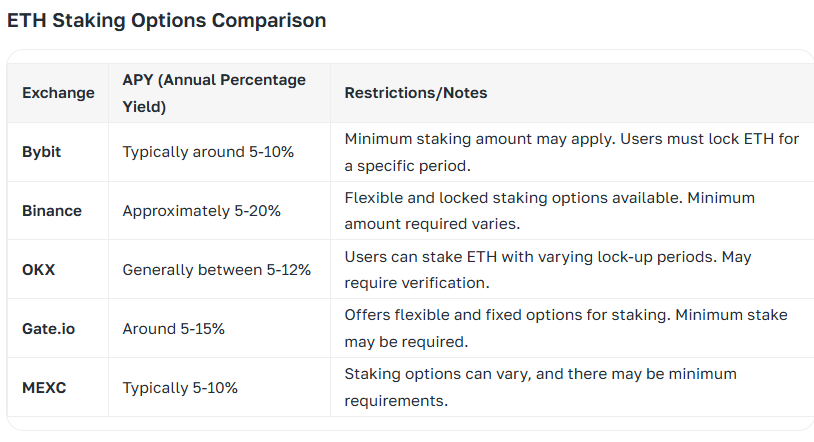
In under 10 seconds, you get a full comparison table. Normally, collecting that data manually would take ages — scrolling through pages, verifying rates, reading terms.
Here, it’s instant. And that’s why staking is such a favorite: steady yield, minimal effort.
Yield Farming: For the More Adventurous
Yield farming is where things get spicy. You provide liquidity to DeFi pools and earn tokens in return.
Your yield can swing wildly — from modest 5% returns to triple-digit APYs — depending on the pool’s risk and tokenomics.
Picture this: you want to analyze a pool before jumping in.
You ask ASCN: “Evaluate the KMNO/SOL pool (3ndjN1nJVUKGrJBc1hhVpER6kWTZKHdyDrPyCJyX3CXK) on a DEX for the last 24/7/30 days — TVL, 24h volume, current APY (fees + rewards), expected LP fees for $500, and rug-risk probability. Also check community sentiment.”
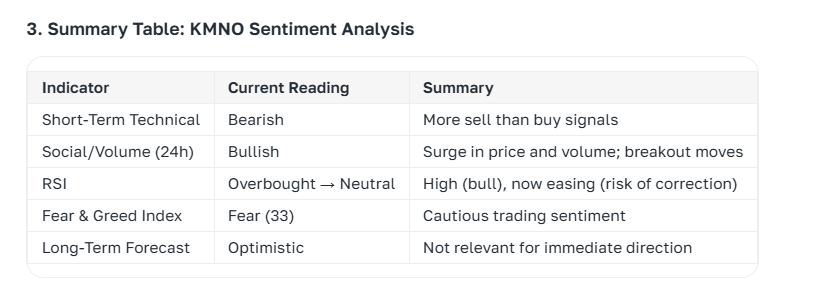
In seconds, you get a full-scale report — graphs, metrics, and sentiment summaries — the kind of analysis that would take even a pro at least half an hour.
That’s the difference between guessing and acting on data.
By the way, you can test ASCN yourself for free — registration takes less than a minute.
Decentralized Lending: Earning Interest or Borrowing Smart
DeFi lending works both ways. You can lend your crypto to earn interest or borrow without selling your holdings.
For example, you might deposit DAI into Compound and earn interest from borrowers.
Or you could take out a loan in USDT on Aave, using your ETH as collateral — useful if you need liquidity but don’t want to sell your coins at a loss.
The rates depend on demand and supply, but they’re often higher than what centralized exchanges offer.
And again, everything’s handled by code — no paperwork, no rejections.
DAO Participation: Voting and Getting Paid for It
DeFi isn’t just about passive income. It’s also about governance.
If you hold a project’s tokens, you get to vote on key decisions — upgrades, partnerships, even treasury use.
Active members are often rewarded with extra tokens, profit shares, or early access to new features. It’s a mix of community and finance — democracy, but with yield.
Trading on DEXs: From Swaps to Derivatives
Decentralized exchanges aren’t just “alternatives” anymore. They’ve grown into full-scale trading platforms.
You can swing-trade, place limit orders through interfaces like 1inch or CowSwap, or even trade derivatives on GMX or dYdX.
Many DEXs now support deep liquidity, cross-chain swaps, and lightning-fast execution — putting them nearly on par with CEXs.
And if you’re into small-cap “degen” plays, ASCN is a dream tool.
It can pull market data, sentiment stats, and whale movements for any token you’re curious about.
Basically, it’s your built-in analytics desk — without the subscription fees.
Arbitrage Across Platforms
Here’s where it gets interesting. Arbitrage is all about catching price differences for the same asset across platforms.
Say a token trades for $1.02 on PancakeSwap and $1.00 on Uniswap — buy low, sell high, pocket the spread.
In 2025, multi-chain arbitrage (between Arbitrum, Optimism, zkSync, etc.) has become especially hot. Spreads of 5–7% aren’t rare during volatile periods.
I ran a quick check on ASCN: “Find tokens with the highest current exchange spread. Calculate potential profit after fees for a $500 transaction.”
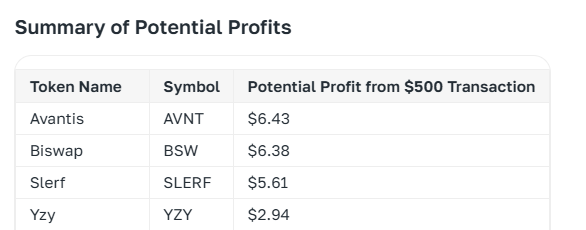
The AI delivered a clear summary — including fees, expected gain, and execution risks — in seconds. Not bad for a tool that’s still evolving.
NFTs Inside DeFi: The Next Frontier
NFTs and DeFi are no longer separate worlds. More projects now merge the two — think NFT-backed loans, yield pools, or even NFT farming.
For example, JPEG’d lets you use NFTs as collateral to borrow stablecoins.
Platforms like Wild Credit experiment with yield-bearing NFTs that earn while you hold them.
Riskier? Definitely. But with the right assets, it can be surprisingly profitable.
Curious about NFT earning methods? ASCN has a whole section on that — complete with a checklist and evaluation tips for NFT projects.
What DeFi Really Means
At its core, DeFi is just a system of open protocols and apps that deliver financial services without middlemen.
Smart contracts handle everything — automatically and transparently.
Say you want to swap one token for another. You connect your wallet to a DEX, enter the amount, and the smart contract finds the best rate and executes it.
No approvals. No paperwork. Just math.
How It Differs From Traditional Finance
Traditional finance runs on centralization — banks, brokers, regulators.
They hold your money, decide when you can withdraw it, and charge you for the privilege.
DeFi flipped that model. Here, you’re the sole owner of your funds. No one can freeze your account or dictate terms.
That’s exactly why crypto enthusiasts around the world love it.
Smart Contracts and Blockchain — the Foundation
Everything in DeFi is built on smart contracts — self-executing pieces of code stored on the blockchain.
For example, in a lending protocol, a smart contract can lock your collateral and automatically issue a stablecoin loan.
No clerks, no bias, no fraud. And since it all runs on the blockchain, every transaction is transparent and immutable.
Tokens and DeFi Protocols — The Moving Parts
Tokens are the fuel of DeFi. Each protocol issues its own — for governance, profit-sharing, or as collateral.
Liquidity providers also receive LP tokens, proof of their share in a pool. Those tokens can be staked elsewhere for extra yield — DeFi on top of DeFi.
Protocols themselves act like decentralized apps — each with a different purpose: swapping, lending, staking, or trading.
No registration, no KYC, and they run 24/7.
The Big Trends of 2025: AI, RWAs, and LSDs
The past year brought a flood of innovation. Here’s what’s hot right now:
-
AI-powered DeFi: Automated strategies built by intelligent agents that hunt for the best yields or optimize risk in real time.
-
RWAs (Real-World Assets): Tokenizing real-world value — real estate, bonds, even invoices — and bringing yield from traditional markets onto the blockchain.
-
LSD (Liquid Staking Derivatives): A smarter form of staking. Instead of locking up your ETH, you get a liquid token like stETH that keeps earning while you trade or farm with it.
These are more than just fads — they could become the pillars of DeFi 2.0.
How to Start Earning in DeFi: A Step-by-Step Guide
At first glance, DeFi might look a bit too technical or complicated. But once you dive in, it’s really not as hard as it seems.
You don’t need to be a programmer or a trader with ten years of experience to get started in 2025. All you actually need is a smartphone, a crypto wallet, and a small amount of crypto to begin with.
Step 1: Set Up a DeFi Wallet (MetaMask, Trust Wallet, and more)
Everything starts with a wallet. Without it, you simply can’t interact with DeFi protocols.
Here are some of the most popular options:
-
MetaMask — a browser extension and mobile app that works across Ethereum, Arbitrum, zkSync, and other major networks.
-
Trust Wallet — a mobile-first solution that supports a wide range of tokens and blockchains, including BNB Chain and Polygon.
When creating a wallet, you’ll receive a seed phrase — 12 or 24 random words.
Think of it as the master key to all your funds. Write it down on paper (never store it online) and keep it somewhere safe.
Lose the phrase — and you lose access to everything. No recovery, no support line. Just gone.
Step 2: Buy Crypto to Get Started (ETH, USDT, and more)
Next, you’ll need some assets to actually use within DeFi.
The most common ones include:
-
ETH — the main currency of the Ethereum ecosystem and a backbone for many protocols.
-
USDT / USDC — stablecoins that are widely used in farming, lending, and staking.
-
MATIC, ARB, OP, SOL — great if you plan to explore other ecosystems like Polygon, Arbitrum, Optimism, or Solana.
You can buy these coins on centralized exchanges such as Binance, Bybit, or OKX, and then transfer them directly to your DeFi wallet.
Step 3: Connect to a DeFi Protocol
Once your wallet is ready and funded, it’s time to connect to a DeFi platform.
It’s easy: go to the official website of the protocol you want to use (for example Aave, Curve, or Lido) and click “Connect Wallet.”
Your MetaMask or Trust Wallet will ask you to confirm the connection — just approve it.
Then you’ll see the platform’s interface, where you can deposit funds, choose pools, or stake tokens.
Always double-check the website address.
Scammers love to clone DeFi sites. The safest way to access legit links is through verified sources like DefiLlama, CoinGecko, or the project’s official Twitter/X account.
Step 4: Choose a Strategy That Fits You
Here’s where things start to get interesting. Since you’re reading this, chances are you’re still new to DeFi — so let’s keep it simple with a few beginner-friendly strategies:
-
ETH staking via Lido or Rocket Pool — around 3.5% annual yield.
-
Lending USDC on Aave — roughly 4–7% per year, depending on market conditions.
-
Farming pairs on PancakeSwap or Uniswap — typically 10% and higher.
-
Participating in DAOs — requires more involvement but can bring token rewards.
-
Using AI tools like ASCN.AI — to automatically find the best-performing and safest protocols.
Don’t try to do everything at once.
Pick one solid strategy, start small, and run a one-month test.
In DeFi, experience is the real teacher — every transaction teaches you something new.
Step 5: Track Your Earnings and Manage Risk
Now that you’re in the game, you’ll want to monitor your returns and protect your capital.
Here are a few tools that make it easier:
-
Zapper, DeBank, Revoke.cash — show all your assets across protocols, profits, and active approvals.
-
APY.Vision, DefiLlama — help you compare yields, risks, and performance metrics across different platforms.
And a golden rule: never put everything into a single protocol.
Diversify.
Read community reviews, stay updated with project news, and most importantly — take profits regularly.
Popular DeFi Platforms in 2025
By 2025, the DeFi landscape has matured into a massive, complex ecosystem.
There are now dozens of strong, time-tested protocols, each covering a specific part of the decentralized financial infrastructure. Some focus on lending, others on trading or staking — and all of them keep pushing the boundaries of what’s possible in open finance.
Let’s take a closer look at the platforms that really matter — the ones worth exploring if you want to earn safely and effectively in DeFi.
Aave, Compound, Curve, Uniswap
These are the OGs of DeFi — the pioneers that built the foundation for everything we see today.
Even after years of market ups and downs, they remain the most trusted and liquid platforms in the entire sector.
-
Aave — a lending protocol that lets you deposit assets (like USDC or ETH) to earn interest or borrow against your crypto collateral. It’s intuitive, multi-chain, and battle-tested.
-
Compound — another cornerstone of decentralized lending. It offers algorithmically adjusted rates and cTokens that can even be used in other DeFi protocols.
-
Curve — the go-to platform for stablecoin swaps. With low fees, deep liquidity, and DAO participation rewards, it’s perfect for steady, low-risk yield.
-
Uniswap — the largest decentralized exchange in the world. It supports thousands of tokens and lets users earn by providing liquidity. The new Uniswap X update introduces cross-chain functionality and faster trades — a huge leap forward for the ecosystem.
Lido, Rocket Pool (ETH 2.0 Staking)
If your goal is passive income through Ethereum staking, these two platforms are where you should start.
Lido makes staking ETH simple — you don’t need to run your own validator. You deposit ETH, and in return, you get stETH, a liquid token you can trade or use for farming elsewhere.
Rocket Pool, on the other hand, is a more decentralized alternative. You can either join existing validator pools or run your own mini-node. It rewards you with rETH, another liquid staking token with flexible use cases.
Both have become essential pieces of Ethereum’s staking economy — combining passive income with on-chain liquidity.
PancakeSwap, GMX, dYdX and More
If trading is your thing, the DeFi world has evolved far beyond simple swaps.
Now, decentralized trading platforms rival centralized exchanges in speed, features, and liquidity.
-
PancakeSwap — the leading DEX on BNB Chain. It’s beginner-friendly, with yield farming, lotteries, NFTs, and even launchpads (IDOs).
-
GMX — a decentralized derivatives exchange that allows leverage trading without intermediaries. Liquidity providers earn a share of all trading fees.
-
dYdX — designed for professional traders. Built on the Cosmos network, the V4 version now offers a fully decentralized order book, lightning-fast execution, and complete user control over funds.
DeFi trading is no longer “experimental” — it’s an entire parallel market that’s here to stay.
DeFi Platforms on Next-Gen Blockchains: Arbitrum, Optimism, zkSync
In 2025, DeFi isn’t just about Ethereum anymore.
The rise of Layer 2 networks has changed everything — they’re faster, cheaper, and more scalable.
Here’s how the most active L2 ecosystems look today:
-
Arbitrum — home to both classic giants like Uniswap and Aave, as well as fresh native protocols built specifically for this chain.
-
Optimism — tightly integrated with Ethereum’s developer ecosystem. Protocols such as Velodrome and Kwenta dominate local DeFi activity.
-
zkSync — a zero-knowledge rollup network focused on maximum security and minimal fees. Projects like Mute, SyncSwap, and zkLaunch are gaining serious momentum.
If Ethereum is the “bank” of DeFi, these Layer 2s are its high-speed branches — and they’re growing fast.
How to Check If a Platform Is Safe
Before you invest or interact with any protocol, it’s critical to verify its safety.
Remember the golden rule of DeFi: “If the yield sounds too good to be true — it probably is.”
Here’s a quick checklist to protect yourself:
-
Smart contract audits — look for reports from trusted firms like Certik, PeckShield, or OpenZeppelin.
-
TVL (Total Value Locked) — high TVL usually signals strong trust from users.
-
Transparent team — public developers and active social channels are always a good sign.
-
Presence on aggregators — listing on DeFiLlama, CoinGecko, or DappRadar means the project is recognized and tracked across the industry.
Trust is the real currency in DeFi — and it’s earned through transparency, not promises.
Safe Earning Methods in DeFi
DeFi offers countless opportunities for profit, but big yields often come with big risks.
Fortunately, there are calmer, lower-risk strategies — they might not promise “x100” returns, but they offer stability and peace of mind.
Staking via Official Protocols
One of the safest and easiest ways to earn in DeFi is staking through official project interfaces.
This means interacting directly with the protocol — no third-party wrappers or risky “mirrors.”
Typical returns range from 4–7% per year, depending on the network and conditions.
It’s steady, transparent, and doesn’t require constant monitoring.
Trusted Lending Platforms
Lending remains the second most popular DeFi earning method — but only when done through trusted platforms with a solid track record.
Look for platforms that offer insurance coverage from providers like Nexus Mutual or InsurAce, which can reimburse users in case of smart contract failures or security breaches.
A good rule of thumb: if you’ve never heard of the project, or if it’s promising 100%+ APY — walk away.
Use Ledger or Hardware Wallets
The foundation of DeFi safety is secure storage.
A hardware wallet works like a digital vault — it only signs transactions after physical confirmation, keeping your assets protected even if your computer or phone gets compromised.
It might seem less convenient at first, but when it comes to capital protection — it’s absolutely worth it.
Low-Risk Aggregators
Another safe approach is using DeFi aggregators — platforms that automatically distribute your assets across several protocols to balance risk and maximize yield.
Aggregators save you time: you don’t need to manually switch platforms or track rates.
They do the heavy lifting while you focus on strategy.
Risks and Pitfalls of DeFi Earning
Yes, DeFi means innovation, flexibility, transparency — and high yields.
But there’s also a darker side to it all, especially for newcomers. Let’s go through the main risks you should know.
Scam Projects and Fake Protocols
One of the most common — and painful — risks.
A website might look identical to a famous DeFi protocol, but in reality, it’s a fake that steals your funds as soon as you connect your wallet.
Many scams lure users with promises of “500% APY” or “next-gen farming.” Don’t fall for it — always double-check URLs and official links.
Hacks and Smart Contract Bugs
Even legitimate projects can get hacked.
Smart contracts are code — and if there’s a vulnerability, attackers can drain the funds in seconds.
The situation is improving, but the risk is still there: in 2024 alone, over $1.3 billion was stolen from DeFi protocols.
Impermanent Loss
If you’re providing liquidity to a DEX, you’ll face the phenomenon known as impermanent loss.
In simple terms — when one token’s price changes significantly, your total balance may end up smaller than if you had just held the tokens separately.
It’s not a direct loss but an “opportunity loss,” and in some cases, it can reach double digits.
Losing Wallet Access
Perhaps the simplest — and most painful — way to lose your funds is by losing access to your DeFi wallet.
And in this world, there’s no customer support to help you recover it.
Store your seed phrase offline, on paper, and in a safe place. One small mistake here can cost you everything.
Regulatory Risks in 2025
Regulators are paying increasing attention to DeFi — especially after its explosive growth in 2023–2024.
By 2025, clear frameworks already exist in the US, EU, and parts of Asia.
Russia and other CIS countries are moving cautiously, but the trend is clear: regulation is coming.
Stay informed, and use a VPN when necessary to protect your privacy.
Withdrawing DeFi Profits in 2025
Earning is one thing — cashing out is another.
In 2025, there are more ways than ever to move from DeFi back into fiat or more liquid crypto assets. But security and local laws still matter.
DEX → Centralized Exchange (Binance, OKX, etc.)
The most common and logical route:
Swap your DeFi tokens for liquid assets (like USDT or ETH) on a DEX, then send them to a centralized exchange for withdrawal or further trading.
It’s fast, convenient, and supported by most major platforms.
P2P Withdrawals
If you want to stay anonymous or live in a restricted region (like Russia), P2P platforms are still a solid option.
Exchanges like Binance, OKX, and Bybit have integrated peer-to-peer markets, allowing users to sell stablecoins directly to others — no bank involvement required.
Using Stablecoins (USDT, USDC)
Stablecoins remain the key bridge between DeFi and the real economy. They’re ideal for both storage and off-ramping:
-
Protect you from volatility;
-
Supported by all major exchanges;
-
Have a strong liquidity infrastructure for withdrawals.
Stablecoins are essentially the backbone of modern DeFi cash flow.
Card Withdrawals via Exchangers
Crypto exchangers — or “manual” swap services — offer another flexible (though riskier) withdrawal option.
Using aggregators, you can find the best rates and avoid lengthy registration processes.
However, scams are common among lesser-known exchangers, so always verify reputation and reviews before using one.
Fees and Safety by Method
DEX → CEX (e.g., Binance, OKX)
-
Fee: 0.1–0.3% plus gas fees, depending on the network (Ethereum, BSC, etc.)
-
Speed: Fast, thanks to high liquidity and quick processing
-
Safety: Generally secure, as major exchanges maintain strong security protocols (2FA, anti-phishing, etc.)
P2P Withdrawals
-
Fee: Usually 0%, but depends on payment method and exchange rules
-
Speed: Varies by buyer — typically minutes to a few hours
-
Safety: Protected by escrow systems, but always check the user’s reputation and never confirm a deal before receiving funds.
Exchangers (e.g., BestChange and others)
-
Fee: 1–3%, depending on liquidity and exchange rates
-
Speed: Moderate, as processing may involve intermediaries
-
Safety: Depends on the service — always verify through trusted aggregators with reputation tracking.
Taxes and DeFi Regulation in 2025
Now that we’ve covered the earning side, it’s time for the final — and often overlooked — part: taxes and regulation.
In 2025, crypto taxation continues to evolve, and staying informed is crucial.
Do You Have to Pay Taxes in Russia and the CIS?
Even though DeFi is decentralized, taxation still applies.
By 2025, several CIS countries — including Russia, Kazakhstan, and Belarus — already require reporting income from crypto activities, including DeFi earnings.
It’s best to consult a professional accountant or tax advisor for your specific case.
How to Record Your Income
Keep detailed records of your operations to avoid trouble later.
Tools like Koinly can automatically track your transactions and calculate potential tax obligations for you.
Declaring DeFi Income
Crypto income is treated like any other form of income — it must be declared.
In Russia, for example, from 2025 onward, crypto income (including DeFi yields) must be reported using the 3-NDFL form.
-
If you earned from staking or farming, indicate the amount and the start date of the operation.
-
If you used P2P or exchangers, be ready to provide proof of the funds’ origin.
How Regulation Affects Platforms
DeFi regulation continues to tighten globally.
Many platforms are expected to introduce KYC verification and compliance measures — though for now, decentralization remains the sector’s defining feature.
Still, it’ll be fascinating to see how this balance evolves in the coming years.
Conclusion: Is It Worth Earning in DeFi in 2025?
If you’re just getting started, your first step should be education.
DeFi can seem complex at first, but with every transaction, you’ll understand it better.
Start with safe strategies — staking through verified apps, using major platforms for swaps, and exploring liquidity farming step by step.
In 2025, DeFi remains a vibrant, evolving ecosystem.
New technologies — like AI-powered DeFi analytics and improved on-chain security — promise even greater potential for income and innovation.
But if you’re looking for quick, guaranteed profits without risk — DeFi might not be for you.
Here, knowledge is the real investment, and every decision teaches you something valuable.
And if you want smart, real-time analysis to guide those decisions — ASCN.AI is your go-to tool.
It helps you track liquidity, yields, and fund flows across DeFi; monitor whale activity and market sentiment; and analyze not just DeFi, but the entire crypto landscape.
All with real-time data, actionable metrics, and intelligent signals — in one place.