



- Русский
- English
Stop-loss is not the enemy, but insurance: how to set it correctly when trading cryptocurrency.

about cryptocurrencies.
Stop-loss is insurance: how to set it correctly when trading cryptocurrency
A stop-loss protects a trader's positions from sharp losses in the volatile cryptocurrency market. Traders often avoid using stop-loss orders, viewing them as an obstacle to profit, but in practice, this order limits losses and preserves capital for future trades. In cryptocurrency trading, where the price of an asset can change within minutes, setting a stop-loss correctly makes the difference between a sustainable strategy and a complete depletion of funds.

What is a stop-loss and why use it in trading
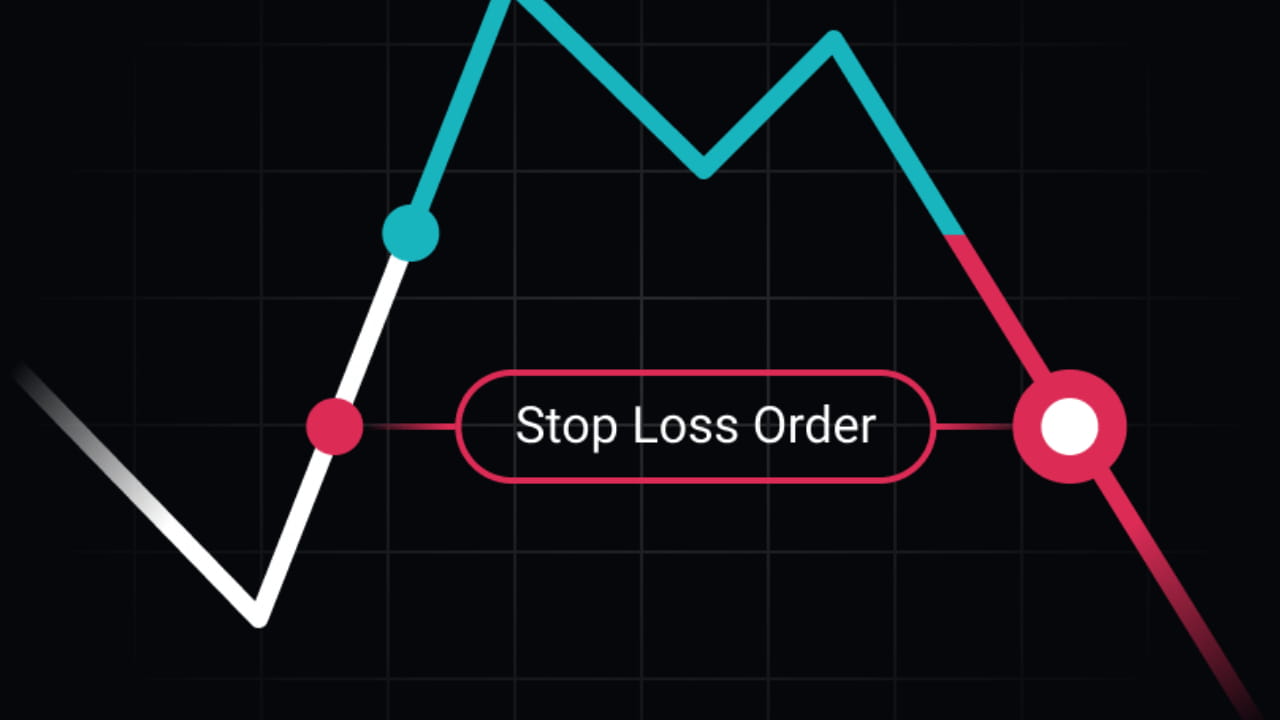
A stop-loss is an order that automatically closes a position when a specified price level is reached. For example, if a trader opens a long position on Bitcoin at $60,000, a stop-loss set at $58,000 will sell the asset if the price falls, limiting the loss to 3.3%. Without a stop-loss, a price drop below this level could lead to much larger losses, especially in the volatile cryptocurrency market.
In trading, a stop-loss minimizes risk. Traders set it based on market analysis: support levels, indicators, or a percentage of the entry price. This capital management tool prevents emotional decision-making. Analysis of thousands of trades on exchanges like Binance shows that traders who actively use stop-losses reduce their average loss by 40% compared to those who trade without them.
ASCN.AI analyzes on-chain data and market metrics to accurately determine stop-loss levels. You can request from the assistant: 'Identify key support levels for BTCUSDT on the 1H timeframe considering current volumes.' The response will show the market structure, RSI, and volumes, helping to set the stop-loss below support to avoid false triggers.
Main Types of Stop-Losses for Cryptocurrency Traders
A standard stop-loss triggers at a fixed price. For instance, a trader buys Ethereum at $3,000 and sets a stop-loss at $2,850—the order executes when the price breaks that level. This type is suitable for spot trading, where volatility is lower.
A trailing stop-loss follows the price, locking in profits. When the asset rises by 5%, the stop-loss moves up by the same amount. In cryptocurrency, where trends can last for hours, a trailing stop allows traders to capture movement without exiting too early. For example, during the SOL rally from $100 to $150, a trailing stop at 5% would protect 20% of profits during a pullback.
A guaranteed stop-loss takes into account spreads and fees, executing precisely at the specified price. This is particularly useful in cryptocurrency futures trading, protecting against gaps when prices jump overnight. ASCN.AI integrates data from CEX and DEX to calculate: a request like "Compare spreads for ETH on Binance and Uniswap, suggest a guaranteed stop-loss for a long position." The assistant will provide levels considering liquidity, reducing the risk of slippage.
Percentage-Based Stop-Loss
Traders risk no more than 1-2% of their deposit on a trade. With a capital of $10,000, the stop-loss is set so that the loss does not exceed $100-200. This rule helps preserve the account during a series of losses. In crypto, where news can cause losses of up to 20%, this approach prevents margin calls.
Technical Level Stop-Loss
Support levels—defined by the minimums of previous candles—serve as the basis for the stop. If the asset's price breaks this level, the trend changes, and the position is closed. Analysis shows that 70% of false breakouts return, so the stop is placed 1-2% below the level. ASCN.AI provides: "Analyze resistance and support levels for ADAUSDT on 4H, indicate zones for stop-loss." The response includes moving averages, volumes, and the probability of a breakout based on historical data.
How to Properly Set a Stop-Loss in a Cryptocurrency Trade
Determine the risk per trade: 1% of capital. Calculate the distance from entry to stop based on volatility—use the ATR indicator, where the stop is set 1-2 ATR below. For Bitcoin with an ATR of $2,000, entering at $60,000 would set the stop at $58,000.
Consider the market: in a bullish trend, the stop is above the candle's minimum; in a sideways market, it’s at the boundaries of the range. Test on historical data: backtesting shows that stops at 2% from entry in crypto trigger 60% of the time but preserve 80% of capital.
Exchange tools like Bybit allow combining stop-loss with take-profit. A risk/reward ratio of 1:2 means a stop at $100 loss and a take at $200 profit. ASCN.AI optimizes: "Suggest a stop-loss and take-profit ratio for a short position on XRPUSDT based on the current trend." The assistant will consider sentiment from Telegram and on-chain activity, providing scenarios with levels.
Calculating Stop-Loss Considering Volatility
The volatility of cryptocurrencies is 5-10 times higher than that of stocks. Use Bollinger Bands: set the stop below the lower band. For DOGE, with a band at $0.15 and an entry at $0.20, a stop at $0.14 minimizes false breakouts. Data from Glassnode confirms that in 2024, BTC volatility exceeded 50%, making ATR-based stops essential.
Mistakes When Setting Stop-Loss and How to Avoid Them
A stop that is too close catches noise: in crypto, a 1% fluctuation is normal, so set it 3-5% from the entry. A wide stop risks capital—limit it to 2%. Emotionally ignoring the order leads to manual closure with significant losses. Automation solves this: exchanges execute orders without intervention.
ASCN.AI warns about mistakes: "Check my strategy: long ETH at 3200, stop at 3100, target 3500. Assess risks based on on-chain data." The response will highlight whale movements and the probability of a decline, helping to adjust levels.
Stop-Loss Strategies for Different Market Conditions
In a trend, use a trailing stop to secure profits. When BTC rises from $50,000 to $70,000, the stop should be set 5% behind, capturing $15,000. In a correction, use a fixed stop at support: a breakout at $55,000 closes the position timely.
For scalping, use short stops of 0.5% with quick execution. In swing trading, set stops at key Fibonacci levels. Market analysis shows that combining with RSI (stop on overbought conditions) increases the win rate by 25%.
On DEXs, stop-losses are less frequent due to slippage, but ASCN.AI monitors: "Compare the liquidity of Uniswap pools for USDC/ETH, suggest a stop for arbitrage." The assistant integrates DEX metrics, reducing risks.
Stop-Loss in Combination with Take-Profit
Take-profit secures profits at resistance, while stop-loss limits losses at support. For a long position in LINK at $15, a take-profit at $18 and a stop-loss at $14 gives a ratio of 1:2. In 2024, such pairs maintained 65% of trades as profitable according to CoinMetrics.
Adapting Stop-Loss to News and Events
Before the BTC halving, widen stops by 10% due to volatility. ASCN.AI aggregates news: "Analyze the impact of halving on stop-loss levels for BTC, provide scenarios." The response with sentiment from Twitter and on-chain data will show risks, helping traders prepare.
Examples of Setting Stop-Loss in Real Cryptocurrency Trades
Trade on SOL: Entry at $140 after breaking $135. Stop at $132 (below support), take profit at $160. The market rose to $155, but the stop didn’t trigger, resulting in a 10% profit. Without the stop, a pullback to $120 would have wiped out the position.
Short ETH during a correction: Entry at $3100, stop at $3200 (above resistance). The price dropped to $2900, and the take profit was triggered with a 6% profit. ASCN.AI provided a signal: request “Technical analysis of ETHUSDT on 15M, levels for short with stop.” The response included KDJ and volumes, confirming the entry.
In a losing scenario: Long XRP at $0.60, stop at $0.57. A regulatory news hit triggered the stop, resulting in a 5% loss. Lesson: monitor sentiment. ASCN.AI prevents this: “Monitor news on XRP, alert me about risks to my position.”
How ASCN.AI Helps Optimize Stop-Loss in Trading
ASCN.AI, trained on Web3 data, provides real-time analysis for precise stops. Unlike universal models like ChatGPT that rely on outdated web data, ASCN integrates on-chain data, sentiment from Telegram, and exchange metrics. This reduces risks that general AI cannot address.
Example request for beginners: “Explain how to set a stop-loss for buying BTC at $65,000, considering 1% risk.” Response: “Calculate the stop at $64,350 (1.15% below). Support level is $64,000 based on MA50. Probability of breakout is 25% based on volumes. Use trailing at +3% for locking in profits.”
For traders: “Provide a scalping strategy for BTCUSDT on 5M: entry levels, stops, targets with RSI and MA.” ASCN will respond: “Long when RSI > 30 above MA20 (67,200). Stop at 66,800 (0.6%). Targets at 67,500/68,000. Volumes confirm the trend.” Such responses save hours of analysis, helping to enter positions timely.
A subscription to ASCN.AI for $29 a month replaces expensive platforms like Glassnode, providing personalized insights. Traders report that with the assistant, their win rate increases by 30%, as it aggregates data from over 50 sources. Start with a request about your asset — you’ll see why without specialized AI, crypto trading risks becoming a lottery.
For learning the basics of cryptocurrency, refer to trusted sources. The integration of AI in trading, as seen in AI crypto agents, simplifies analysis, especially in cases like Bitcoin.

Questions and Answers About Stop-Loss in Crypto Trading
Do beginners need a stop-loss? Yes, it protects against volatility. Start with a 2% risk per trade.
How can I avoid false stop-loss triggers? Place it 1 ATR below the level, considering the spread. ASCN.AI will calculate this based on data.
Is it possible to trade without a stop-loss? It's risky: 90% of losses come from emotions. An order automates the exit.
How does a stop-loss affect profit? It locks in losses early, freeing up capital for winning trades. A 1:3 risk-reward ratio can cover losses.