



- Русский
- English
- Português
Cryptocurrency Analysis as the Top Choice for Investment in 2026


about cryptocurrencies.
Cryptocurrency has changed significantly since 2017. The current market cap is approximately six trillion dollars, which is about the same as the GDP of the UK, and institutional investors hold almost 50% (42%) of the total supply of Bitcoin, indicating that this market has matured.
Why is cryptocurrency being treated as an investment opportunity today? Here are three reasons:
- 24/7 Availability.
Unlike stock exchanges that are open only during specific hours, cryptocurrencies are traded all day, every day. Think back to October 2024; if someone invested using an automated Arbitrage system, they would have made more profit from three trades in that day than from a month of investing through a stock exchange. During that time, Arbitrage spreads peaked at 40% for several hours after the price drop. - High Liquidity Level Compared to Major US Stock Exchanges.
Many cryptocurrencies, including Bitcoin and Ethereum, trade at volumes similar to large-cap stocks like Apple. Large decentralized exchanges (DEXs), for example, have daily trading volumes surpassing $2 billion. This gives investors ample opportunity to enter and exit trades large enough without suffering from excessive price slippage. - Data Transparency.
All blockchain transactions are transparent. All aspects of the blockchain process, from transactions to whale movement, to withdrawals from exchanges, are visible publicly. Services such as ASCN.AI are able to collect, analyze, and publish on-chain information, and develop an indicator of sentiment, and calculate funding rates in real-time. Therefore, everything that affects cryptocurrency movement can be reviewed and understood rapidly. Glassnode also indicates that by 2025, 68% of Bitcoin had not moved in more than a year - this is a much higher percentage than the same timeframe in 2017 when only 45% of Bitcoins were held for over one year. This increase in percentages shows how much more mature the crypto market is today compared to just a few years ago; investors are buying coins for long-term accumulation and thus decreasing volatility over time as well.
The volatility and risks associated with crypto markets can be easily mitigated.
Market volatility is not a reason to panic, it is simply part of the market. The flash crash on October 11, 2024, saw the market decline by approximately 35% with approximately $22 billion worth of positions liquidated during that time. Most people who were trading on leverage at the time of the flash crash felt the worst effects of the crash due to the highly-leveraged nature of their trading positions; however, those who bought Bitcoin and other currencies on the spot market generally only experienced a very small loss, if at all.
Here are a few simple rules that will help you to minimize your losses from cryptocurrency investments:
- Only invest in the spot market. The futures and leveraged markets are similar to lottery tickets; there is an extremely high risk that you will lose everything if the market moves against you when you are using leverage. Even a small amount of leverage could lead you to being liquidated if the market moves upward quickly.
- Diversify your portfolio by including liquid assets such as 60% Bitcoin and Ethereum, 30% from the top 10 altcoins and 10% of your portfolio in projects that have a real product with long-term potential. Diversifying your portfolio in this way will help to reduce the amount of pain you feel from losses when the market experiences drawdowns.
- Be sure to always watch for signals in real-time. The ASCN.AI platform takes into consideration all the possible factors that could cause an anomaly and compiles them together, and displays them to you in under 30 seconds, including; funding rates, whale movement, social media sentiment, and market anomalies. Traders who were able to monitor current price acts (Utilizing Arbitrage Scanner technology such as ArbitrageScanner) were able to take advantage of the "Flash Crash" Situation by Trading BTC at 5% - 10% Arbitrage Profits.
Here's a quick overview on other Cryptocurrencies that may be a good Investment for your Portfolio in 2026!
Bitcoin Market Dominance
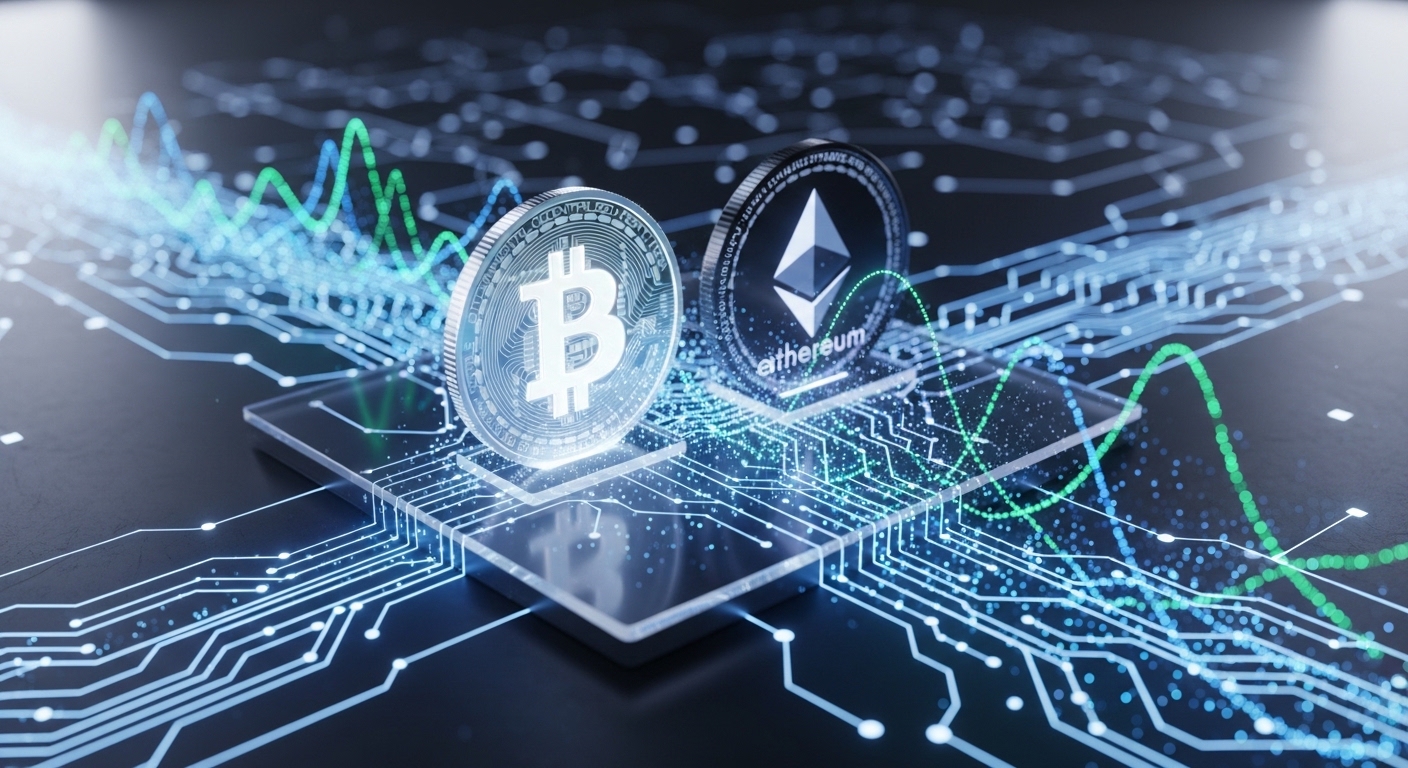
For quite some time, Bitcoin has evolved from a simple "digital gold" into becoming one of the largest macroeconomic indicators. The price of Bitcoin tends to rise significantly when the Federal Reserve (Fed) lowers interest rates, inflation increases, or the Financial System Faces Bank Problems. There is also evidence supporting the fact that all three events simultaneously drive up Bitcoin's price.
Looking at a small snapshot of BTC's pricing at the beginning of 2026, we have BTC Held at approximately 95K USD Range and approximately 70% of BTCs (over 2 Years and Mostly held by Large Investors or Institutional Investors). The 2024 halving event of BTC may also help to escalate BTC price awareness. Following the last halving (historically), Bitcoin tends to appreciate for a period of time after the halving due to a Reduced Supply of BTC (through reward reduction).
The emergence of Spot ETFs in the USA will likely also push Bitcoin value up. As of the first quarter of 2025, over 18 Billion USD in Institutional Money has been placed into Spot ETFs in the USA.
Geopolitical events around the World are continuing to be a good support for Bitcoin value to continue growing. Countries such as El Salvador and the United Arab Emirates (UAE) currently have Bitcoin in their official reserves, which is also likely to support the continued Demand for Bitcoin.
Taking into account the above-mentioned opportunities, it appears that Cheap Bitcoin is a good place to become a long-term crypto investor, as Bitcoin provides a strong base to build a 60% Allocated Portfolio for Arbitrage Trading due to the High Liquidity associated with BTC. The opportunity presents itself with price discrepancies that reach 2% to make up to 12% net profit per month without leverage.
Ethereum is at the center of the DeFi ecosystem, with thousands of dApps and smart contracts supporting it. By 2026, Ethereum (ETH) expects to have more than 4,000 dApps and a total value locked (TVL) of about $120 billion.
- DeFi and NFTs — The most significant protocols, such as Uniswap, Aave, Compound, and MakerDAO, heavily rely on Ethereum, with ongoing demand for it.
- Proof of Stake — After "The Merge," Ethereum's energy consumption was reduced by more than 99% and is now attracting institutional investors and ESG players.
- Layer 2 Solutions — Arbitrum, Optimism, and Polygon will provide a 50-100x speed increase over the Ethereum network, while having fees as low as a few cents and supporting up to 10,000 transactions per second.
As of October 2024, ETH was experiencing price discrepancies of 8% between centralized and decentralized exchanges, with arbitrage successfully performed on ASCN.AI. ETH should have a position in your portfolio of approximately 25-30% as it generates a moderate return with lower risk compared to other digital assets.
Altcoins: Cardano, Solana, Polkadot, and many others are available.
While altcoins typically provide higher returns, they also carry higher risk. Therefore, you should do your due diligence.
Solana (SOL) has high throughput, with approximately 65,000 transactions per second and very low fees, and is emerging as a platform for meme coins and NFT projects. The TVL for Solana has surpassed $8 billion, and the Solana Foundation is actively engaged in limiting validator centralization. A good projection for the end of 2026 is approximately 300-350, assuming the market continues its bullish trend.
The Cardano ecosystem (ADA) uses a scientific method to create smart contracts, and thus focuses on security and scalability as a priority. Currently, the price is $0.80 to $1.20 and is expected to grow in the coming years.
Polkadot uses parachains to allow projects to interact across multiple chains, and its current price is $8 to $12 with slow progress.
Chainlink (LINK) is the leading provider of decentralized oracle technology, connecting external data with the blockchain. Current prices have stabilized between $18 and $25 and have a low risk of loss.
Sensible Advice: Never invest more than 10% of your total investments into any one altcoin; you should always use ASCN.AI to confirm information before making an investment.
Global Economic Regulation on the Cryptocurrency Market in 2026
Legal Regulation Effects on the Cryptocurrency Market
Legal regulation of the cryptocurrency market has become much clearer by 2026, with Europe having introduced the MiCA (Markets in Crypto-Assets) and the US and Asia putting in place regulatory frameworks for the operation of spot ETFs and rules for the exchange of cryptocurrencies, respectively. KYC and AML checks now form part of every transaction conducted on major exchanges, and this has led to tighter investor protections being implemented for institutional investors by the exchanges as a means to maintain these protections.
The rate of taxation on profits made from trading in cryptocurrency ranges from 15% to 30%, which provides more transparency to individuals in the sense that they do not have to be concerned about whether or not they will have to pay taxes on profits made in the future.
The introduction of strict licensing requirements for projects and ICOs has reduced the amount of fraudulent projects and increased market confidence among investors.
While there remain strict regulations against cryptocurrencies in the specific countries of China and India, the overall trend towards legalizing and institutionalizing cryptocurrency is continuing in most countries.
Economic Factors and Trends in the Marketplace
The crypto market is becoming more integrated with the traditional financial industry, and it is highly correlated with several of the largest economic indicators, including:
- Federal Reserve monetary policy — there is a correlation between falling interest rates and cryptocurrency price increases. For example, the price of Bitcoin rose from $60K in December 2020 to over $110K in December 2021 after a 75-basis-point interest rate cut.
- Inflation — once inflation rises above 3%, people start turning away from traditional methods of saving (i.e., savings accounts) and towards cryptocurrencies.
- Geopolitics — the sanctions imposed on Russia have accelerated the adoption of P2P crypto transactions as a method for cross-border currency transfers.
For this reason, the use of crypto-assets is a great diversification and insurance tool for global portfolios.
Comparative Return of Crypto-Assets and Traditional Investments
Data for this comparison is based on 2020 through 2025:
| Crypto (BTC/ETH) | S&P 500 Index | Bond index (10-Year Treasury Notes) | |
|---|---|---|---|
| Average return per annum | ~180% | ~12% | ~2.5% |
| Volatility (standard deviation) | ~65% | ~18% | ~5% |
| Liquidity | Very high, available 24/7 | Very high, available only during the working hours of the stock exchanges | Not available |
| Minimum investment | $10 | $1 | $100 |
| Regulation | Partially regulated | Highly regulated | Highly regulated |
| Inflation protection | Yes | Partially | No |
| Correlation with traditional markets | 0.4–0.6 | 1.0 | -0.3 |
Overall, cryptocurrencies provide significant income potential, but one should be ready for potential price declines of 30% to 50%. Traditional stock investments are good for long-term investors, while bonds can be viewed as a means of capital preservation. When deciding which method to use to achieve a capital return in a short period, cryptocurrency is by far the better overall option compared to traditional stock and real estate investments based on stability and moderate capital growth.
Investment Strategies and Tips for 2026
Diversification and Risk Management
If you are ready to invest in cryptocurrency in 2026, you should use a simple three-tier portfolio model:
The first tier (60%) will consist of a 2:1 ratio of BTC to ETH, the basic building blocks of crypto that are least likely to experience sharp and sudden drops in price.
Tier 2 Assets (30%): The top ten Altcoins & Assets with Proven Products (with Some Liquidity) are SOL, ADA, DOT, LINK, MATIC, AVAX, UNI, AAVE, ATOM, and APT.
Tier 3 Assets (10%): All Risk Assets Without Proof of Product or Liquidity with High Growth Potential and A Noticeable Degree of Risk.
Simple Risk Management Guidelines:
- Only Invest Money That Would Not Affect Your Life If Lost.
- Take Partial Profits—it Helps Preserve Your Earnings In Case Of A Market Spike.
- Use Stop-Losses On Risky Assets And Maintain Basic Assets For The Long-Term.
Yes, Rebalance Your Holdings At Least Once Every Quarter; Sell Items That Have Increased In Price And Buy Items That Are Underpriced.
Clients Who Followed These Steps Limited Their Maximum Losses During The October 2024 Flash Crash To 25%, While The Average Market Loss Was Just Under 35%.
Selecting A Platform For Trading And Storing Your Cryptocurrencies
Exchange Options:
- Binance: A large Exchange With Many Different Cryptocurrencies And Trading Pairs With Low Fees But Very Strict Regulations In Some Areas.
- Coinbase: A Fully Regulated And Insured Exchange For Safety; However, Its Fees Are Higher Than Other Exchanges.
- Bybit: Has Low Fees And Is A Popular Exchange Among Traders; However, It Lacks Volume And Liquidity Compared To The Market Leaders.
- Kraken: A Reliable Exchange With Clear Explanations; However, Its User Interface Is Less Intuitive Than The Other Exchanges.
How To Store Cryptocurrencies?
- Hot Wallets (Meta Mask, Trust Wallet, Phantom) Are Convenient For Small Transactions And Quick Transfers Of Funds.
- Cold Wallets (Ledger, Trezor) Are The Most Secure For Long-Term Storage Since The Private Keys Are Kept Offline And The Only Expense Is The Cost Of The Wallet Device.
- Exchange Wallets Are Good For Trading Purposes But Have High Risk Of Hacking And Increased Regulatory Compliance Issues. Therefore, All Other Funds Necessary For Daily Trading Should Be Kept On An Exchange Wallet.
My Personal Life Hack: To mitigate my risk, I will maintain a 70% cold storage wallet, 20% hot wallet, and a small portion (10%) on exchanges for active trading.
Forecast and Expectations for the Crypto Market in 2026
According to JPMorgan Chase's forecasts, Bitcoin (BTC) is estimated to reach $150,000 if the trend continues through 2026. ARK Invest anticipates BTC will reach $200,000 by 2027. Additionally, Bloomberg Intelligence now anticipates that the total market cap of crypto will rise to $5 trillion.
Briefly, the three scenarios below:
- Base Case (60% probability): BTC will reach a price of between $120,000 and $150,000, Ethereum (ETH) will reach a price of between $8,000 and $10,000, and the overall crypto market cap will reach between $4 trillion and $5 trillion, with steady growth throughout the period.
- Bullish Scenario (25% probability): The FOMC will begin to cut rates sharply, resulting in a significant capital influx into the crypto market via ETFs. Therefore, BTC will rise to at least $200,000 while ETH will reach between $12,000 and $15,000 and many altcoins will increase in value by 5 to 10x.
- Bearish Scenario (15% probability): There will be a recession combined with an increase in regulatory pressure resulting in extreme price drops in BTC, which will likely drop to between $60,000 and $70,000 and ETH will likely decrease to around $3,000, resulting in an accumulation phase of about two years.
Personally, I will favor this base case as it offers me both a stable profit and a lower risk than either of the other two scenarios.
Frequently Asked Questions Regarding Investing in Cryptocurrency in 2026
What can I do to begin investing in cryptocurrency with little to no risk? To start investing with minimal risk, I recommend initially investing $100 to $500, which you can afford to lose, into both BTC (70%) and ETH (30%) using the spot markets and not using leverage. After acquiring BTC and ETH, be sure to take a few months to get used to the volatility of the price, which will then allow you to make a decision regarding increasing your holdings. To start investing in cryptocurrency, you can create an account with either Binance or Coinbase to pass KYC verification and purchase your digital assets directly from P2P exchanges or through credit/debit cards.
Transfer to a cold wallet only all amounts beyond $1,000; avoid touching those currencies that are hard to explain what they are in less than a few sentences (memecoins); leverage your position in the future.
The following are good entry-level cryptocurrencies: in the beginning, concentrate on BTC and ETH. Then, as you become comfortable, you may want to look at SOL, LINK, MATIC, which are all solid projects and have robust ecosystems.
$500 = Hot wallets. $500 - $5000 = Regulated exchanges. $5000 or more = Cold wallets. Keep all seed phrases off-line, preferably in multiple locations.
The easiest way to react to market fluctuations of 30-40%: do NOT panic. You should view these major drawdowns as buying opportunities, for example, through arbitrage trading via ASCN.AI.
Expert View: How Crypto Investment Will Change by 2026
"Cryptocurrency is more than just a speculative investment; the industry now has large institutional players, meaningful patterns, and an established infrastructure. But, many people continue to play by the old 2017 standards of chasing hype and leveraging. Today, however, the tools for fast analysis have changed. ASCN.AI enables you to receive a report with on-chain data, sentiment, and whale movements within 30 seconds. Those who let emotions dictate their actions lose; those who rely on data win."
The Psychology of Investing: How to Remain Calm and Make Rational Decisions
Most investors lose money because of emotional decisions (FOMO, panic, impulse trades). There are three techniques to help yourself control your emotions:
- Do NOT make a spur-of-the-moment decision. Wait at least 24 hours; especially if there is a large spike in the price.
- Keep a trading journal, and write down your feelings at the time of buying/selling.
- Make decisions based on data, not gut feelings: analyze on-chain data, sentiment, and funding rates via ASCN.AI.
Most investors will sell when they see the market decline by 20%. However, based on experience, it is normally a temporary correction; hold your position.
How ASCN.AI Helps You Make Money in Cryptocurrency

ASCN.AI provides you with a complete report on each token within 10 seconds: it includes tokenomics, on-chain activity, sentiment, and risks. It will allow you to identify "pumps" and "traps" before they occur, thereby preventing your losses.
For example: in October 2024, a client of ASCN.AI used the service to avoid purchasing a token after receiving a warning that there was a transfer limitation for the token, and a high concentration of tokens in the market. This client's warning saved them money. Additionally, during the flash crash, the same client was able to use ASCN.AI to take advantage of arbitrage spreads as high as 8%, earning them a 6% profit on one transaction.
Tips on Utilizing ASCN.AI:
- Request a comprehensive report prior to making a token purchase and avoid any project that has multiple red flags.
- Be vigilant monitoring your portfolio to immediately detect any warning signs.
- Utilize ASCN.AI to make arbitrage trades when the spread is greater than 2%.
- Never hesitate to ask the ASCN.AI assistant questions; it will assist in understanding the market.
ASCN.AI will never replace your own judgment but is merely a tool to improve your decision-making.