



- Русский
- English
- Português
Cryptocurrency Portfolio Development 2026: Creating Your Own Diversified Portfolio and How to Manage It


about cryptocurrencies.
The year 2026 brings with it an ever-changing world of digital currencies. In addition to selecting your coin(s), the underlying principle of developing a safe crypto portfolio is being able to identify and manage risk, diversify assets, and use information in order to analyze complicated markets.
What is a Cryptocurrency Portfolio?
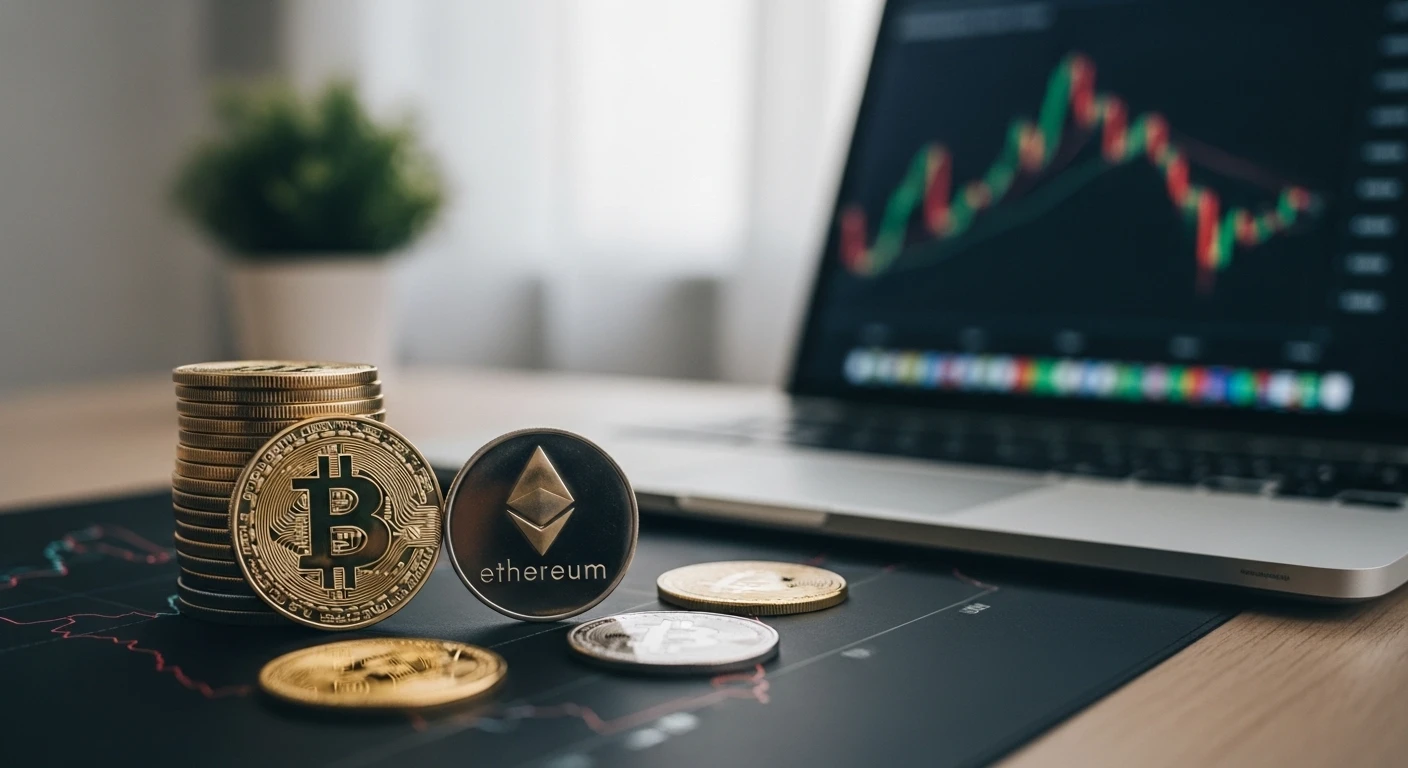
A cryptocurrency portfolio is a collection of digital currencies (i.e., coins and/or tokens) designed to achieve a specific investment objective. A cryptocurrency portfolio allows you to spread your exposure across a generally volatile market, which may be characterized by risky/low-return characteristics.
Greater diversification decreases the effects that an individual coin will have on your overall portfolio as they typically experience major price changes.
The combination of traditional investment methodology and cryptocurrency-specific factors such as blockchain technology, the utility of tokens, and the sentiment of the market is critical when developing your portfolio in 2026.
What are the Current Trends in the Cryptocurrency Market for 2026?
The current state of the Cryptocurrency market is that it is much more mature than in the past; however, this is not to suggest that it is predictable.
The recent growth of institutional participation, the development and growth of DeFi platforms and Layer 1 blockchain (i.e., Ethereum, Solana, etc.), the growth of NFT (non-fungible tokens) markets, and the continued growth of tokenization of traditional assets are opening up new investment opportunities.
In fact, research suggests that portfolios that contain a total of between 23 and 61 coins will best balance risk and growth potential.
Basic Terminology & Concepts
To create an effective portfolio and successfully manage it, it is important to understand the basic terminology and concepts of digital currencies, such as:
- Coins: Native currency to a blockchain (e.g., Bitcoin).
- Tokens: Asset created on top of existing blockchain.
- Diversification: Spreading your exposure.
- Volatility: Level and range of historical market price fluctuations.
- Market Capitalization: Total value of all coins or tokens (current supply x price per coin) of a particular digital currency.
Optimal Portfolio Construction
The optimal number of cryptocurrency assets in a cryptoportfolio will be 17 to 41 core assets, given that portfolios with these ranges strike the right balance between return and risk.
The total number of individual cryptocurrency assets — coins and tokens — should fall within the range of 23 to 61.
When there are not a sufficient number of assets in the portfolio, increased volatility will be evident; conversely, too large of a number of assets will cause a significant reduction in total potential return and could complicate management.
ASCN.AI has verified through their research that portfolios that consist of 17-41 assets are proven to yield the most favourable results. By diversifying between 17 to 41 assets, investors reduce volatility since they are distributing risk across multiple projects.
“Based on our historical experience, we have found that portfolios with 17 - 41 assets tend to strike an optimal balance between expected growth and tangible and manageable risk.”
Why You Should Diversify
When investing in a portfolio of cryptocurrency assets spread over 17 to 41 separate assets, individual project underperformance is unlikely to have a major detrimental effect on overall portfolio performance, as long as the assets in the portfolio consist of a balanced mix of liquid, large capitalization coins (e.g., Bitcoin or Ethereum) and potentially increasing capitalization tokens.
Importance of Coin-Token Balance
The typical cryptoportfolio has a target balance of 50-60% coins and 40-50% tokens, which represents a comfortable trade-off between relative stability and potential for growth.
It is also important to continue actively monitoring the tokenomics of each asset and fundamental metrics related to the project as you will need to make timely adjustments to the make-up of your portfolio as you adapt to marketplace changes.
Understanding Risk vs. Return
There are many risks involved in investing in cryptocurrency. Some of these risks are:
- Market Risk: Uncertainty surrounding the price of an asset due to the overall market or investor sentiment as well as external forces.
- Liquidity Risk: Uncertainty regarding whether or not, as a seller, you can complete a trade promptly and without causing a significant change in the price of the asset.
- Smart Contracts Risk: This refers to the potential for vulnerabilities in the decentralized finance (DeFi) protocols or blockchain applications.
Risk Assessment Categories
Regulatory risk is associated with the evolving laws and regulations; operational risk is associated with the theft of digital assets on exchanges or the loss of users’ private keys or the failure of the underlying technology of the exchange itself or underlying assets.
Managing Risk Within Asset Class Ranges
To control risk, an investor must adhere to the recommended limits placed on the number of different assets in a portfolio and allocate toward well-researched projects, incorporating the use of advanced analytics, including ASCN.AI tools, to evaluate on-chain sentiment and risk metrics.
As an investor rebalances their portfolio periodically (e.g., every quarter), the investor will remain in line with current market dynamics as well as the investor's risk tolerance.
A combination of analytical tools and periodic rebalancing will assist in mitigating risk.
The content here is for educational purposes, not for use as investment or financial advice from a licensed financial professional.
How to Calculate Returns in the Volatile Crypto Market
In order to accurately forecast investment returns in the volatile crypto market, an investor must consider past price history, project fundamentals, and macroeconomic issues.
An investor should use risk-adjusted return measures (Sharpe Ratio) to allow for realistic expectations of volatility when investing in crypto.
Investment Strategies and Tools
- DCA (Dollar Cost Averaging): Investing the same dollar amount in the market at regular intervals and reducing emotion-based decisions caused by the volatility of the markets.
- Rebalancing: Adjusting asset weights periodically to ensure a target asset allocation and proper risk management.
Prominent Exchanges and Platforms
There are several global exchanges, including Binance, Coinbase, and Kraken, that offer a large number of digital assets, excellent liquidity for transactions, and advanced security features.
Using a hardware wallet (such as Ledger or Trezor) for long-term storage is recommended while hot wallets that are secure are recommended for active uses.
Use of Analytical Data and News

Real-time data, on-chain analytics, and AI-driven tools (including ASCN.AI) allow investors to identify both risks and opportunities proactively.
The timely monitoring of news will enable timely responses to events that impact the market.
Portfolio Construction in 2026
Layer 2 scaling solutions, DeFi platforms, and using AI and blockchain will emerge as promising sectors.
When evaluating new assets, investors should evaluate the team of developers, the tokenomics of the project, and engagement by the community.
Impact of Market Trends and BTC
BTC continues to dictate the direction of the entire cryptocurrency market.
The overall market dynamics are often driven by price movements of BTC which directly affect portfolio performance.
FAQ
How do I decide how many cryptos to include in a portfolio?
The optimal number of crypto assets to hold will range between 23-61 to balance risk distribution and manageability.
What is the difference between crypto tokens and crypto coins?
Coins are the cryptocurrencies of a specific blockchain that can be used as currency as well as a store of value.
Tokens are built on existing blockchains and represent specific rights, utility, or governance functions.
What are the most significant risks?
The most significant risks associated with cryptocurrency investments are high levels of volatility and impending regulatory changes.
Conclusion
Many qualified and experienced investors can become susceptible to taking on excess risk by investing too heavily into volatile tokens, failing to diversify holdings, and overlooking important security measures.
Implementing a diverse portfolio, performing strategic rebalancing, and using analytical tools for risk control are key elements for long-term success.
Best Practices for Safety
- Use cold wallets and hardware devices for long-term storage.
- Enable two-factor authentication on exchanges and services.
- Avoid phishing websites and suspicious links.
- Use AI monitoring tools such as ASCN.AI.
How AI Agents and No-Code Development Systems Work to Help You Earn Using ASCN.AI
Businesses and investors using ASCN.AI can use artificial intelligence-powered assistants without requiring programming experience.
These assistant agents analyze on-chain and off-chain data, evaluate market sentiment, and track trading signals.
AI tools can automatically identify arbitrage opportunities between exchanges and detect emerging trends.
Case Study: SAR
During the unexpected collapse of Falcon Finance (FF) in early 2026, ASCN.AI agents alerted multiple users to switch their holdings to stable currencies.
The use of data-driven management provided users with a significant advantage compared with emotional trading decisions.
Summary
By 2026, investors must maintain a diversified portfolio of 23-61 assets while carefully managing crypto-specific risks.
Combining diversification, strategic asset allocation, AI analytics tools, and consistent portfolio management will help reduce risk and improve long-term performance.