



- Русский
- English
Long and short in cryptocurrency: what they are and how to use them — ASCN


about cryptocurrencies.
The crypto market isn’t just about grabbing coins and hoping they moon. Modern traders make money both ways — when prices go up and when they tank.
That’s where long and short positions come into play. These two concepts are the foundation of almost every active trading strategy — from simple spot deals to complex leveraged futures.
Before diving in, it’s worth checking out ASCN.ai — a tool that can answer pretty much any crypto question you throw at it.
Let’s say you’re curious which coins are currently being sent to centralized exchanges.
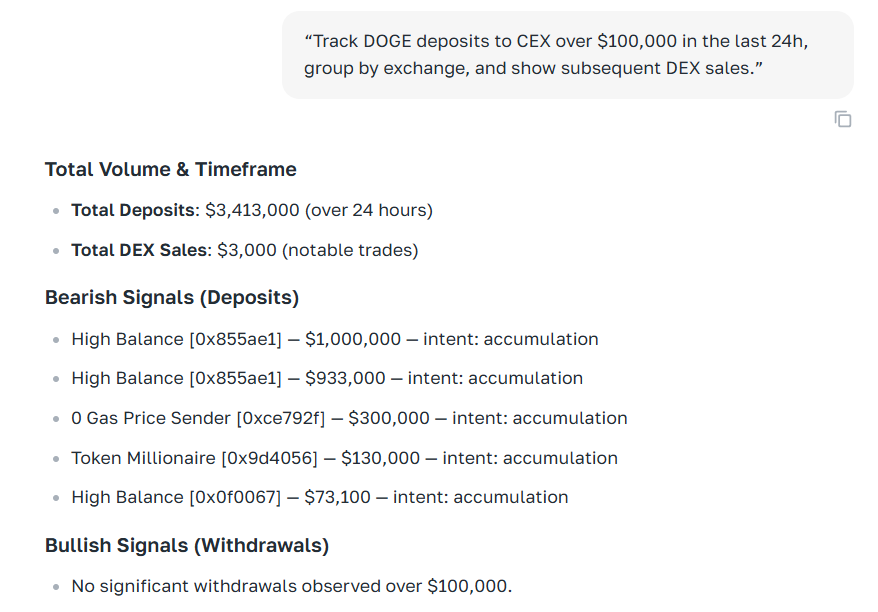
Within seconds, ASCN.ai lays it all out — deposits, outflows, and likely next moves. That kind of data can easily tip the scale when you’re deciding whether to go long or short.
Whether you’re just starting out or already trading full-time, ASCN quickly becomes your secret weapon.
What Long and Short Mean in Crypto
Let’s clear up the basics before things get messy.
In trading — not just crypto, but any market — there are two opposite bets: long and short. Two sides of the same coin. One’s a bet on growth, the other on decline. But let’s unpack what that really means.
Going Long — Betting on Growth
A long position means you’re buying an asset expecting it to rise.
Example: you buy Bitcoin at $100,000 and hope to sell at $105,000. That $5,000 difference is your profit.
You can go long not just through spot trading but also with futures using borrowed funds — leverage. That boosts potential gains but cranks up the risk too.
Going Short — Betting on a Drop
A short position works the other way around: you profit if the price falls. Sounds weird at first — how do you make money when an asset’s getting cheaper?
Here’s the trick. You borrow the asset from the exchange, sell it at the current price, then buy it back cheaper later and return what you borrowed. The difference stays in your pocket.
Example: you short ETH at $4,000. The price dips to $3,800. You buy it back and pocket $200 per coin.
That’s shorting in action — your friend when everyone else is just “hodling” through the bear market.
How Traders Profit from Market Swings
It all comes down to reading the market.
If the trend’s bullish — traders go long. If the market’s tanking — they short.
Here’s the basic logic:
-
Price rising → open a long
-
Price dropping → open a short
-
Sideways market → wait for a breakout or set orders in both directions
Pro traders sometimes even hold both long and short positions at once — a form of hedging to protect against sudden moves. (We’ll touch on that again in the FAQ.)
Real Trading Cases: BTC and ETH
Let’s look at two examples from recent years.
BTC Short (2025):
In June 2025, Bitcoin hovered near $108K. Then came headlines about rising tensions in the Middle East — the price dropped to $104K in a day.
Traders who shorted with 20x leverage walked away with over 80% profit in just hours.
ETH Long (2025):
A month later, Ethereum surged nearly 60% after record inflows into ETFs and a wave of retail optimism. Price jumped from $2,400 to $3,800 in under a month.
Those who spotted the strength early and went long made a tidy profit — even without leverage.
The takeaway? Knowing how and when to use longs and shorts is what separates guesswork from strategy — even when the market acts completely irrational.
How Longs and Shorts Actually Work on an Exchange
Theory’s nice, but how does it play out in practice?
Opening a position isn’t just pressing “Buy.” There’s structure behind every trade — contracts, leverage, risk management.
What You Need Before You Start
To open a long or short, you’ll need:
-
An account on an exchange that supports derivatives (futures)
-
A wallet with stablecoins like USDT or USDC
-
A clear understanding of your direction and why
Big platforms like Binance also require KYC — without it, key functions stay locked.
Using Leverage: The Double-Edged Sword
Now for the fun (and dangerous) part — leverage.
It lets you trade with more capital than you actually have. Say you’ve got $100 and use 10x leverage — you’re effectively trading $1,000. Tempting? Sure. Safe? Not really.
The higher the leverage, the closer your liquidation level — the point where the exchange force-closes your trade at a loss.
New traders should stay under 3x leverage — and always set a stop-loss.
Spot vs. Futures — What’s the Difference?
Newcomers often ask: if I can just buy crypto, why bother with futures?
-
Spot: you buy the asset and actually own it. Buy ETH, and it’s yours.
-
Futures: you’re trading a contract tied to the price. You don’t own the asset — you’re just betting on where it’ll go. This allows shorting and leverage.
Closing a Position: Locking In Results
Once your trade is open, it’s live. To realize profit or loss, you must close it — manually or automatically.
-
Manually: hit “Close position.”
-
Automatically: set take-profit or stop-loss orders.
-
By liquidation: if your loss hits critical levels.
Example: you went long on BTC at $110K, set a take-profit at $112K, stop-loss at $108.5K.
When either price hits, the position closes automatically — no need to babysit charts all day.
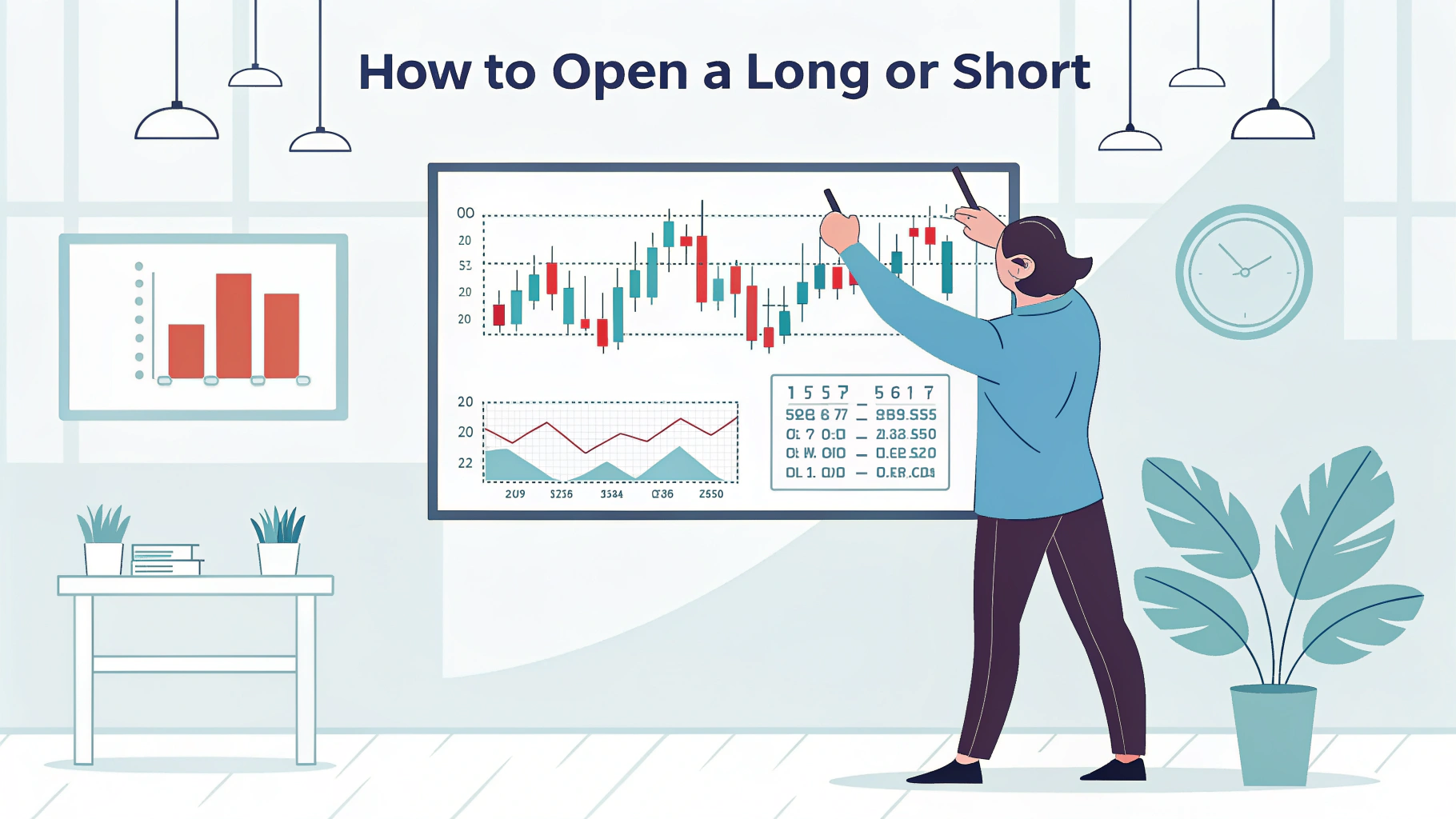
How to Open a Long or Short: Step-by-Step
Here’s a quick practical walkthrough for beginners using exchanges like Binance, Bybit, or OKX.
Step 1. Sign Up
Pick a reliable platform with a good track record.
Register using email or phone, confirm it, and complete KYC (upload an ID). That’s it.
Step 2. Choose a Trading Pair and Contract Type
Example: SOL/USDT.
Then pick your contract type:
-
USDⓈ-M Futures (settled in USDT/USDC)
-
Coin-M Futures (settled in BTC or other coins)
-
Perpetual Futures (no expiry — the most popular)
For newcomers, perpetual USDT contracts are easiest.
Step 3. Place an Order
Two main options:
-
Market order: opens instantly at current price — quick but not always optimal.
-
Limit order: you set the price and wait for the market to reach it.
Limit orders save money, especially on volatile assets.
Step 4. Set Stop-Loss and Take-Profit
Trading without protection is asking for trouble.
Always set:
-
Stop-loss: caps your loss automatically.
-
Take-profit: locks in gains once your target hits.
Once that’s done, you’re officially in the game.
The Perks and Pitfalls of Long and Short Trading
At first glance, going long or short seems like a money printer: buy, sell, profit.
But the reality’s more complex. Each side has its benefits and serious downsides — especially in crypto’s rollercoaster environment.
Why It’s Worth It
The best part? You can profit in any market.
Bull run? Go long.
Bear market? Short it.
Unlike passive HODLers, active traders don’t just wait — they act.
Other perks:
-
Flexibility — switch strategies fast.
-
Leverage — more opportunities even with small capital.
-
Hedging — shorting can protect your portfolio from drawdowns.
It makes you adaptable — as long as you don’t get greedy.
What Can Go Wrong
Crypto is no calm lake — it’s an ocean storm.
Prices can swing 10% in minutes. Risks are massive, especially with leverage.
Common rookie nightmares:
-
Liquidation: your collateral wiped out.
-
Volatility: sudden spikes hit your stop-loss even on a good setup.
-
Psychological pressure: fear, greed, revenge trading.
Imagine this: you open a 10x long, price dips 10%, and boom — liquidation. Deposit gone. Painful, but that’s trading.
Margin Calls and How to Avoid Them
A margin call is basically your exchange shouting: “Add funds or we’ll close your trade.”
It happens when your margin (collateral) drops below the maintenance threshold.
Avoid it by keeping leverage low, using stop-losses, and never betting your full balance. Simple but lifesaving.
Rookie Mistakes You’ll Want to Skip
Everyone slips up early on, but some errors are so common they’re practically universal:
-
Trading without a plan — “the chart just looked nice.”
-
Ignoring stop-losses — hoping for a miracle bounce.
-
Using oversized leverage.
-
Chasing news blindly.
-
Emotional revenge trading after losses.
Almost every pro trader has been there. The trick is to learn from others before it costs you money.
Strategies for Long and Short Positions
Now that you know the mechanics, how do you decide when to go long or short?
That’s where strategies come in — structured approaches that turn impulse trades into informed ones.
Trend Trading
Trade with the market, not against it.
If Bitcoin’s been rising for days on bullish news, look for long entries — not shorts.
Basic logic:
-
Uptrend → enter long on pullbacks
-
Downtrend → short on corrections
-
Sideways → wait for breakout
Trading with the trend puts probability on your side.
Technical Analysis — The Trader’s Toolkit
Technical analysis (TA) is what helps you read the charts instead of guessing.
Useful tools:
-
Support and resistance levels
-
Moving averages (MA, EMA)
-
RSI, MACD, Stochastics
-
Chart patterns like flags, triangles, double tops
You don’t need to be a chart wizard, but a solid grasp of TA filters out false signals.
Watch Volume and News
Same pattern — different outcome depending on context. Always consider:
-
Trading volume
-
Market news
-
Key events: halving, upgrades, lawsuits, ETF approvals
Example: a breakout with low volume? Probably fake. Add breaking news, and that setup becomes much more meaningful.
Managing Risk and Emotions
Making money in crypto is one skill. Keeping it — that’s another.
Most people blow up their accounts not from bad analysis, but from bad emotions.
Golden rules:
-
Risk only 2–3% per trade.
-
Take partial profits.
-
Review your mistakes.
-
Don’t trade when tired or emotional.
-
After a losing streak, take a break. Seriously.
Half of trading is psychology. Ignore that, and even the best strategy won’t save you.
Exchanges That Support Longs and Shorts
Not every exchange offers full long/short functionality. Some only do spot trading, others go deep into futures and leverage tools.
Binance
The heavyweight. Spot, futures, margin, demo — it’s all here.
User-friendly for beginners yet powerful enough for pros. Liquidity and reliability are unmatched.
Bybit
Originally built for derivatives — perfect for long/short trading.
No-nonsense interface, regular bonuses, optional KYC, and a handy demo mode. Great for futures-focused traders.
OKX
Known for advanced analytics and a sleek mobile app.
Offers USDT and perpetual futures, copy trading, and even a DeFi section. A bit busy interface, but very capable overall.
MEXC
The go-to for new altcoins and early listings.
Simple registration, often no KYC. Perfect if you like discovering fresh tokens before they hit the majors — though occasional bugs pop up.
Bitget
Popular in Asia and Europe, pushing hard into copy trading and futures.
Perfect for learning from pros or joining trading competitions. Great leverage tools too.
Fees and KYC Comparison
| Exchange | Min. Fee | KYC Requirement |
| Binance | from 0.01% | Required |
| Bybit | from 0.02% | Partial |
| OKX | from 0.02% | Required |
| MEXC | from 0.02% | Optional |
| Bitget | from 0.02% | Partial |
All serve the same goal — active trading.
Choose what fits your style: MEXC for altcoins, OKX for analytics, Binance for liquidity and stability.
FAQ — Common Questions About Longs and Shorts
Time to tackle the usual beginner questions — the ones that really matter when you’re getting started.

Can I open a long and short at the same time?
Yes. It’s called hedging. On most exchanges, you can open opposite positions in isolated modes — say, long in one margin account, short in another. A good move during volatile news cycles.
Which is more profitable: long or short?
Depends on the market. In bull runs, longs dominate. In bear phases, shorts win.
Profit doesn’t come from guessing direction but from sticking to a solid plan and managing risk.
Should I start with a demo or real money?
Demo trading is great for getting comfortable — but it doesn’t simulate real emotions.
Try live trades with small amounts ($10–20) once you grasp the basics.
Which coins are best for trading?
Stick to liquid, well-known assets:
-
BTC — least volatile, highly predictable
-
ETH — strong liquidity, perfect for TA
-
SOL, BNB, XRP — good for short-term plays
Avoid low-volume altcoins at the start.
Trading long and short is a skill — one that takes practice, discipline, and emotional control.
The good news? In 2025, access to these tools is easier and safer than ever.
And by the way, you don’t have to crunch all the numbers by hand.
AI tools like ASCN.ai can scan trends, volumes, and indicators — then lay out possible scenarios in seconds.
It won’t trade for you, but it’ll make sure your next long or short move is backed by real data, not guesswork.