



- Русский
- English
- Português
How the Ethereum Ecosystem Works: A Complete Guide

about cryptocurrencies.
"Ethereum isn't like traditional currencies such as Bitcoin and instead is an entire ecosystem creating new avenues of decentralized innovation. By learning how Ethereum functions, individuals and organizations (investors and developers) will be able to better understand and navigate through the future of blockchain technology with confidence."
What is Ethereum?
Ethereum is an open-source public blockchain platform that was created primarily as a way to utilize smart contracts and decentralized applications (dApps). It differs from Bitcoin in that Bitcoin is purely a monetary currency. Whereas, Ethereum allows developers to build and launch applications that can contain many different components of complex business logic.
Currency and Gas
ETH (also known as Ether) is the network's native token (currency). Within the Ethereum network, a payment system called "gas" exists, where gas is used to pay for processing transactions, and gas is also the reward that validators receive for maintaining and ensuring the security and integrity of the Ethereum network. Additionally, ETH can also be used within the Ethereum ecosystem as a digital asset or tokenized asset.
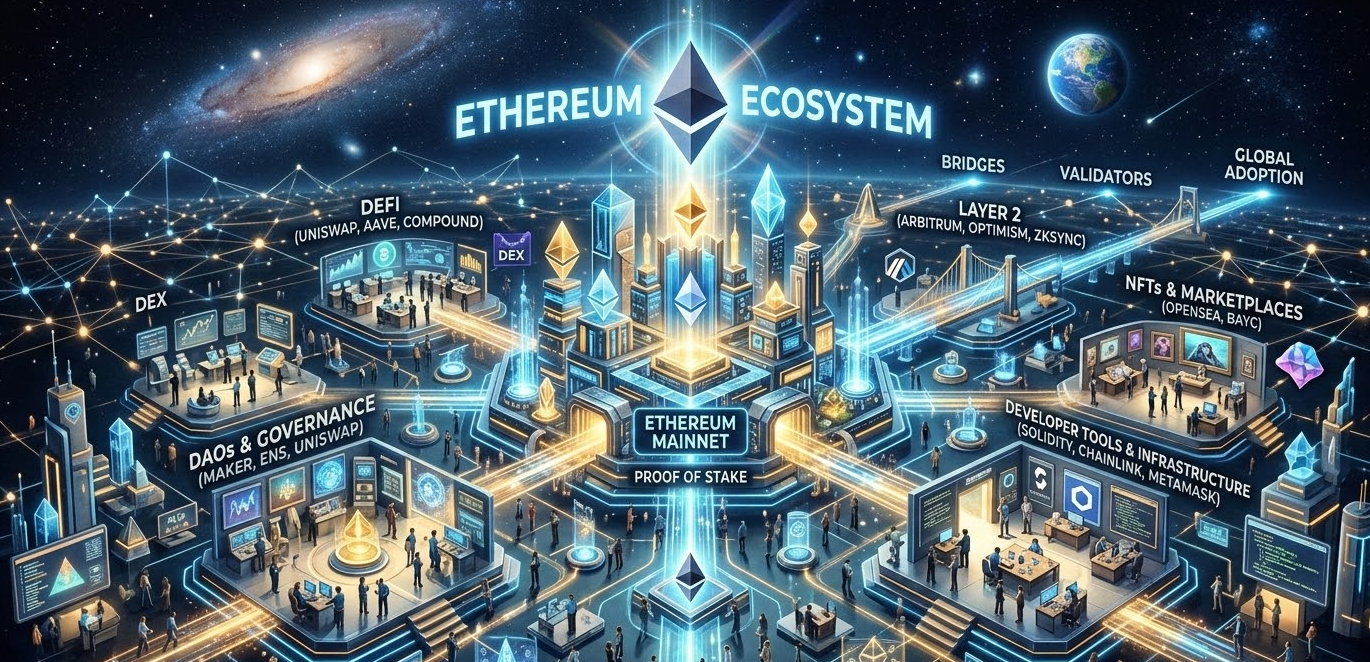
Platform Architecture
The architecture of the Ethereum platform is unique and multifaceted and takes advantage of many characteristics of centralized systems while addressing the issues and disadvantages of using centralized systems. Because of this, Ethereum has evolved into a fully functional alternative and supplier of many different types of decentralized solutions.
As such, Ethereum is widely recognized as being foundational to the advancement of decentralized financial alternatives (DeFi) and NFT technology and others within the blockchain industry. Overall, Ethereum provides the framework for all peer-to-peer applications and financial transactions performed without intermediaries, creating reliability and transparency.
If you're new to Ethereum or want to learn more about how blockchain technology works, our book How Blockchain Works: Your Step-By-Step Guide from Transaction to Analysis, is a good resource to the development of the Ethereum blockchain platform.
Historical Milestones
The Ethereum Platform was proposed by Vitalik Buterin at the end of 2013 and first launched in July of 2015. Since then the Ethereum platform has gone through the following milestones:
-
Frontier: The Ethereum platform was launched; however, smart contracts could not yet be run; Ethereum was primarily a means of sending ETH to other people (and sending ETH to a smart contract).
-
Homestead: The Homestead upgrade released some of the first major changes to the Ethereum protocol and added network stability.
-
Metropolis - Byzantium and Constantinople: The Metropolis upgrade added significant complexity to the Ethereum protocol and its network and made improvements in security and scalability, and increased the sophistication of decentralized applications (dApps).
-
Istanbul: The Istanbul upgrade was a major enhancement of performance and further development of interoperability with other networks.
-
Ethereum 2.0 (started in 2020): Ethereum began transitioning to a "Proof of Stake" consensus mechanism, which will make Ethereum more sustainable and scalable than traditional proof of work strategies. By transitioning to PoS consensus, Ethereum will reduce its energy consumption by at least 99.95%.
Thus, the Ethereum development roadmap depicts a commitment from developers to continue to work towards solving the "impossible" issues of scalability, energy efficiency, and usability.
"Ethereum's transition from Proof of Work to Proof of Stake will be a significant moment in the evolution of sustainable blockchain networks."
Ethereum's Ecosystem and its Key Components
The Ethereum blockchain is a database (distributed ledger) that securely stores every single transaction and every smart contract on the Ethereum platform using cryptographic algorithms. The Ethereum network operates on nodes, or computers running client software, to verify and propagate data on the Ethereum blockchain.
Transactions and Gas Fees
In terms of the overall capabilities of the Ethereum blockchain, it has the ability to conduct tons of different types of transactions - including both ETH transfers and smart contract transactions. Each time a transaction occurs on the Ethereum (or any other) blockchain, it consumes gas.
Gas is a fee that is paid to the validators for the computational resources consumed to execute the transaction they'll need to use computational power (resource) to validate and execute the transaction and thus earn gas. Gas is a fee that is paid in ETH for users to gain access to resources on the Ethereum network. The fee is used to prevent misuse of the network and to incentivise validators to properly validate each transaction. The price of the fee fluctuates based on the number of transactions being processed on the Ethereum network at any given moment.
Types of Networks
The following describes the different types of networks within the Ethereum ecosystem:
-
Mainnet - This is the public network where real transactions take place and have true monetary value.
-
Testnets - These are the test networks, such as Goerli and Sepolia, which were created for developers to build and test their applications without the risk of losing any money.
The architecture of Ethereum is designed in such a way as to provide decentralised consensus, transparency, and security, which makes it the underlying protocol for many blockchain projects.
The Operational Basics of Smart Contracts and Their Applications
Smart contracts are a type of code that is executed on the Ethereum blockchain. They automatically execute when an event occurs that meets the defined criteria. The smart contract can eliminate the need for an intermediary and will execute the terms/conditions of the contract at the point when the specified conditions are met.
Smart contracts are programmed using the Solidity programming language. The Solidity code is then compiled into bytecode and executed inside of the EVM (Ethereum Virtual Machine) environment.
Examples of use cases include:
-
Automated financial instruments, including lending and trading;
-
Decentralised autonomous organisations (DAOs);
-
The creation and management of tokens.
Ensuring the security of code is critical, as failure to do so can result in significant financial losses. Therefore, code auditing and strictly adhering to code templates that have been verified to function properly is critical.
Tokens and a Digital Asset Built on the Ethereum Network
Ethereum also enables different types of token standards. The major ones are ERC-20 and ERC-721.
-
ERC-20: This token standard is used most heavily in the area of Decentralised Finance (DeFi), project governance, and stable coins, among many other things.
-
ERC-721: This token standard represents a type of nonfungible token (NFT) and can represent anything from a piece of art to a collectible to virtual real estate, and much more.
Tokens on the Ethereum platform allow it to be more than just a platform for transferring ETH; they enable the growth of the entire digital asset ecosystem on the Ethereum network.
Layer 2 Solutions
Any operation that takes place on the Ethereum network comes with a gas fee charged in ETH. Gas is the payment for processing the resource required to complete the operation.
Of special significance are Layer 2 solutions such as Optimistic Rollup and zk-Rollup which significantly increase the throughput and decrease the fees and latency of executing transactions outside the Layer 1 blockchain.
Individuals can make transactions through a wallet where they set the gas price and limit. Transactions processed by validators are included in blocks and stored on the Ethereum blockchain. For details about how to save on gas costs and how AI can assist you in saving money with gas costs, please refer to our detailed report on the subject.
dApps and Related Concepts
dApps operate on the Ethereum blockchain and utilize smart contracts to perform the server-side processing of the dApp. dApps are commonly found within the following four categories of DeFi (decentralised finance) projects:
-
Lending, borrowing, and trading;
-
NFT marketplaces;
-
Gaming and social networking;
-
Identity and data storage services.
dApps support the concept of decentralisation by enabling users to hold and maintain ownership of their assets and verify their identity without relying on third-party services. dApps also create an opportunity for users to have access to financial and social services that were previously inaccessible due to traditional service models.
Technical and Usability Attributes
To perform transactions on the Ethereum blockchain, users must use wallets (programs or devices) to secure their private keys.
-
Hot Wallets: Hot wallets allow you to connect to the internet and are ideal for users who need.
-
Staking (Ethereum 2.0) — Staking is the act of locking in ETH in relation to Ethereum 2.0, for security purposes, as well as earning a reward on it.
-
Staking Requirements: A minimum deposit for a validator to stake is 32 ETH, but some people may not have that many ETH available for staking. There are various staking pools set up for people to pool their smaller amounts of ETH into.
Ethereum Security - Protecting Layers and Threats
Ethereum security consists of a decentralized network of nodes and uses complex cryptography; however, it should be noted that:
-
Smart contract logical errors can lead to massive losses to users.
-
Wallet owners may be victims of phishing attacks.
-
Due to congestion, network fees can be substantially high to conduct any activity.
Common sense should be used when conducting online transactions, as it is best to use a hardware wallet, be aware of audited smart contract code, and practice safe browsing.
Developers and the Development Tool(s)
Developers are the main contributors to the Ethereum ecosystem – creating protocols, programs and decentralized applications (dApps) – creating value for the user.
The primary tools include:
-
Solidity: The main programming language used to write smart contracts.
-
Truffle and Hardhat: Software application frameworks used to build, test and deploy dApps.
-
Infura and Alchemy: Software services that connect developers (through APIs) to Ethereum nodes.
-
MetaMask: The most popular wallet & browser extension used to interact with dApps.
Current Trends and Future Development
Ethereum has been facing “scalability” issues. This is causing issues with both time for processing transactions, as well as the fees (also referred to as gas fees) associated with conducting transactions. Solving the scalability issue on Ethereum is ultimately a matter of Layer 2 technologies, like Optimistic Rollups and zk-rollups. Layer 2 performs many operations off-chain and increases performance by many times. Layer 2 also saves costs and time in the process.
Ethereum 2.0 will make sharding available which will help improve scalability and reduce loads on the network. The original purpose of Layer 2 was to move the work off the main network.
NFTs and New Digital Assets on Ethereum
NFTs are one of the biggest sectors in the Ethereum network with integration from all angles, including things like collectibles, games, virtual real estate, and branding. As the standards for the types of NFTs keep changing so does the way people are able to interact with and use them on the Ethereum network.
Cross-chain Segmentation and Relationship with Other Blockchains
Cross-chain integrations between Ethereum and other projects are becoming more prevalent throughout the blockchain space. Cross-chain asset transfers are enabled through bridges to other chains which provide composability of DeFi and compatibility with Web3 infrastructures. Analysis of other cryptocurrencies (Hedera, Ethereum and BTC) provides insight into competing for the Ethereum network.
Frequently Asked Questions and Practical Advice
How to Use Ethereum for Smart Contract Development
There are several steps that can be taken to develop smart contracts using Ethereum.
-
Master Solidity
-
Use a development tool such as hardhat to test / deploy smart contracts
-
Use testnets such as Goerli to perform tests
-
Use a wallet (i.e.; MetaMask) with enough ETH for gas to deploy
-
Take a course / do tutorial follow multiple tutorials
Choosing a Wallet and Protecting Your Assets
Choosing a wallet is determined by three criteria: Safety, Ease of Use, dApp Usage. Always protect your seed phrase securely or you can lose your access to your wallet; never share your private keys, as this is how you will lose access to your wallet.
First Steps for New Users of the Network
-
Learn the basics about Blockchains and cryptocurrencies
-
Practice using the test Blockchain (testnets)
-
Do not use complicated leveraged strategies at first
-
Use reliable analytics tools (ASCN.AI) that produce valid and reliable information.
Conclusion and Summary
The Ethereum ecosystem is a complex ecosystem that incorporates decentralised innovations on blockchain technology using programmable smart contracts with thousands of applications and digital assets. Consistent updates and the addition of Layer 2 technologies will improve the scalability of the network and reduce the operational costs of the Ethereum Network.
Security, and the developer community's engagement are the two most important parts of Ethereum's success in continuing to grow. Having a strong understanding of the blockchain from start to finish and the dApps that live on the blockchain will give one the ability to take advantage of the many opportunities coming into the decentralised economy. Knowledge of the Ethereum ecosystem will give both investors and developers a competitive advantage.
Disclaimer
This information is intended for general use only and is not intended to create an investment decision. Investing in cryptocurrency carries a high level of risk. You should seek the advice of a competent financial advisor before making any financial investment decisions.