



- Русский
- English
- Português
Blockchain Games: How Gamification Works in the Crypto World

about cryptocurrencies.
A basic definition of blockchain is a decentralized digital ledger that stores all transactions permanently on countless computers worldwide. As a technology for gaming, blockchain solves one of the most significant issues in gaming, which is proving that a player's in-game assets belong to that player without having to place trust in centralized database servers.
Another significant aspect of blockchain gaming compared to traditional gaming is that in traditional games, all your equipment resides with the game developer. For example, if you purchased a rare sword in a traditional game, that sword would not exist as an actual item, just as a record in the game developer's database. If the developer decided to close down the game, the account associated with the rare sword would be invalidated, and you would lose access to that item's assets, with no recourse for recovery. On the contrary, blockchain games use Smart Contracts to allow the player to own and manage their in-game assets associated with their cryptocurrency wallet. Even if the game developer were to cease operations, the player would retain ownership of the associated in-game digital assets.
The four primary features of blockchain utilized within gaming include:
- Ownership Verification: All in-game items are unique NFTs (Non-Fungible Tokens) and have their own identifier. All the NFTs an individual owns are reflected in his or her associated wallet, even though some of those NFTs may have originated in other games.
- Transparency: Because all token issuances, major token holders, and total number of tokens that have been locked can be verified, this reduces the opportunities for fraudulent activities surrounding the issuance of new tokens.
- Cross-Platform Usage of NFTs: The concept allows NFTs to be used across different gaming platforms; however, development of standardization for implementing NFTs across multiple platforms is still in the development stages.
- DappRadar projects that, by the year 2025, blockchain gaming will account for approximately 28% of all Ethereum transaction volume and nearly 41% of the total transaction volume on Polygon; Therefore, this dramatic increase in Activity, along with increased interest from people wanting to maintain control over their digital assets, is not simply a passing fad.
Blockchain games can be categorized based upon their primary source of revenue, and how they manage their in-game items; there are many instances of Blockchain games blending several of these models together to offer a more complete player experience, but there are basic classifications that help navigate the current landscape.
The Play-to-Earn (P2E) Model: The Play-to-Earn Model has been around since the dawn of modern gaming; in essence it is like a job in which one receives tokens for achieving specific objectives or defeating their adversaries in battle. One well-known example is Axie Infinity, where players purchase three digital pets called Axies, pit them against each other, earn SLP (Smooth Love Potion) tokens by winning, sell those tokens for fiat currency, and potentially generate a decent monthly income. An example of this is that several players from the Philippines were earning as much as $1,500 per month in 2021; this amount was significantly higher than the average wage for Filipinos. The caveat to the P2E Model is that it is dependent upon the continued influx of new players into the community; if that influx ceases to exist, the price of the SLP token will essentially drop off a cliff (it dropped from around $0.40 to a fraction of a cent within a year).
NFT Games: Games that focus on collecting and exchanging uniquely identifiable cards, or other items within the game, typically offer players the ability to build their own decks (competing against other players) or provide players with an advantage over others by having access to superior game-play, as demonstrated by the card game Gods Unchained (whose cards are issued as NFT cards, have a history associated with them and, therefore, have actual collectibility), where certain rare items have sold for thousands of dollars. Profits, however, are dependent upon both the player's abilities, as well as the overall perceived value of the game in the market place.
Metaverses: Similar to virtual worlds like The Sandbox and Decentraland, your ownership of virtual land gives you the ability to build on that land, lease it to other players, and to host events and/or activities upon it. Snoop Dogg's purchase of land and subsequent concert attracted attention resulting in tripling the price of adjacent plots. Think of it as a Global Digital Real Estate Marketplace. GameFi Protocols - Combine DeFi and Gaming. You put your tokens into projects to earn money from them through rewards. For example, if you have an NFT tractor on the blockchain, it may create a yield of "Harvest" tokens, which can be sold or used to create new rewards. But if the Yield starts to overflow, the entire reward system comes crashing down.
Based on Blockchain Game Alliance data, approximately 67% of new games on the blockchain are created using a Hybrid Model, meaning gamers can play the game on the blockchain without paying to play but must purchase NFT assets or stake to earn rewards. This helps decrease barriers to entry for newcomers and increases the development lifespan of the games.
Gamification is the process of using gaming mechanisms and elements outside of the traditional gaming framework to drive and engage players more effectively. The use of Gamification in blockchain games has a different purpose: It is not only a motivation system. All actions performed in a Gamification-based Game are driven by an economic reason. In traditional Games, leveling up is designed to increase enjoyment. In Blockchain Games, the value of leveling up is determined by the value of what I can earn from each task.
Gamification provides three distinct types of motivation:
- Emotional Motivation. Gamification impacts the brain with utility by triggering the brain's reward system through participation in tasks or making progress toward completion. As these games grow in price and magnitude, the emotional impact multiplied exponentially. This provides gamers with a strong incentive to play consistently.
- Social Motivation. The Social Elements of Gamification can also have a powerful impact on individuals. Social elements, such as leaderboards and tournaments in gaming, create a competitive environment, encouraging gamers to invest in and compete with other players on a regular basis. For example, in Axie Infinity, a Global Leaderboard exists for all players, and the Top 100 players receive rewards for being in the top ranks. This creates an incentive for gamers to invest time and energy into creating their Axies and competing with one another daily. In the past several years, the gaming industry has begun to recognize the potential value of exchangeable currencies. This movement has been largely driven by the emergence of "microtransactions," which refer to small amounts of money spent through various means in-game or on the platform itself. In addition to maintaining the game's core function of providing entertainment for gamers, these currencies provide the ability for developers to generate a perpetual stream of income from gamers by way of ongoing engagement through gamification-based tokenomics.
There are a number of gamification mechanics that can be used in conjunction with ERC20 tokens in order to incentivize continued engagement of a gaming audience. Many of these mechanics are similar to those used in traditional game design, but adapted for use within the cryptocurrency ecosystem. Gamification adds an additional layer to the traditional functional design of a game, making them not only fun but also profitable endeavors.
Each time a player successfully completes a new challenge, they will also unlock new features. Examples of this process are seen throughout many blockchain games. For instance, in Splinterlands, high rated players will be rewarded with exceptionally rare ERC20 tokens.
The use of achievements and quests has been commonplace within gaming for a number of years, with daily prizes being a very popular means of encouraging players to log into the game each day, as well as fostering player interest. In Gods Unchained, players receive special bonuses for achieving consecutive wins.
Additionally, players are able to collect, produce, and sell game items. The sale of these types of in-game resources results in players receiving crypto tokens, which can be converted to fiat currency. Players' ability to earn rewards through a player's ability to stake tokens creates a close bond between players and their staking mechanic. At the height of Axie Infinity's success, the annual staking yield was approximately 120% APR, but the staking yield dropped as the price of Axie tokens dropped in value.
Players can earn tokens and rewards through leaderboard rankings. A monthly leaderboard allows players to track and compare their rankings, with in-game bonuses for players ranked in the top ten percent of their respective leaderboard. Players who invite friends to play (through referral programs) receive bonuses for doing so, which encourage continued participation by converting their peers into informal marketers of the game.
Lastly, seasonal gamers will often engage in limited-time events and participate in exclusive prize giveaways. Many of these events are designed to create a sense of urgency (FOMO) and to increase participation levels through incentivizing new forms of monetary exchange. The entire cycle seems to work in such a way that players will make investments using tokens, receive rewards via their investments, and continue making investments up until they no longer make enough rewards from their investments to sustain their activities. However, this cycle only works as long as there is a continuous inflow of new players coming into the game; if there isn't, the entire economy will eventually fail.
Blockchain games use gamification in order to enhance the gaming experience. There are many different game mechanics used in many blockchain games:
- Breeding Axie Infinity: In order to breed an Axie is necessary to have both a combination of AXS (Axie Infinity Currency) and SLP (Smooth Love Potion) tokens available. There are numerous very expensive Axies, some selling for upwards of $2,000. Unfortunately, excessive breeding resulted in large declines in the prices of Axies and ultimately caused a crash in the market.
- Land staking in The Sandbox: If you own plot(s), it is possible for you to stake NFTs or rent out plots to others, thus earning between 3-20% APR based on your proximity to activity.
- P2E Guilds use scholarships for NFT owners. To do this, the NFT owner will rent out the NFT to other players and split the revenue with the player earning 70% and the NFT owner receiving 30%. Many guilds such as Yield Guild Games have made investments of millions of dollars into the scholarship program.
- Randomness crafting in Illuvium: In Illuvium, players can craft items that offer a chance for rarity. Many players liken this to a lottery. Most people will end up losing money crafting these items, but a select few will hit the jackpot and win large amounts of money.
- Guild wars in Star Atlas: Guilds fight for control of different territories in space. The best guilds, where the top players are spending hundreds of thousands of dollars on NFTs, are also the guilds maintaining the best status within the game.
- Daily rewards with multiplier effects: If a player logs into the game each day for a certain amount of time, they will receive additional rewards. For logging in every day for seven consecutive days, players would receive their first multiplier (1.5x) of daily rewards, and as they continue to log in, the multiplier would increase (i.e., 3x, etc…)
Although there are many different mechanics that allow players to earn an income within the crypto space, these mechanics are not just gimmicky features for players to use for fun; they are carefully crafted ways of controlling the behaviour of players within the crypto economy. To the people in the know, play2earn (P2E) products offer consistent earnings once you understand how they operate; however, people who are unaware of this operation will experience significant losses with little opportunity to recover when their investments dry up.
The psychology and economics of gamification have both played a role in creating motivation to play. When a person plays with the knowledge that they will eventually earn something from playing, they will continue playing until they cannot see any more progress or earn any more money.
The Naavik study demonstrates that 78% of players play P2E games strictly for the potential to earn; if suddenly the payouts decreased, 80% would cease playing. Therefore, it is evident that players are reliant on the potential to earn funds.
Time (and money) invested in a P2E game can often keep players active even when they lose interest in the gameplay itself.
NFTs created a FOMO effect and limited-time events have increased activity in games like The Sandbox, where activity soared over 340% leading up to the event and then plummeted by 70% immediately afterward.
Social proof has proven to be a highly motivating factor for new players. The success of "top players" has attracted new players to the ecosystem and the economy of the projects.
P2E Games with loot boxes or gacha mechanics utilise gambling-like elements that provide players with low chances to win valuable items at a high emotional stake. Gamers often expend 4-6 hours per day trying to win back lost investments from games like Axie Infinity. Consequently, 65% of players will have exited within three months of starting the game.
If the balance between a player's income, gameplay, and ability to progress in a P2E game is disrupted, the project will be unsustainable.
The Economies of Blockchain Games
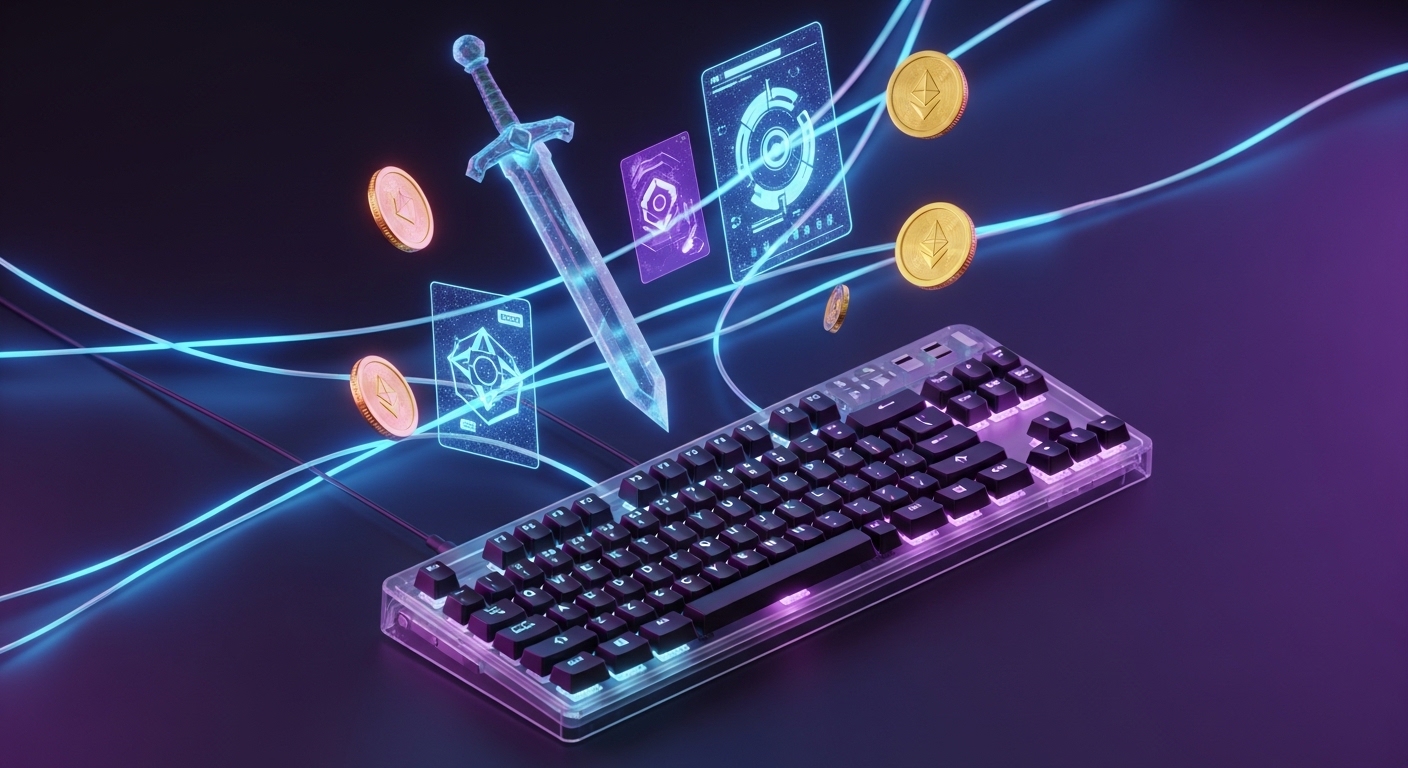
Three Elements of the In-game Economy
The blockchain economy of games is based on:
- Fungible Tokens (known as cryptocurrencies in traditional finance),
- Non-Fungible Tokens (typically referred to as NFTs), and
- Smart Contracts (or Decentralised Applications).
In Axie Infinity, two types of tokens exist. Firstly, the SLP (Smooth Love Potion) serves as a utility/reward token but is subject to significant inflationary effect. Conversely, AXS tokens are the governance token and limit your access to breeding and staking opportunities.
Additionally, NFTs (Non-Fungible Tokens) represent your characters, land and equipment. They are special digital assets that reside within your wallet.
Smart contracts automate many processes such as reward payouts, purchases and breeding. They are on the blockchain and perform transparently without interference from the developers. For instance, a smart contract may work as follows: IF Meow Meow wins a fight then give him 10 SLP, OR IF player staked 100 AXS for a period of thirty days they receive 0.5% interest per day.
Unfortunately, most projects become overzealous with the rewarding or emission of their utility tokens and eventually fail. The STEPN token exemplifies this as its price fell from four dollars to one cent within a three-month period despite having a user base of five million people.
Play-to-earn represents a business model where users can monetize their gaming activities, and receive tokens or NFTs in return for time spent playing the game. Much like a pyramid scheme, the flow of funds typically travels in one direction: from new players to existing players until the growth stops.
A common example includes purchasing NFTs (characters, land, equipment) by new players. Once they purchase NFTs, they can play the game, complete tasks and collect or earn tokens for playtime. Eventually, players will either sell what they earned or reinvest their rewards back into the game.
When the flow of new players ceases, so do the prices of NFTs and the amount of time players spend playing. The peak of Axie Infinity was witnessed in November 2021 with 2.7 million total users, an AXS token price of $165, and an average cost of around $300 per Axie. By July 2022, the average Axies and AXS token prices had declined by approximately 90%. The main factor behind the oversupply of SLP tokens was that the breeding of Axies did not burn enough SLP to offset how many were being created.
The primary ways in which players have made money through Axie Infinity include:
- Farming for tokens (easiest way to earn money but most risky).
- Scholarships (renting NFTs and splitting revenue).
- Trading NFT's at a markup.
- Speculating on rare NFT's in hopes that the price will appreciate.
- Reselling or developing virtual property.
Players who made a profit earned the following amounts:
- Top 1%: $5,000-$20,000 per month.
- Top 10%: $500-$2,000 per month.
- Rest of Players: $50-$300 month or even losing money.
The main errors players make are:
- Entering too late.
- Not being patient.
- Ignoring inflation.
At ASCN.AI, our goal has been to help players avoid these common pitfalls. In October 2024, for example, the crypto market dropped by over 40% and the value of gaming tokens dropped by 60-80% due to the liquidity crisis. Players who used the AI assistant to help them through this period were able to realize their profits before it was too late and did not lose everything.
For instance, Pixel Token (the native token for Axie Infinity) dropped from $0.80 to $0.15 in one week. However, we were able to identify the increase in emissions and liquidity dump by whales and advised players to sell their tokens.
I believe the future of "play-and-earn" gaming will be a model where players earn money as a side benefit. In other words, projects focused solely on monetization will only last for 1-2 years, while those that create enjoyable experiences, such as Illuvium or Guild of Guardians, will endure.
Axie Infinity is a good example of how to gamify blockchain games. Video game Axie launched late 2018, but experienced massive exponential growth in 2021 due to the COVID-19 pandemic causing people in Asia to look for new sources of income. Players form teams of three Axie characters and participate in either Player vs Player (PvP) or Player vs Environment (PvE), farm Smooth Love Potion (SLP), and create more Axies with Axie Infinity Shards (AXS). These factors combined created a vibrant and sustainable economic environment.
In order to play Axie Infinity, players are required to invest approximately $600 in in-game assets. While playing for approximately 4 - 6 hours per day, players have been able to generate income ranging from $300 - $1,500.
The pace of growth was supported by the introduction of scholarships, allowing novice players with no financial resources to rent Axies from veteran players, the establishment of an attractive referral program, and the viral nature of the game. By November 2021, the number of daily active users (DAUs) reached 2.7 million, resulting in total revenue of approximately $4 billion. However, during this time, Axie Infinity faced many problems, including but not limited to:
- The overwhelming issuance of SLP tokens, approximately 300 million each day when demand was only approximately 50 million, resulting in an eventual decrease in value from $0.40 to $0.003 per SLP token.
- The addition of new Axies into the marketplace causing a surplus of Axies, thus resulting in the drastic decrease of Axie's prices from $300 per Axie to $5 per Axie.
- As a result of the market saturation of Axies, new consumer acquisition slowed, thus causing the economy associated with Axie Infinity to collapse, thus rendering scholarships worthless.
Currently, Axie Infinity: Origins is attempting to revitalize the Axie Infinity project by reintroducing a "Free to Play" model and improving the fundamentals of the game economy with a forecasted number of 600,000 DAUs by the end of 2025.
The Sandbox and Decentraland represent two of the largest metaverses - allowing users to buy/sell virtual real estate (NFT), create brand new content for the games, and earn from both renting property to gamers and hosting special events.
These platforms are best compared to traditional gaming due to their limited gameplay experience, as opposed to classic "games." Example of The Sandbox:
- 166,464 individual plots of virtual land (LAND NFT).
- Token known as "SAND."
- Tools available for creating VR content, including VoxEdit and Game Maker (no prior VR coding skills required).
The Partners of the two video game platforms, The Sandbox and Decentraland, for example, report the following statistics:
- The Sandbox currently has three major partners - Snoop Dogg's Music Group, Adidas, and Gucci.
- Decentraland currently has more than 90,601 plots of virtual land available for sale.
- Their native token is called MANA, which is managed by a Decentralized Autonomous Organization (DAO).
- As a result, both platforms are completely decentralized.
- Each game platform has formed partnerships with major global brands such as Samsung, Coca-Cola, and Sotheby's.
Both The Sandbox and Decentraland are experiencing significant challenges, including the following low number of daily active users (DAUs):
The Sandbox currently has about 15,000 DAUs, while Decentraland has about 8,000. This number is significantly less than competitors like Roblox with 70 million DAUs and Fortnite with 30 million DAUs.
In addition, much of the land that has been purchased in each platform is being held as speculation on the future value of the land.
Both game platforms have limited gameplay and weak motivations for players to continue to be active.
Without active players, there will be little to no demand for their tokens.
The future success of both platforms depends on the amount of growth of players, the value of content being produced on their platforms, and the presence of major partners with great reputations.
The Benefits and Challenges of Gamifying Games through Blockchain Technology
Players:
- Ownership of assets - Players own their NFT assets, so they cannot take an NFT without the express consent of the owner.
- Playtime and Money: The value of tokens and NFTs in the real world.
- Trust: Players can verify how NFTs are distributed and how they sell in the marketplace.
- Future: Players will be able to use NFTs as currency and for items in multiple games.
Game Developers:
- New ways to earn revenue: Collecting a commission on a portion of the sale data from NFT resellers.
- Retention of players: The ownership of an NFT motivates players to remain playing and makes it difficult for players to leave their game.
- Investments are created by the creation of a community around successfully launching an early token or NFT.
Game developers can automate their business processes through the use of smart contracts. Automating these business processes will allow them to save money and be more transparent about pricing.
Through gamification, a game developer will be able to carry out viral marketing strategies.
Additionally, gamification will provide access to a larger international marketplace without requiring middlemen and a large amount of fees paid to third parties.
A great example of the earning potential of a game through gamification is Axie Infinity earning a total of 170 million dollars in commissions from a total of 4 billion dollars in sales volume; and The Sandbox, which earned 140 million dollars in revenue from land sales in the year 2021.
While there are great benefits to gamification through blockchain technology, there are also several risks, such as:
- Token Inflation: Excessive supply of tokens on the market.
- Dependence: Game developers depend on a continuous influx of new players to remain a viable gaming platform.
- Tokenomics: Game developers manipulate the supply and demand of their respective tokens. For instance, Crabada slashed its rewards by 70% resulting in a loss of faith from its community.
- Technological Failures: The Ronin Network was hacked for $625M in 2022 and the high fees on the Ethereum network resulted in a lot of network congestion and down time during peak activity.
- Psychological Factors: FOMO, burnout, compulsive playing behaviour. Axie Infinity players would play 4-6 hours/day on average but 65% of them left the game within the first 3 months of playing.
- Regulations: There are currently very vague rules on token legislation, gambling type elements being illegal and income tax on earnings made from gaming tokens.
The best way to mitigate your risk is through a combination of thorough analysis of your tokenomics (the study of how tokens interact), diversification of your investments and consistently taking your profits. ASCN.AI offers very good tools for assessing risk using AI technology. As an example, Falcon Finance was able to generate $1,000 in earnings from their clients by doing a handful of queries.
Conclusion - The Future of Gamified Blockchain Based Games
The first wave of Play-2-Earn has shown us the weaknesses in the systems, resulting in collapsed economies, loss of funds and damaged reputations of projects. The second wave (2023-2025) is focused on mixed models of earnings being revenue generation rather than the primary objective of gaming.
Here is how we see things developing:
- Free to Play with Optional NFTs: This model provides greater access for players entering the game and allows for a longer life of the project.
- Artificial Intelligence for Content Generation: Providing cost savings and greater variety for the player base.
- Real-Life Economic Integration: There is a growing demand for gaming token use in the real economy.
- Deep Gameplay Engagement: regardless of the token price, will attract a wide-ranging player base.
- Regulations: When regulations are put into place, they'll clear up the grey areas in the law and will create significant amounts of money for major investment opportunities.
The 2025-2027 Outlook: The Blockchain Gaming Market is Expected to Grow to $15-20 Billion. Poorly Constructed Projects Will Fade Away as Serious AAA Blockchain Games and Metaverses Will Emerge, Gamification Will Continue but With An Evolution - Such as The Survival of Projects With Real Value and Strong Community Is Not Focused on Quickly Acquiring Wealth.
Frequently Asked Questions
- Do I Have to Pay to Start Playing Blockchain Games?
- Depending on the Game Model, Yes and No. For Example, In P2E Games Like Axie Infinity You Will Need To Purchase an NFT Set to Begin Playing (approximately $50). Alternatively, You Can Play Free to Play Games (unable to Earn Money) But You Will Need an NFT or Token To Earn Money While Playing. Additionally, There is a Possibility to Rent NFTs using a Scholarship.
- Can I Really Make Money?
- Profitability Will Depend on Your Skill Level, Time Available, And The Stage of The Project. The Earning Potential of The Top Players Ranges from $300-1500 Monthly, While The Majority of Players May See Earnings Between $50-$200 a Month and Possible Losses. It Is Important To Remain Cautious of The Potential Risks Associated With The Project and The Overall Market Stage.
- What Are NFTs and Why Do We Need Them?
- NFTs Are Unique Digital Assets Stored On The Blockchain, Representing, In Games, Characters, Land, And Equipment, And As The Game Owner, They Are Yours. A Player Can Sell or Use These Assets In Other Projects If Supported.
- What Are The Main Risks?
- The Top Five Risks of Blockchain Games Are Token Hyperinflation, Decreased NFT Prices, Technology Vulnerabilities, Regulatory Roadblocks, and Psychological Burnout.
- How Are Blockchain Games Different From Regular Games?
- The Main Difference Between Blockchain Games and Standard Games Is That The Assets Belong To Players Rather Than Publishers. You Can Creatively Generate Revenue And Verifiably Access The Economy Through The Blockchain.
- What Should I Look For In Selecting A Game?
- Observe The Tokenomics, Who Is On The Team, How Active The Game Is, And The Economy. Use An Analytical Tool Like ASCN.AI to Assess Your Risk.
- What Is Play to Earn?
- The Play To Earn Model Is Where The Time And Effort You Invest In A Game Are Converted To A Token With Real Value That Will Allow You To Sell or Reinvest As Your Economy Grows.
- How Much Will I Pay in Taxes?
- Depending on Where You Live, In Russia There is A 13% Income Tax for The Sale of NFTs and Tokens; In The United States, There Is Up To 37% In Taxes. It Is Suggested You Maintain Proper Recordkeeping and Consult Tax Professionals.