



- Русский
- English
- Português
AI Interview Agent: What It Is and How It Works

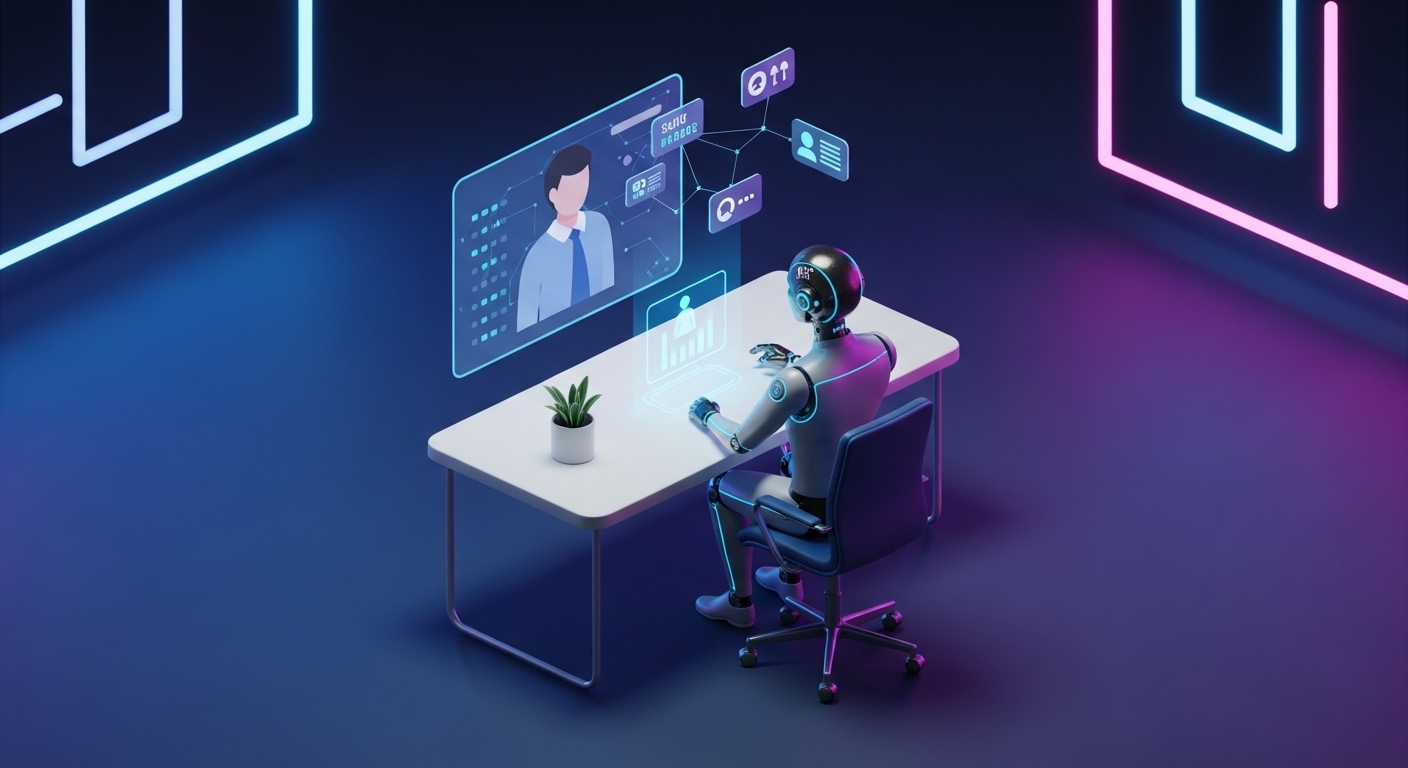
Simply put, an AI interview agent is a specifically designed program that interacts with the candidate via written or spoken words. Think of it as a person who can ask questions of an applicant based on what has been scripted for that particular interview as well as provide real-time feedback on the answers to those questions. An AI Interview Agent is able to change its questions based on the responses from the candidate, obtain clarity on any vague responses from the candidate, and, in addition, assess the emotional state of the candidate and read cues from their voice and physical pauses.
Capabilities of an AI Interview Agent
An AI Interview Agent is capable of doing structured interviews without the continuous supervision of a recruiter, measuring both technical and social skills all through written as well as spoken forms. The AI Interview Agent also filters out unsuitable applicants according to the pre-defined qualifications for a candidate such as an applicant's understanding of the English language, how long they have been using the tools associated with the job, as well as their willingness to travel. Ultimately, an AI Interview Agent will provide a means for automating all the common aspects of the recruitment process so that human resource practitioners can devote their attention on high-priority milestones and that all applicants shall receive equal treatment when applying for a position. In light of the above, any time an AI Interview Agent is used for primary screening the time needed to complete the screening is reduced from many hours to approximately 15 minutes. This fact has been confirmed by many statistics derived from popular sources that provide AI technologies and use of AI Interview Agents by large organizations and Fortune 500 companies. The reduced workload on human resource departments will be beneficial, particularly when reviewing hundreds of applications for a particular position within a fast-paced business environment such as a startup or call center. Reduction of time from a subjective process to an objective process in the hiring of employees will result in substantial savings.
The Importance of AI Automation for the Interview Process
Let's be honest there is no way to avoid the fact that traditional recruiting is time-consuming and labor-intensive. A single HR manager can conduct a maximum of 8-10 interviews per day, with each interview lasting about 30 minutes or longer. At high-volume candidate levels, the overload occurs quickly, and additional HR staff will be required, which is never inexpensive. An AI agent tells a very different story. An AI agent allows for conducting hundreds of conversations at the same time and does so 24 hours a day, 7 days a week, without fatigue and without losing focus. This enables companies to fill vacancies much more quickly and much less expensively than is possible with human resources. According to a study conducted by LinkedIn on the use of automated screening to fill vacancies, companies that use automated screening complete the hiring process almost 33% faster than through traditional methods. AI also removes bias from the hiring process, such as age, race, sex, and education; therefore, candidates are assessed purely based on their experience and skills. In addition, candidates who have used AI typically have a much better experience than candidates who have experienced HR departments. For example, candidates using an AI agent say that they prefer to receive an immediate response via an AI bot versus waiting for a response to a submission or an HR receptionist or HR manager to call back (waiting for a call can take days). This is especially true in highly competitive sectors such as cryptocurrency and trading (or Web3). For example, a trader who submits a job application and waits several days to receive a response will likely pursue an opportunity with a competitor rather than wait for HR or a recruiter to respond. However, if an AI agent conducts an interview for that trader at 3 a.m., and the results of the interview are available to the recruiters by morning, the result is a very different level of speed and convenience.
AI Agents and Machine Learning
There are many algorithms that use machine learning (ML) at the core of their AI. Machine learning is comprised of algorithms that can learn from massive amounts of existing data. When organizations are exploring new options for new employees, AI will also analyze success and failure rates and similar characteristics that lead to success before determining their effectiveness. Rather than setting up agents specifically to meet the individual needs of job positions, the agent learns from prior experience, using data developed through past interviews and assessments provided by former supervisors of each candidate (i.e., the individual who supervised the candidate's performance during their probation period) and evaluates all of that data to determine the likelihood of an applicant being offered employment. For instance, a candidate applying for a backend developer position may score a 78% based on historical experience as a backend developer. A real-world example of this use of technology is Unilever, who analyzed 250,000 video interviews over the last two years and improved the time it takes to hire from four months to two weeks. Additionally to improving the speed of hiring, Unilever used this technology to assess emotional facial expressions, tone of voice and other reference points from which to measure candidates, the complex algorithms provided by Unilever were able to evaluate each candidate based upon the successful employee profiles of Unilever. This process resulted in Unilever saving on the cost of hiring while also increasing diversity within their organization because the method of determining who to hire was based on skill set rather than demographic statistics. HireVue another example of the implementation of machine learning to analyze audio and video input to develop unique speech patterns within candidates that were deemed successful in prior roles. Although specific efficiency cannot be determined with the use of HireVue, it is an identifiable trend. Natural language processing (NLP) capabilities will provide software with the ability to "understand" how to respond to spoken or verbal communication; examples include measuring a candidate's understanding of Python, understanding emotion through context, identifying key ideas or elements and creating clarifying questions to gain further clarity of a candidate's abilities. As an example, if industry keyword "Kubernetes" was expressed by a candidate, an online recruitment agent may follow up with questions of clustered-based, monitoring, and/or continuous integration and/or continuous delivery of Kubernetes. The Paradox platform and its virtual assistant, Olivia, is an example where millions of engagements per month are processed for customers, such as McDonald's and General Motors. Olivia is able to process natural language (inclusive of slang, typos, etc.) while providing completely accurate responses to inquiries (more than 90% accurate). The SeekOut technology uses LinkedIn and GitHub to review users' profiles to better assess technical talent (even when their careers are incomplete). According to Web3 companies, the success rate of using SeekOut to screen technical candidates has improved 40%; the majority of those results have not been documented publicly.
Measuring Candidate Emotional and Behavioural Traits
AI behaviour analytics and affective computing allow the AI to analyse all forms of communication, including intonation, timing, tone and facial expression, in order to determine how well a candidate is performing under stress and/or confident. An example would be an extended pause after a partner has asked a difficult question; it could be an indication of their unfamiliarity with the topic at hand. This could assist in reducing the risk of persons applying for roles that are inaccurately listed and/or lack motivation to fulfil the duties of the position. However, emotions shouldn't be overemphasised, as it could be possible that the candidate is simply feeling shy/introverted; therefore, the person could still be a valuable employee. There are already laws in the USA being passed that will require companies to tell candidates whether the AI was used to analyse their behaviour and to allow candidates to request that the data collected on them to be deleted. Following these laws, some platforms have stopped facial video analysis. Emotional analysis should only be considered a supplemental source of information; therefore, the positive results of an emotional analysis should be viewed as an additional information when creating a full scope of the potential hiring company. However, the final decision still belongs to the human recruiter.
Capabilities and Functionality of AI Interview Agent
Conducting Initial Interviews
AI agent has taken on many of the time-consuming tasks that recruiters typically perform, such as primary screening, resume reviews and phone calls to verify basic information such as the candidate's availability, salary expectation and legal status. The AI agent automates most of the initial screening process by asking 10-15 questions of each candidate, collecting their responses, and assigning a score to each candidate. This allows recruiters to spend less time processing resumes and working directly with candidates who are best suited for the job. In addition to conducting initial screenings, AI agents can customize their processes based on industry. For example, if a recruiter needs to hire for a call center or retail position, AI agents will focus on verifying schedules and documentation; if a recruiter needs to hire someone in the IT space, the AI agent will use detailed screening questions regarding React and databases. Additionally, with NLP technology, AI agents will quickly extract the right technologies needed from candidate responses. To illustrate this further, a Web3 company in the DeFi (decentralized finance) vertical received 230 applications for a Solidity developer position in a two-week period. If done manually, the CTO would have spent over 40 hours going through all the candidates. Using an AI agent to conduct interviews via the telegram platform, the AI agent identified 40 out of the 230 applicants as being qualified based on the responses to eight interview questions. The CTO of the company then had six hours to process the remaining candidates and selected 12 as being qualified for final consideration. AI reduced the time required to hire from two months to three weeks.
Evaluating Candidate Performance and Skills
The evaluation of candidates' abilities and skills is accomplished through the use of a variety of methods, including the analysis of written documentation, administration of an interactive testing component and the simulation of work activities. The method of written documentation to evaluate a candidate's ability to represent themselves, particularly descriptive written formats of soft skills, will be evaluated as to how well the candidate used the STAR (Situation, Task, Action, Result) method, which is a standardized format for evaluating descriptive written format soft skills. Written documentation that is vague or unclear in identifying the candidate's performance will receive a lower rating than those that are clear. Tests can also be included as part of the dialogue, by having the candidate respond to a prompt asking them to write an SQL query and check it on an appropriately populated test database. Platforms like AI can also include simulations in which candidates make choices for their actions which can then be compared to successful historical instances. For example, Pymetrics uses cognitive games to assess potential soft skills with approximately 68% accuracy. Codility and HackerRank validate candidates' technical skills through real-time coding, and evaluate the quality of the produced solution along with the extent to which it covers edge cases.
Automated Ranking and Resume Selection
Using automated ranking the system provides a compliance-based score ranging from 0-100 based on compliance to the position, after which all candidates who receive a score greater than 70 will progress to be short listed, candidates receiving a score below 50 will be automatically eliminated and all candidates sitting in between the two will be referred for further screening. One of the greatest advantages this automation provides is the time saved to the recruiter and the minimisation of subjectivity in the hiring process, completely eliminating any potential for discrimination to take place against the candidates based on name, age or other related factors. For instance LinkedIn Recruiter utilises AI screening to reduce the time to hire by 30 – 50%.
Advantages of AI Agents in HR
Reducing the time to hire
SHRM reports average length of time to hire for mid-level professionals in the US is 42 days and 68 days for more experienced professionals, when this is comparative to what automation will produce, the length of time to hire will be reduced to 28 days for mid-level professionals and 45 days for experienced professionals. This is a significant saving when you consider that lost time translates into lost hiring opportunities, as seen in the niche areas of crypto trading. One particular case that demonstrates the reduction in time to hire is that for Revolut, as they successfully hired 200 customer support agents in a period of 6 weeks where previously they had typically taken 4-5 months to hire this number of customer support agents. An AI agent has the capability to analyze 3200 initial interviews and narrow that number down to 600 candidates; this allows a department that provides support to begin work at a much earlier point than traditional means. In addition, a decentralised crypto exchange needed to fill 15 roles with Rust Developers. Using traditional means, these roles would have taken approximately 4 months to fill and would cost a considerable amount of money. However, through the hiring platform ASCN.AI, a GitHub search, and using a Telegram interview process, ASCN.AI was able to assist in hiring 12 developers in only 5 weeks, saving approximately $48,000.
Neutrality and Minimizing Human Element
AI takes into account only job focus factors, such as name, age, gender, and university level are irrelevant to success in the workplace. One excellent example of this is a study conducted by Harvard University, which discovered that candidates with 'white sounding' names received approximately 50% more requests for interviews than candidates whose name did not sound 'white'. Xerox discovered, for example, that candidates who lived far away from their office, but had their own method of transportation were given a much greater chance than a candidate who lived closer, but without their own transportation. AI was able to assist Atari in changing that threshold, thereby reducing employee turnover; for a Web3 project that was hiring analysts in DeFi, they moved from evaluating based on the name of the school to evaluating based on practical demonstration of skills; resulting in 40% of new employees came from unknown schools, but demonstrated superior accuracy in predicting future performance.
Scalability and 24/7 Availability
AI agents can be easily scaled with increases in the volume of work; there is no way to conduct hundreds of interviews and/or process thousands of resumes at the same time without the use of AI. For a global crypto trading exchange that needed support staff in four different time zones, they were able to use AI to provide employees with opportunities to do interviews 24/7, resulting in the time it took to hire candidates being reduced by nearly 50%. Candidates also receive quick notifications of their status as well as having the ability to pick a time that suits them for their interviews. AI's Effectiveness at Improving Job Seekers' Perception of AI Significantly. The evidence shows that nearly three-quarters of job seekers experience AI as being more convenient and transparent than any previous method of interviewing.
Companies with AI Interview Agents
There are a number of companies now using AI interview agents to streamline the hiring process for their open positions: Unilever had used the HireVue platform, which allowed them to reach over 250,000 potential candidates in just two years and reduce their overall time to hire from four months to just two weeks and allowed for an annual savings of over $1 million in costs. Hilton Hotels has implemented an SMS-based interview system (Paradox Olivia) for their initial screening of candidates, shortening the time to hire by almost 90% and improving their overall fill rate by 30% over traditional methods. IBM has begun using Watson Recruitment to analyze resumes from both LinkedIn and GitHub. The company reports that it reduced their overall cost-per-hire by 30% while increasing retention of new hires by 25%. When discussing the HR strategy, Unilever's recruitment director stated, "The AI agent has not only freed recruiters from performing repetitive tasks, but also helped to elevate the quality of hire and develop a more efficient recruiting team while strengthening the Unilever employer brand and increasing engagement with passive candidates."
Performance Comparison Chart

| Metric | Traditional Hiring | AI Hiring | % Change |
|---|---|---|---|
| Time-to-Hire | 42 Days | 28 Days | 33% Less |
| Cost-per-Hire | $4,129 | $2,800 | 32% Less |
| Quality of Hire | 3.4/5 | 3.8/5 | +12% |
| Retention At 12 Months | 68% | 80% | +18% |
| Resumes Processed Per Recruiter/Day | 30 | 200 | 567% More |
Source: SHRM, LinkedIn Talent Solutions, Bersin by Deloitte
Choosing and Implementing an AI Interview Agent
Software Selection Considerations
When selecting your AI system, you will need to consider three groups of factors. Technical factors include: ease of use of the tool with existing systems (ATS, CRM); availability of an API; whether self-hosting is possible; if multi-lingual capability is available; and operational speed. Functional characteristics consist of the capacity for customizing interview scenarios, accessing a template library, having access to A/B testing and analytics/reporting, and use of various communication platforms (for example text, voice, etc.) when communicating with candidates. The business parameters are related to costs, uptime SLAs, quality of support, legalities, as well as the reputation of the platform developer. We recommend starting with a pilot program with approximately two to three different platforms (for example HireVue or Paradox or ASCN.AI) in order to assess your quality of hires as well as observing what level of convenience it is for your candidates. For Web 3 projects especially, you will want to have an integrated technical experience by asking candidates more technical questions as well as integrating with industry-specific sources. Example of how HR systems could be integrated, an AI agent connected to an ATS (applicant tracking system) such as Greenhouse. After a candidate submits his or her application through the ATS, the data will immediately flow into the ATS, after which the ATS will be able to send an invitation to the candidate to schedule an interview using either the AI agent on Telegram or by email. Once the candidate has completed their interview, their profile will be automatically updated in the ATS to include the same score, transcript, and recommendation that the AI agent provided to the ATS; creating one fully-integrated system for the maximum convenience of the recruiter.
An implementation using the ASCN.AI platform could include:
- Register for a membership and select a plan.
- Create interview question scenarios for multiple roles.
- Configure the source of interviews (Telegram bot, web-based form, ATS API).
- Use AI to analyse the candidate responses and create filtering criteria to automatically invite or decline candidates.
- Store the data collected using either Google Sheets, Notion or using a CRM.
- Test the interview questions and scenarios with actual candidates.
- Expand to additional vacancies.
It is essential to understand that the AI agent is an assistant in that it takes away much of the work associated with being a human and not a replacement for you. The candidate must be told how the interview with the AI agent works, which will provide the candidate a better understanding of how to conduct themselves at the interview. Establishing trust via solid communications is critical to everyone involved with the process.
Questions Frequently Asked Regarding the AI Interview Agent
How does the AI agent secure data privacy? Data that is to be sent or stored by the AI agent is stored in encrypted format and access to the data stored in encrypted format would be restricted to designated users. The AI agent has complied with both GDPR (General Data Protection Regulations) and CCPA (California Consumer Protection Act). The candidate may also request deletion of his or her data at any time.
What languages does the AI agent support? Most platforms provide support for more than 15 languages (English, Spanish, Russian, Chinese, Korean, Japanese, etc.). Technical interviews would be conducted in English.
Can the AI agent work while sharing screens? Yes. The AI agent can perform analysis of the candidate's actions using computer vision technology to measure how much time the candidate spent on solving problems and making corrections, thereby providing the recruiter an additional means of evaluation.
Conclusion and Future Development of AI in HR
AI Agents have transitioned from an experimental to a production environment as a platform for business. The AI agent has simplified and shortened the difficulty of filling openings by performing more of the work in the hiring process, thereby allowing the recruiter more time to devote to the human side of recruiting (general expertise/strategic decision making). The direction of interview processes is changing as follows:
- Hyper-personalisation – Customised questions to match the emotions and history of the candidate being interviewed.
- Predictive analysis – Use of predictive analytics to forecast the success of an employee over a long period of employment.
- Web 3 on-chain integration – Use of decentralised autonomous organisations (DAOs), GitHub and Decentralised Finance (DeFi) data to comparatively evaluate and assess a candidate with the candidate's consent.
For additional information, visit our blog to read our case studies and examples demonstrating the use of our platform.