



- Русский
- English
- Português
Is There an AI Better Than GPT? A Comprehensive Comparison of the 2026 Leaders

“GPT is not a panacea. In 2026, the choice of a model depends on the task, not the brand. At ASCN, we built our own nodes and indexing because off-the-shelf LLMs don’t work with real-time blockchain data.”
Introduction: The Evolution of the AI Market and Selection Criteria
It used to be so easy to answer, “Use GPT and don't think about it.” As time progresses, GPT is no longer the only leader. LLMs have formed their own ecosystems: OpenAI, Google, and niche products. Selecting a model has changed from “model strength” to “relevance to my use case.” As of 2026, search for information will change from brand-based searches to entity (or “what is”) based searches. Understanding this point will help you understand the future of search.
Entity and Domain Structure for AI Queries
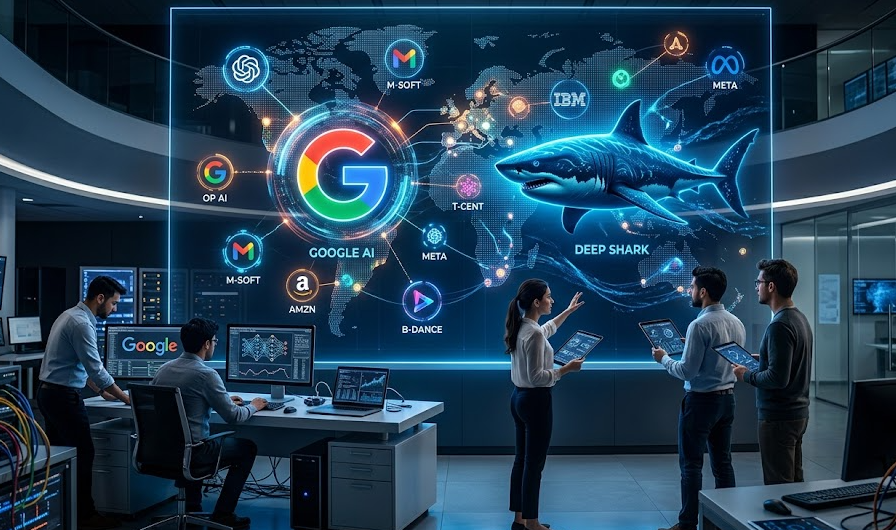
AI typically encompasses a variety of different entity domains. Within each domain, there are various entity models. OpenAI has their own models, such as GPT and ChatGPT; Google's models are known as Gemini; and a niche company, such as Deep Shark, will have their own models. To compare models, entities must first be categorized by domain (OpenAI, Google, Other). This helps you select the correct model for your use case. One of the most important things you can do is understand that not all use cases work with the same model types.
Rating of Substitutes: Top GPT Alternatives
When users are looking for chatbots and alternative LLMs to ChatGPT, they typically have a very specific function or feature in mind, and very few free options. As of 2026, Claude is the best option available for writing copy; Gemini is the best option for creating multimodal content. If you are looking for an alternative to GPT for your use case, consider a product such as Mistral (if you require a local/desktop LLM) or Deep Shark (if you require precise calculations). These LLMs will be able to replace many of the functions that OpenAI's LLMs provide and may be made available based on how the user intends to use them (coding or creating original content).
Which AIs are Better than GPT and ChatGPT: Top Alternatives
While working on real projects with real clients at ASCN, we tested twelve different models. The model was tasked with real-time token evaluation. Our first step was to implement GPT-4, and then transition to use Gemini, to then build a custom LLM. Ready-to-use LLMs could not analyze the blockchain data; therefore we developed our own infrastructure over a span of two years. We learned that no AI model fits all tasks; each job requires its own tool.
Summary Table of Market Leaders
| Model Name | Top Use Cases | Context Size | Cost (Free/Paid) | User Rating (1-10) |
|---|---|---|---|---|
| GPT-4o | General Use (Creatively) | 128K Tokens | $20/month | 9.2 |
| Claude 3.5 | Code and Long-form Writing | 200K Tokens | $20/month | 9.4 |
| Gemini 1.5 Pro | Multimodal Content, in Google's Environment | >1M Tokens | $20/month | 8.9 |
| Mistral Large | Launch Local, Privacy | 32K Tokens | Free/Free | 8.5 |
| Deep Shark | Mathematics; Very Specific Calculations | 64K Tokens | $15/month | 8.3 |
What is the Best AI and GPT Model Today?
To decide on which model is best for users, it is essential to know their purposes. Based on the metrics of 2026, the superior AI is GPT-4o. Nevertheless, there are many different rankings depending on the purpose. As such, in the event that you are working on coding tasks, the leader is Claude 3.5. Or, if you are utilizing GPT in data processing, the primary choice from GPT falls below the specialized analytical neural networks. The leader is actually based on how relevant a specific model is to fulfilling user completion. At ASCN, we do not attempt to chase the ranks but instead build the tool appropriate for a specific completion.
Detailed Comparison of Giants: GPT vs. Competitors
GPT-4 vs. Google Gemini
When comparing GPT with Gemini, one significant consideration is the user ecosystem primarily focused on. While both GPT and Gemini belong to the same suite of AI tools, they exhibit marked differences within their crypto-related functions. This exists mainly due to the different logics employed by each type of tool (plugin) as they both have experiences in how they can aid you with crypto-related queries.
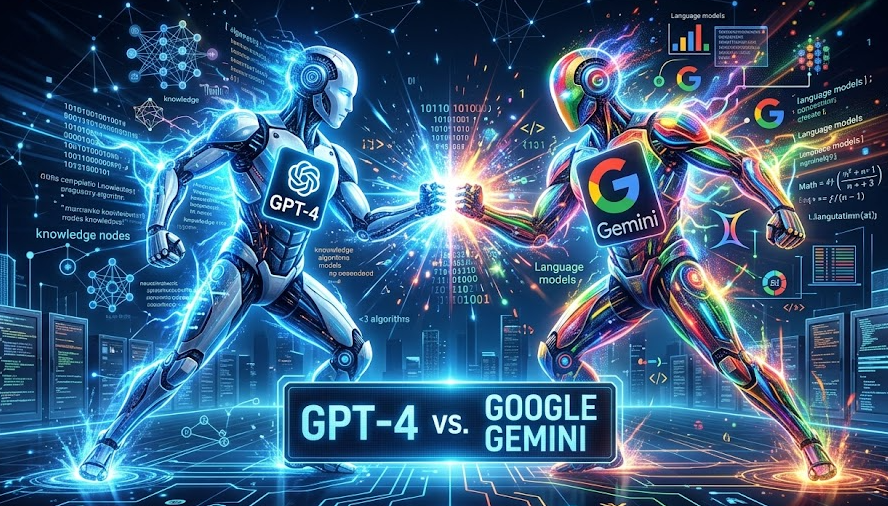
In this case, we performed a comparison of the response times from the tools. By comparing and measuring the response times for 1,000 crypto-related queries (using Anthony B. Cion's latest version and the Gemini 1.5 Pro model), both of the model tools (i.e., GPT-4o and Gemini) have their benefits. Both of these model tools made (and continue to make) short work of responding to single-task requests like those provided above; however, Gemini was 23% faster to return a response on cases with simple data, while on small multi-task data, ASCN returned a full blockchain record in just under 10 seconds (both models take a long time to provide the necessary information after their own processes have completed).
AI Comparison: Google vs. Deep Shark and Others
To summarize our comparison of AI models (Google vs. Deep Shark and others in the model space): With any model or tool, niche providers can bring unique characteristics or functionality to your decision-making process. This makes their competitive advantage to you in that they will provide you with accurate (and timely) information with your specific use-cases, while allowing you to leverage tools from Google or any of the other vendors' AIs that you may have. They will often process data quickly in a specific use-case but will not help you solve all of your business problems.
Technical Deep Dive: Context, Window, and API
Context Window Size (Llama 3 vs. GPT-4 Turbo vs. Claude Opus) — The context window has a substantial influence on the size of the dialogue between models. The context window size for the three respective models is Llama 3 (8K-32K), GPT-4 Turbo (128K), Claude Opus (200K). In reviewing documents exceeding 100 pages, with a large number of queries per page, Claude has the winning edge; however, Llama is enough for performing activities with limited queries. At ASCN we have indexed large amounts of data for years; our historical context goes beyond the AI model’s data limitations.
Business Implementation Costs & Comparison of Costs from API Providers: The cost of using the API’s AI (cost per 1000 tokens): GPT-4 - $.03 in; $.06 out; Gemini - $.0025; Claude = $.015. If your organization had 1,000,000 queries to answer each month, selecting the appropriate API on either the high or low end could result in an annual savings between $50,000+ and $150,000+. We will provide you with automated activities; you only pay for the outputs — not by the number of tokens.
Data Security/Privacy Policy: One of the most important factors with business-to-business (B2B) transactions. The GPT Enterprise and Gemini Enterprise models isolate your data from each other; however, the fact that OpenAI and Google still have access (as an entity) to logs or other information raises a huge red flag when it comes to your data’s security, especially when dealing with sensitive information such as cryptocurrency and financial transactions! You can use ASCN at anytime since we do not transfer any data between/amongst third parties. In addition, we do not use third-party nodes or other companies’ infrastructure; we are the sole owner of all information (data) transmitted/received from our client(s) and/or data that is generated by us through our own methods/technological capabilities.
Choosing a Model for Specific Tasks (Use Cases)
Programming and Debugging (Winner: Claude 3.5 / Codestral)
If your organization is writing computer code — Claude 3.5 Sonnet is superior with respect to HumanEval — compared to GPT-4. Claude will be your best selection for locally running Code on Codestral by Mistral whereas GPT-4 would fall behind Claude by 12% when programming more complicated code.
Content Generation and Copyrighting (Winner: GPT-4o)
For writing based on creativity or marketing materials, scripts or other creative expression — GPT-4 is by far superior, in that it produces material that is more natural sounding and free of “robotic” patterns. In addition, if you need to write SEO Articles using both GPT and manual editing (to produce unique material). ASCN automates typical tasks, but final text editing is completed by a person.
Big Data Analysis and Documents (Winner: Gemini 1.5 Pro)
With a 1M+ token context window, entire books can be uploaded into Gemini as documents to Google Drive, speeding up workflows. For blockchain analytical purposes, ASCN AI Assistant is used to process data as Gemini doesn’t index nodes.
Local Launch and Privacy (Winner: Llama 3 / Ollama)
Llama 3 from Meta can be run offline using Ollama. It has 100% privacy; however, requires considerable hardware power for performance. The only viable option for corporate data storage with no cloud transfer is to build hybrid solutions (cloud + local nodes) using ASCN.
How an AI Agent or No-code System Allows You to Earn with ASCN
An AI crypto arbitrage approach is no longer simply theoretical; with new tools available for algorithmic trading, it will soon become possible for many more people.
Case Study: Real Efficiency
Situation: In January, 2025, the overall market crashed and demand for keys fell to a quarter of what it had previously been. During this time, what the Flash Crash Profit Case Study made clear is that with general market uncertainty, rapid adaptation is essential. Action: When our competitors became inactive, we were able to take control of their audience. Result: We increased our revenue, due to our services providing effective solutions combined with sound economic principles.
An ASCN AI agent identifies crypto arbitrage possibilities too quickly for the average human — ten seconds per opportunity; an example is in the ASCN and Falcon Finance case study.
Practice: How It Works
Spot + futures invested at 1x leverage + funding = a portfolio optimization approach that performs well in a down market. By working through ASCN.AI, individuals can launch IT businesses without the need for an existing team or practical technology experience. Utilizing AI agents for businesses gives people automated workflows, builds AI assistants, or provides the opportunity of having a “future profession,” automating through AI agents. Three steps to establishing an AI agent are: connecting to a data source (Google Sheets), defining the logic of the agent (Notion) and identifying the notification channel (Telegram).
Crisis creates larger market share for the strong.
FAQ: Common Questions About Choosing a Neural Network
Can I fully replace ChatGPT with free alternatives?
The Microsoft Copilot and Grok produce 70% of my work through no charge; for complex queries, a paid subscription would be required. Full substitution can occur if the task is basic (text, elementary code and search) but is limited for analytical or blockchain applications to specialized systems.
Which neural network draws the best images in 2026?
Midjourney v7, via artistic generation, is still in the lead; accordingly, DALL-E 3 has its GPT component integrated and is easier to use for quick tasks; finally, Stable Diffusion XL only works with locally-controlled operations. Selection depends upon style; finally, also, budget.
Is it safe to transfer corporate data to GPT?
All enterprise versions of the GPT and the Gemini Platforms provide complete isolation; however, all logging is stored with the developer of the program. As for the transfer of finance, crypto or private data, this represents a considerable liability risk; therefore, protecting corporate data consists of using a local or isolated circuit as a protective method. Therefore, ASCN operates without transferring corporate data to outside companies, possessing its own infrastructure, to which client(s) have access.