



- Русский
- English
- Português
The Best Mathematical AI for Problem Solving: Rankings and Scenarios for 2026

“Having worked in the technology field for over 11 years now I have seen new tools come out every two years or less frequently; in mathematics the most important thing is not how fast the solution is generated but rather how well you understand the reasoning behind it. An AI that only returns answers does not provide any value; you need an AI that tells you the reason it returned that result or what happens if it didn't.”
As we move into 2026 it has become increasingly difficult to determine which of the many mathematical AIs on the market is best. There are so many to choose from; a camera phone based application like Photomath uses a photo scanner to read your handwritten math problem(s), WolframAlpha calculates with incredible precision - 15 decimal places of each answer - and ChatGPT-4 tries to communicate their results in an easy to understand fashion like humans do. Therefore now mathematical AIs are no longer just a basic calculator but instead are professional tutors helping students learn to solve math problems using a step by step approach.
It is difficult to recommend one single mathematical AI as there will be many variables involved. For example, while a high school student may use Photomath, a university student in engineering would have to use WolframAlpha or ChatGPT-4. Conversely, an accountant or analyst would need another type of AI. In summary, understanding the labels "best AI for solving math problem" can be subjective and vary depending upon your specific scenario. To help, we will review the three most promising AIs today; discuss how each is used within the corporate environment (true power of automation); and create a logical selection framework for your use case.
Best AIs for Mathematics and Problem Solving
Three key criteria will be used to evaluate which AIs are the best for solving problems based on three factors: calculation accuracy, explanation clarity, and ease of use. Each product was rated based on how many of the 47 tools were eliminated during the testing process of each product between the years 2025-2026; sadly, most of these tools failed in some form or fashion with respect to their ability to actually calculate or do so accurately.
1. Photomath — for School and Basic Algebra
Photomath is an Optical Character Recognition (OCR) scanner that uses your camera to take photos of written or printed math problems. Photomath works offline, is available in 30+ languages, and is good for quickly checking answers to your math homework.
Pros:
- Able to recognize messy handwriting.
- Provides a solution for each step of the calculation.
- Generates an interactive graph.
Cons:
- Does not provide a solution for advanced math such as calculus or differential equations; therefore, it is of no help when working with these problems.
- Access to the complete solutions requires a paid subscription ($9.99 per month).
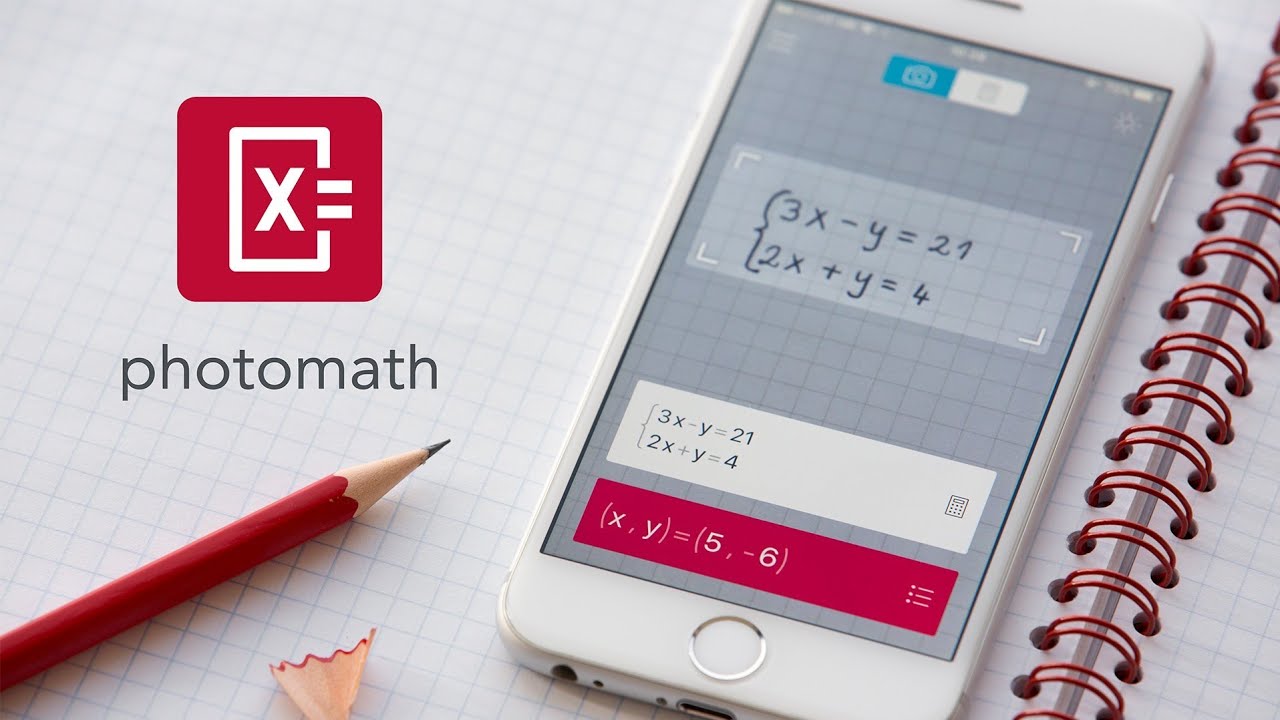
This is a fantastic free AI tool for solving basic-level math problems that you may encounter in school. However, it won’t be helpful as a solution to the problem of college-level mathematics, but it can serve as an adequate “cheat sheet.”
2. WolframAlpha — for University and Engineering
WolframAlpha is the computation engine for university-level math and engineering. WolframAlpha is a symbolic-based computing engine, as opposed to a traditional neural network. WolframAlpha uses a knowledge base of all known rules of mathematics as well as rules of trigonometry. This ensures that WolframAlpha produces results with a high degree of accuracy.
Pros:
- Engineering mathematics - 99.7% accuracy rate.
- Provides solutions for differential equations, linear equations in algebra, and statistical problems.
- Can be integrated with Mathematica for publications in scientific journals.
Cons:
- Explanations provided by WolframAlpha are in the form of formulas and do not provide a “human-language” explanation of the results provided by WolframAlpha; due to this, the explanations provided by WolframAlpha appear to be “dry or uninteresting.”
- To get complete solutions using WolframAlpha requires a subscription ($5.99/month).
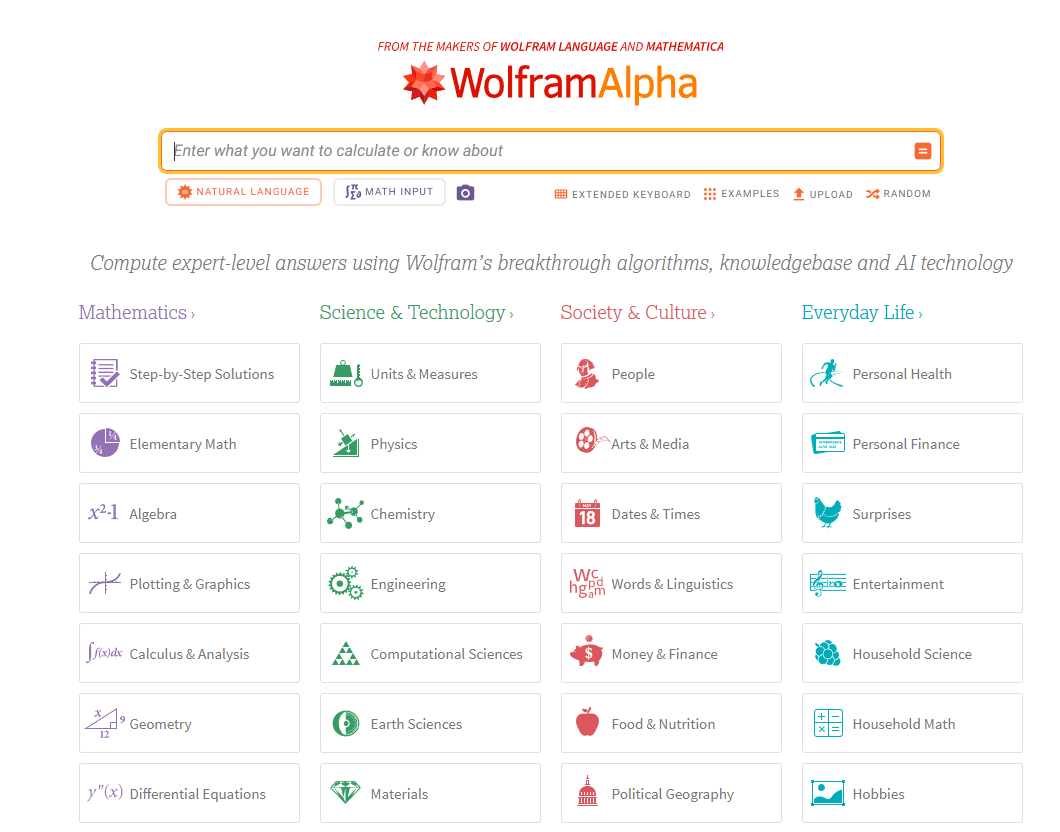
If you want to know which of these two AIs is better at solving math problems for students who are pursuing technical degrees in college, then there is no other answer than WolframAlpha. This AI will provide you with the most accurate and precise solutions to your math issues; however, it will not provide you with an explanation of how it arrived at those solutions.
3. ChatGPT-4 / Gemini Advanced — for Understanding Logic
ChatGPT-4/Gemini Advanced are language models that have computation plug-ins (Wolfram and Code Interpreter). These language model-based AI tools are attempting to mimic the way humans think.
Pros:
- Provides rationale and fixes for problems like a tutor, can ask tutor follow-up questions.
- Provides solutions using written problem titles instead of formulas.
Cons:
- Could make mistakes in calculations or symbolic manipulation.
- Requires confirmation of results - reliance on someone blindly has major risks.

If you want an AI tool will help you learn how to solve mathematics problems and understand the principles more than just provide answers, this is the best AI tool.
Which AI Solves Math and Problems Better?
The best artificial intelligence tool for solving mathematics or problems will depend on the type of application you need it for. See below for a comparison of common applications of several AI tools. It is important to look at the API column as this is very important to anyone interested in using automation.
| Tool | Problem Type | Cost | Platform | Accuracy | Automation |
|---|---|---|---|---|---|
| Photomath | High School (Algebra, Geometry) | Free / $9.99 | iOS, Android | ~95% | No (only manual) |
| WolframAlpha | University (Calculus, Physics, Engineering) | $5.99 | Website/iOS/Android | ~99.7% | Yes (API) |
| ChatGPT-4 | Conceptual Learning | $20 | Website/API | ~95 - 97% | Yes (API) |
| Gemini Advanced | Multimodal Problem Types | $19.99 | Website/Android | ~94 - 96% | Yes (API) |
| ASCN.AI (Agents) | Business Processes and Analytics | $29 range | Website, Integrations | Variable by AI Engine | Yes (Fully Automated) |
Overall: if you are working in an engineering environment, Wolfram is the best for solving engineering problems. If you want to learn, ChatGPT-4 with the Wolfram plug-in is your best choice, and if you want to do quick checks for homework, Photomath. If you are looking for solutions to many different types of data manipulation, agent-based solutions will work best.
AI for Business: Finance and Engineering
When companies are doing business, they are not going to look for an AI tool that gives an answer; instead they need an AI tool to integrate with other tools in their workflows and work with real people. A lot of the competition out there has either under delivered or not addressed the business-to-business aspect of their product line & focusing primarily on education. However, in 2026, using automation tools like Energent.ai and ASCN.AI makes automating risk assessments and quantitative reports possible. Your users will have the power of automating the calculation of basic financial metrics as well as being able to "manage the books".
AI for Finance
- Your particular automation might include the automatic calculation of metrics (Return on Investment, Customer Acquisition Cost, etc.) from Google Sheets with generated report automatically sent to Notion.
- A security feature of these types of corporate automation solutions is the use of encryption to secure the data collected, while additionally preventing the data collected being used to create a public model.
- For example, in a flash crash profit case, an AI agent generated a signal to analyze the market depending on its analysis of market data within twenty minutes of delivering to the financial markets. You cannot manually perform that analysis in twenty minutes.
AI for Professional Engineers
When building AIs for engineers, it is critical these types of AIs are compatible with existing software products for engineers. More advanced AIs integrate with things like MATLAB, Excel and CAD with older methods using the AIs simply to copy and paste formulas into chat applications.
- Functionality: Differential equations solved automatically and data analyses performed on simulation data.
- Integration: Integrate with project file rather than relying on pasting or transcribing text into a chat application.
AI for Academics and Researchers
Researchers use AIs to establish statistical significant results and to analyse the literature. For them to be valuable, the research software must provide an option to export to LaTeX, in addition to working with legacy research software programs. Precision and accuracy are critical to total quality in scientific investigation.
Best AI for Math Problems and Their Solutions
When considering an AI to solve mathematical issues, always check the AI against the following list of criteria. If any part of the criteria does not exist within the AI you are evaluating, it is time to find another AI.
Core features:
- Step by step answer – A complete answer including a step by step structured logical explanation for each answer. Good examples here would be Photomath or WolframAlpha.
- Visual recognition – May allow you to take a picture of a formula you are trying to solve on your note pad and input it. The accuracy of the Photomath app is reliant on the quality of the handwriting that it is scanning - the app will scan many types of equations such as handwritten, keyboarded, or text in pictures taken from your camera.
- Graphing – The ability to plot 2D and 3D interactive graphs for multiple functions (up to ten graphs can be plotted at the same time using WolframAlpha).
- LaTeX integration – Export solutions as LaTeX code for scientific publications, which is essential for graduate students and researchers.
- “Explain like I’m five” mode – Another great feature of the AI applications is a mode that provides simplified explanations of complex mathematical concepts to beginners. This mode can be accessed using both ChatGPT-4 and Gemini Advanced.
AI can solve most math problems (that do not require advanced calculus or additional training) using an AI solution through language models (ChatGPT, Gemini) and an AI solution through symbolic engines (WolframAlpha, others). The equation "60% time savings" is mostly true and should be treated as such, but it is also true that just because you are saving time, you should not use that to replace understanding.
AI Capabilities for Math Solutions
Math AI has two standards of computation (symbolic engine and language model). There are also key differences between both standards of computation using an AI calculator compared to an AI conversationalist.
WolframAlpha is an example of a symbolic engine as it uses a deterministic process. All steps are backed up by mathematical proofs. It is very unlikely for users to experience any errors due to the mathematical nature of the symbolic engines, however the explanations provided are usually very dry.
Conversely, ChatGPT and Gemini, are examples of language models, which produce solutions using a probabilistic method. The output is the text of the solution and there is a high likelihood of some inaccurate solutions due to calculation errors; however, the explanation will be much more descriptive in nature.
Code implementation to validate solutions is how many AIs resolve problems. ChatGPT-4 uses a programmed Python script to execute calculations; thus the potential for arithmetic calculation errors is ≤ 1-5%.
Adaptations and/or individualization will continue to increase with usage leading up to the end of 2026. The new trend will include AIs analyzing the type of errors an individual user makes and recommend problem sets to assist the user in correcting weaknesses.
Choosing the Best AI for Math
When AI is merely a tool rather than a rational being, how can a tutor perform the role of executor? It depends on the aim of either merely receiving an answer or automating a procedure. After all, time represents the most outrageous cost to an individual.
In selecting the best AI system for math, there are three questions to contemplate: Level, Budget, and Goal.
- Students attending school: Photomath (the basic version will meet 80% of all requirements).
- Technical college students: WolframAlpha Pro + ChatGPT-4 for developing theoretical knowledge.
- Researchers: WolframAlpha + Mathematica for conducting scholarly work.
- Budgeted Scenario: Photomath (no cost) + ChatGPT-4 (basic version limited in capability).
- For the Automation of Processes (Business): ASCN.AI.
An Overall Statement: There is no one solution that will fit all needs; therefore, the combination of different tools produces the desired result. Remember, AI is a tool; the correctness of an answer depends upon the proper selection of tools. Template examples of uses that can automate a procedure exist for establishing AI agents for learning and work.
“At ASCN.AI, we have developed an ability to automate repetitive processes using AI agents. Mathematics is just one of many processes that can be automated. To automate does not necessarily mean to delegate responsibility for understanding. Use the AI system to tutor you, do not use an AI system as a crutch.”
Frequently Asked Questions (FAQ)
Is it legal to use AI to obtain exam credit?
No. Academic Integrity allows for no use of AI when taking the exam at 95% of universities. The AI utility is for the purpose of tutoring and not the purpose of cheating the evaluation system. Instructors check deliverables using AI detectors, and expulsion from the university is a risk to the student using the AI utility on an examination.
How accurate are the answers produced by Advanced Mathematics Solutions?
WolframAlpha demonstrates a 99.7% accuracy rate with engineering calculations. However, Language Models (as with ChatGPT & Gemini) show 95%-97% but require verification through use of a code interpreter. Always confirm any critical calculation before accepting the answer as being accurate.
Can AI be integrated with Excel or MATLAB?
Almost all professional tools (Wolfram and specialized agents) will provide either APIs or plugins for data inputting directly from Excel or for executing scripts in the MATLAB environment. By having this capability, calculations can be performed using either tool and can be automated with no need to copy information manually.
Where can I find the task data after calculations?
On the mobile application's free version, it is common for data to be processed at cloud servers. For sensitive math calculations use local software versions or business solutions that possess the proper level of encryption (such as ASCN.AI for business applications).
Is there any way to obtain a completely free alternative?
Photomath (basic version), Symbolab (with limitations), and ChatGPT-3.5 (no plugins). No completely free AI-based application provides the same degree of accuracy as does WolframAlpha, because the server computes the calculations and requires various levels of resources to perform those calculations via the internet.