



- Русский
- English
- Português
Neural Networks for Generating Assignments and Topics: Your Personal Assistant in Education

There's no denying it anymore — artificial intelligence is not just a thing of the future but has been here and has already provided thousands of educators with an additional tool for alleviating their workload created by excess sameness in an otherwise hectic schedule.
Using artificial intelligence systems to create assignments, essay topics, test questions, etc., can be completed within a matter of minutes instead of requiring many hours of effort. I remember spending my own weekends getting ready for Monday until I started using automation. I have learned how to use neural networks to create educational content as an extension of my experience in automating business processes, and now I'm going to show you how to get a real, usable result very quickly, without beating around the bush or presenting you with long, drawn-out theories.
"AI is not intended to replace a teacher's expertise; what it does is remove the mechanics, thus allowing the teacher to focus more time on conversation and motivation to enhance learning."
This article will demonstrate how to create a ready-to-use math exercise within 30 seconds and what tools are available for various task types (from topic creation to deepened case study development) and why traditional web searches are an inadequate means of obtaining information. At the end of this article, you will be able to copy one of the sample prompts provided in this article and adapt it for your subject area. You'll achieve results before you've finished reading this article! No kidding!
Advantages of Using Neural Networks for Educational Content Creation
The use of neural networks to quickly and easily produce educational materials is advantageous for both teachers and students.
Teachers spend a large portion of their workdays preparing materials and doing administrative tasks instead of engaging in live interaction with their students. Studies have shown that teachers are required to do an excessive amount of paperwork and not enough time is allotted to teaching. It is fortunate that AI is so much less expensive than previous methods of completing this work. One hour of work can now be done in five minutes with no decrease in the overall quality.

This Practice with Neural Networks for Creating Assignments and Topics provides:
- Time savings. Creating an assignment with 3 problems of varying levels of difficulty takes 2-3 minutes instead of 30 minutes of manual production. The tools available offer a multiple reduction in preparation time and give you time to focus on methodology.
- Formats. A single prompt can produce multiple test formats, open-ended questions, and practical case studies. The AI engine tailors its style according to the age of its target audience, from preschoolers to college students.
- Class-specific personalization. When you request a question generated using a neural network, it has access to information about the readiness of the group, if you anticipate giving the question to a group of students. It generates content based on that and offers a choice of difficulty levels without apparent calibration.
- Creativity without burnout. AI empowers teachers to consider alternative (i.e., outside their own) ways to present the topic than they do when they are tired of working.
- Automatic generation of unique topics. The AI/technology generating 10-15 unique topics for an essay or project in a single request will satisfy a teacher's need for brainstorming.
AI will do the mechanical part of preparing the drafts of tests; teachers will continue to be the experts in evaluating complex skills, discussions, and motivation for students. Machines do not replace a mentor; they provide teachers with a powerful tool to assist in their work. The next section will illustrate how this works through practical experience.
Practice: What Will AI Be Able To Generate For A Lesson Today?
Artificial Intelligence can be used for instructional material of any type from simple quizzes to in-depth analytical studies. To get AI to produce an output you simply need to copy and paste a template for the request, input your parameters (subject, grade, & topic), and verify that the output is accurate. Below you will find examples of specific types of requests you can use with AI. These examples will work across different universal structural models (ChatGPT, Claude, Gemini, etc.).
AI Will Create Assignments for Any Subject from an Idea to Final Exercise
If you give an AI Prompt the right structure, then it can create an exercise within 30–60 seconds. The secret is providing the AI with a role, context, and output structure. Without these components, you will produce a generic text that will need to be rewritten manually.
Formula for Creating Exercise Assignments:
Act as an experienced [Subject] teacher.
Create an exercise assignment for [Grade Level] students on [Topic of Exercise Assignment].
For each task, provide the skill the assignment contains (basic, intermediate, or advanced).
Sample Request for Mathematics:
Act as an experienced math teacher.
Create an exercise assignment for 8th Grade students on Solving Quadratic Equations.
For each task, provide the skill the task has (basic, intermediate, or advanced).
The AI will output structured sets for each of the tasks with a skill-related description that can be copied and included in a document or presentation. If you want the response in table or JSON format for import to LMS, append "Output response in table format" or "Format response as JSON object." You can use this for any subject area including history, science, English, or math.
I have seen educational project teams dramatically reduce test prep time using this same template and by adding the sentence, “Please provide the correct answer and an explanation of the solution,” to their prompt. They were able to use the system to create test prep materials ready for distribution.
Use Neural Networks to Generate Subjects for Teaching Lessons and Essays
You can eliminate the ‘blank page’ phenomenon with AI; by utilizing the system to generate 10-15 unique titles in one query based on age, format (essays vs. reports vs. projects), and degree of difficulty, you can solve the brainstorming issue.
Here is a prompt for generating subjects:
Please provide 10 subjects for [Format] in the [Subject] area for [Grade].
The subjects should be broken down by three levels: 3 easy, 4 moderate, and 3 hard.
Provide each subject as a problem/question or as a research project.
As an example for Literature:
Please provide 10 essays related to “Literature” for a 10th grader.
The essays should be broken down by three levels: 3 easy, 4 moderate, and 3 hard.
Provide each essay as a problem/question or as a research project.
The neural network will create responses such as "How does the hero change through time as he reflects the change in society?" or "What are two authors that have used symbolism?" Questions like these challenge the student to analyse rather than just retell what their teacher has said, which will provide better quality final work.
If you want topic ideas to build into a curriculum, just say, "Disperse the topics by term." The AI will create something logical for you.
Using AI for Creating Tests & Writing Question Lists
A neural network designed for generating questions takes lecture paragraphs and generates a complete test with questions in less than 2 minutes. All you need to do is upload your material and state the type of questions you want and the program will create a format and generate assignments as multiple-choice test options, open-ended or mix of both.
Prompt for test creation from specific text material:
Read the following text and develop a test of [# of Variables] questions for [Grade] students.
Use the following types of tasks:
[List your expected type of Questions - The question types to be produced should be like how many multiple-choice to produce or how many open-ended.]
Also, specify that for your multiple-choice question, you want the success answer listed.
[Your Text in which the test was developed from]
Example - Science uses Examples like Biology:
Biology Read the following text and develop a test with 10 questions for 9th-grade students. Use the types of tasks as follows:
6 Multiple Choice Questions, 3 Open Ended Questions, 1 Matching Section Total of 10 Questions
Specify The Correct Answer Under Each Multiple Choice Question
[Photosynthesis]
If you need an export format to import to an LMS (Google Classroom, Moodle, etc), simply say, "Export as JSON format." Most systems offer this functionality via their API.
Important: The AI will create questions once they have the base text you have sent; however, if that happens, be sure to search through the model's output for accuracy. Checking for dates to ensure they are correct. For better accuracy, when working with creating case studies using materials, simply uploading the original work is your best source.
Developing Practical Educational Case Studies with AI
The most complex and in demand use of AI to create educational case studies is a situational task requiring logic, a plot and realistically written characters. When requesting models with a longer context window, you should be using Gpt 4, Claude 3 Opus, or Gemini 1.5 Pro to generate realistic plot lines (i.e., they maintain their structural composure very well).
The formula to generate an educational case study is:
1. Create an Educational Case Study for Subject [Subject] on Topic [Topic] (for Grade [X] Students).
2. Include a realistic situation presented by either a conflict or problem.
3. List the participants and their roles or character traits at least 2 - 3 different characters with two different interests).
4. Include statistical data for the case study to be analyzed (i.e. numbers, facts and context).
5. Include 3 - 5 discussion questions to stimulate an analytical discussion regarding the case study subject matter.
6. The length of the case study should be no less than 300 words and no greater than 400 words.
For example, in the subject of Economics:
Create an Educational Case Study for Subject: Economics (topic: Pricing Under Competition) for students in 11th Grade.

1. Present to the reader a realistic situation presented by either the presence of a conflict or a problem.
2. Identify the participants and their respective roles and/or character traits - a minimum of 2 - 3 different roles/characters with two differing points of interest.
3. Provide sufficient statistical data for the case study to be analyzed (provide numbers, facts, context).
4. Provide a minimum of 3 - 5 (discussion) questions that stimulate conversation regarding the case study topic.
5. The length of the case study must be between 300 - 400 words.
Using (for example) a Case Study created by a neural network of: "Two stores compete against each other in a price war...” This process would provide a comprehensive structure that contains the case study participants, data used for analysis, and discussion prompts.
In my own experience we utilized an automated process to create an educational Case Study for business training by developing a utilising an AI agent to identify the conflict points within the process being described to establish components of an educational case study. The length of time to set up activities has decreased from three hours to approximately fifteen minutes or less. Almost all requests will have been fulfilled without error using well configured prompt.
If you are looking for case studies that can be accomplished through role play, consider including "Provide the instructor with private directions for each character", as this will allow the task to become more of a game.
The Best Neural Networks and AI Tools Used to Generate Assignments
Your choice of tool will depend on the task at hand — universal models usually accommodate the majority of inquiries (over 80%). Specialised tools are used to produce visual and presentation products. The table below lists each service I have personally used.
ChatGPT
- Recommended Use Case: A universal assistant; you can create texts of any configuration or content, whether they are tests, case studies or both. A superior choice when you are working on logic and need to accommodate to a contextual setting.
- Significant Trait: ChatGPT 4o has a significantly faster processing capability to complete requests and is able to accept longer completion requests (up to 8,000 words). In most cases when you have the written instruction for the lecture's student in PDF document format, ChatGPT will excel.
- Prices: Free (GPT 3.5/4o mini) or starting at $20/month.

Claude
- Recommended Use Case: To generate complex case studies and situational assignments which have multi-layered logic. The Claude 3 Opus Model produced the most accurate results when the data was produced across long periods of time.
- Significant Traits: The Claude model will create less error. While testing the dates used to create assignments, the Claude model produced far fewer errors. Use Claude 3 Opus Model when creating material for testing.
- Prices: Free (limited) or starting at $20/month.

Perplexity AI
- Recommended Use Case: Use this tool to create new assignments using verified facts and sources. Like all other search engines using AI, it provides a layer of service.
- Significant Traits: The Perplexity AI system will provide you with current documents containing any type of legislative analysis you may require. The Perplexity AI system will find the sources for you.
- Prices: Free (limited) | starting at $20/month

Gamma / Tome
- Recommended Use Case: Use these available tools to generate presentations or slides. The topic entered generates a structure with both text and design.
- Example: "Biology presentation for 8th graders" → Select the format → Download in Power Point.
- Key point: It only does about 80% of your slide creation at best. Manually refine for final presentation look and feel.
- Cost: Free versions available.

Specialized Resources
- Math: MathGPT — Solves equations and describes how the formula was derived.

- Audio: Turboscribe — Converts video content into audio for use in listening exercises.

- Language Learning: Twee — Teaching materials for vocabulary that fit the various European Common Framework for Reference (CEFR) levels.

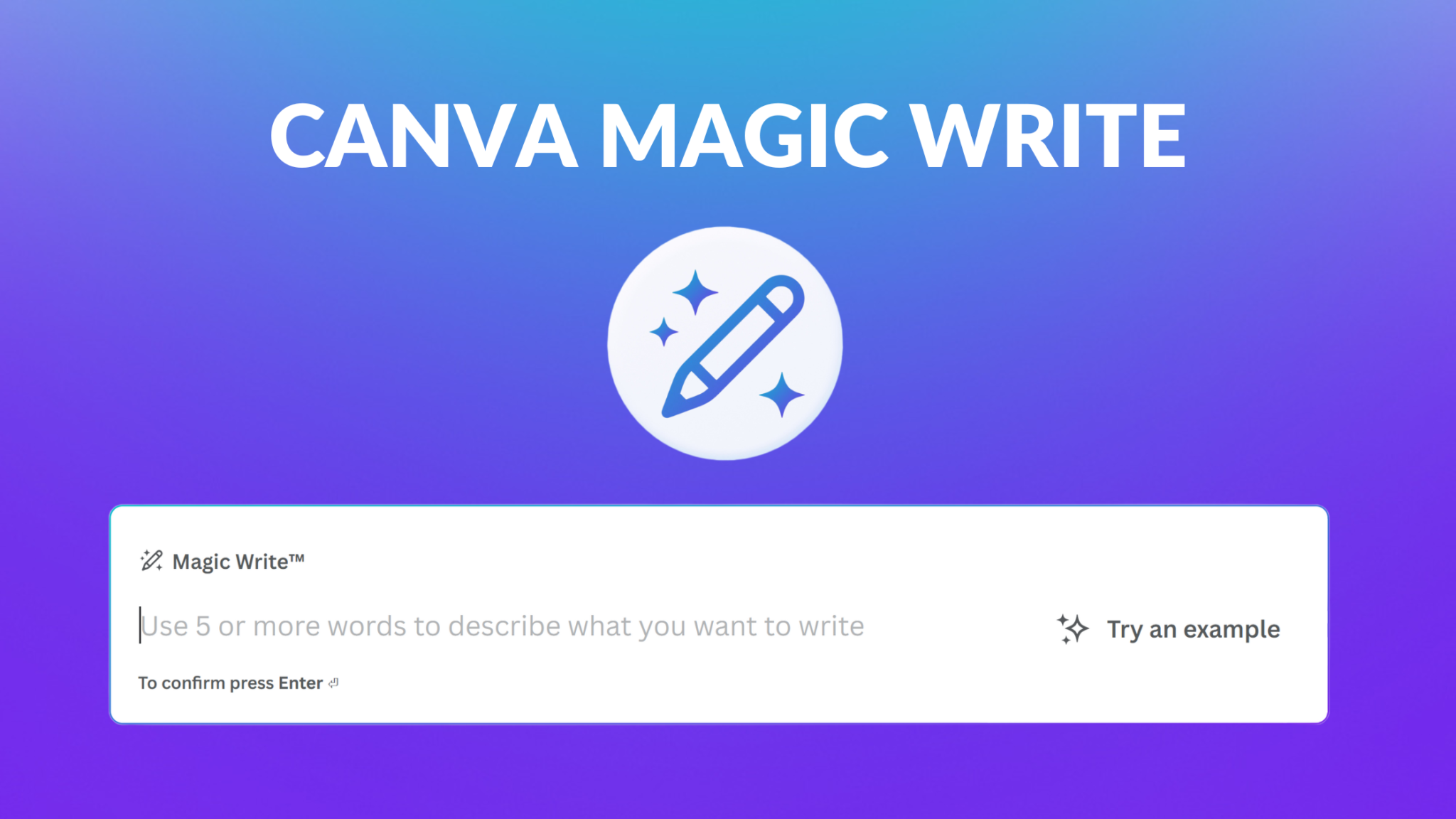
- Canva Magic Write: Best Usage: Creating written content to accompany a visual presentation (posters, infographics, etc.) that have both written content and design provided in one place.
Step-by-Step Instructions: How to Generate Assignment Materials via Neural Network
These steps will work for any task. Follow through to create your materials, usually in 5-10 minutes.
Step 1. Select your task-type
Identify what type of content needs to be created. Text content will require either ChatGPT or Claude. Fact-based content will use Perplexity. Presentational content will use Gamma.
Step 2. Formulate your request using the Roles + Task + Context method
When creating your prompt, make sure to include the following three items:
- Role: Please act as a biology teacher with many years experience.
- Task: Create a quiz with 10 questions on the topic 'Photosynthesis' for 9th graders.
- Context: Based on the Links provided above, indicate that you would like the output to be in table or JSON format. If this is not done, the system will output free-form text, and you will need to manually format.
Step 3. Check the Results (Human-in-the-loop)
The AI will generate results within seconds however, it is your job to verify and modify the final output. Check for accuracy, difficulty of content, writing style, etc. If you are unhappy with any part of the output, e.g. question #3 is too hard. Please enter: "Simplify question #3" into the response, and the AI will modify accordingly.
Master Class: How to Write Good Prompts (Mega-Prompt)
The quality of the output is 80% reliant upon the prompt. The neural network adheres to prompts exactly as stated. Below is the construction I utilize while designing agents at ASCN.AI (precise construction is necessary).
The Perfect Request Formula for Educators
Every prompt must have 5 components:
- Role – State what role the AI will play, such as "act as a methodologist" or "act as a business trainer"
- Context – State to whom the prompt is directed, such as "to a group of 10th graders with basic knowledge of the topic"
- Task – The main action verb of what the AI will do, such as "create a test" or "generate a list."
- Constraints – The parameters of the assignment, including such things as "must be no longer than 300 words in length," or "must have 3 questions."
- Output Format – The format of what the output will look like (e.g., "a table format")
Sample complete prompt:
You are an economics professor with years of teaching experience. Create an educational case study about "Investment Decisions." The case study should include a scenario, data or information to support the case, and a minimum of 3 questions at the end. The case study will be a minimum of 350 words and a maximum of 400 words.
Structure: Scenario → Roles → Questions.
How to Prevent Hallucinations & Errors in AI
The AI may sometimes generate an incorrect output. For the field of Education, accuracy is critical. Another way to verify the accuracy of a document is to ask someone else to check your work against the original. You could do this by emailing them copies of both documents and requesting that they look for any discrepancies.
The second method is to upload the data source providing the research materials used in the written content. You can then ask it to generate content that is solely based upon the uploaded source file.
In a case study, we used automated AI systems to generate case studies for businesses. AI generated unrealistic figures. When we added the instruction that the generated data should be realistic for small businesses, the AI produced data with a 40% error rate; after making that change, the error rate decreased to only 5-7%.
Frequently Asked Questions (FAQ)
What neural network models can be used without cost by educators?
All of them can be used without cost: ChatGPT (suitable for simple assignments), Bing Chat / Copilot (basic GPT-4 model with limits), Google Gemini (weak). As a point of interest, Perplexity allows 5 - 10 searches without any charges per day.
What tools do students use and how can we control student usage?
Students use the same tools. Detection systems such as GPTZero perform poorly and produce many false positives, so they are not reliable. Attempting to use them does not work; instead, I suggest the following: conduct oral exams, analyze style changes abruptly (if there are more than two or three), give assignments about specific recent events using data from class lectures; use an alternative format until you have redesigned the assignment to allow a more project-based type of evaluation.
Do I have permission to upload student personal information into a neural network?
Absolutely not! Uploading student personal information would violate data protection laws (GDPR and others). You must use anonymous data such as Student A & Student B.
Conclusion: AI is a Tool/Resource, Not an End Product
They automate the mechanical process of being a teacher and allow you to spend more time with students. By using an AI System, a teacher does not lose any personal expertise; the use of this system becomes a tool to complete an actual job instead of completing another mandatory assignment. If you would like to know how to automate your daily life in other areas, read on.
Congratulations for making it through to the end; I encourage you to now put these tools to work by copying one of these "Practice" Prompt Examples and pasting it into ChatGPT with your subject; remember that you will be able to have the material generated from ChatGPT within 30-seconds.
Our own experience proves both effectiveness of the methods listed here in both science and business. As an example, we used ASCN.AI in our case study of Falcon Finance to prove that having the correct prompt will produce results (in our case) even when there is no factual basis to connect to. We also demonstrated the speed of agents' response time to news of the October 11 flash crash.
If you're interested in automating business process documentation (CRM, email, and report generation), visit the ASCN.AI automation platform. We have created agents that operate on specific time intervals, available with over 100 pre-defined templates and in a no-code environment.