



- Русский
- English
- Português
How to Make a Chatbot for Doctor Appointments: A Complete Guide to Creation and Implementation

Gone are the days of spending hours searching for information or trying to figure out how to work through complicated algorithms when setting up a new application. Nowadays, companies want simple apps that can automate much of what they do; that don't require programmers to build them; and that can be up and running in less than two months instead of six months or longer.
Every day, patients leave healthcare facilities for one reason or another: scheduling appointments is too time-consuming and difficult! Phone lines are often busy; receptionists often work the same hours as lunch; and when a patient needs immediate attention, they need a doctor NOW! A medical appointment chatbot addresses this issue.
“In the last eleven years of working with customers and products, I have seen many great products that fail because the developer built something they wanted, not what the customer wanted. If you're a doctor trying to schedule an appointment for a patient, the time it takes from when you start building your app until it gets to production has no value if that patient does not receive the services they expect as described above! In addition to being user-friendly (at least 30 seconds to complete), you will also incur no additional costs and still have room on the clinic staff for more patients.”
Introducing Medical Chatbots
A medical chatbot is an AI assistant that takes patient requests via a messenger platform (e.g., Facebook Messenger or WhatsApp); uses natural language processing (NLP) technology to process those request(s); and automatically books appointments with any required operating specialist accordingly. Unlike traditional web forms, chatbots can be used wherever people are communicating with each other — via Facebook Messenger, WhatsApp, or VKontakte.
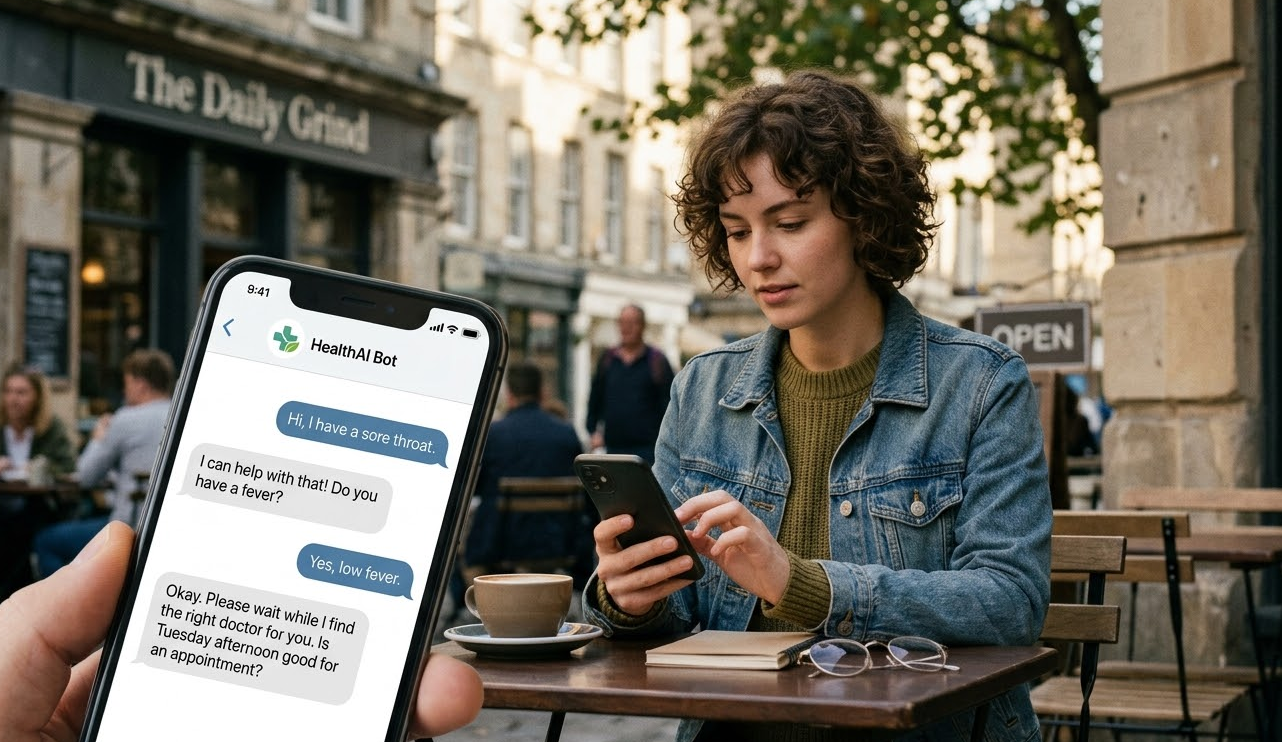
Three-Stage Process for Clinic Appointments:
- Trigger — When patients request an appointment via Telegram, e.g. “I need a dentist”;
- Logic & AI Agent — The intelligent bot engages in an AI algorithm, analyzes the required specialty, and checks availabilities via integration with the clinic’s scheduling system, and then confirms appointment details if needed;
- Action — Once confirmed, the bot gives instructions to the patient (such as “Click the button on the screen”) to let the patient know they are scheduled; the patient receives 24-hour reminders, and data is recorded in CRM/EHR.
Simply put, the patient is placed into a workflow of interconnected-automated and logical tasks – receives the message, AI processes the message, creates an entry in the database, and sends notifications. This is done automatically and no magic exists, simply standard structured code blocks integrated into a no-code builder in under two hours.
Advantages of Automating Appointments at Clinics
By creating a chatbot to handle the majority of clinic appointments, three major pain points associated with the medical field are addressed:
- Speed of Response. No matter how hard they may try to deliver exceptional customer service, humans can’t handle more than 50 calls an hour; especially at peak times, meaning, no appointments are scheduled at the end of the business day (such as Mondays or during flu-season peak) or appointments aren't booked quickly enough. A bot can easily manage multiple requests simultaneously. A bot can book an appointment in 30–60 seconds, vs. 3–5 minutes via telephone.
- Reduced Human Error. Human errors happen! No-shows, double-bookings or lost appointments are eliminated! The bot checks each request, verifies that there is a doctor available and accesses the doctors' schedule directly.
- 24/7 availability, even on weekends. On Sundays, patients can book a time slot with their physician by using a chatbot. When a patient requests to make a booking outside of clinic hours on Sunday at 11 PM, the chatbot will accept the request, create a pre-booked appointment for the patient, and create a list for the receptionist to review on Monday morning. The receptionist will then have the ability to confirm the appointment and collect the patient's insurance information or medical history if they do not have this information available.
By automating the communication between patients and clinics, clinics can reduce their operating costs by 20-30% and increase their conversion of inquiries to patients by 15-25%. Evidence also shows that patients prefer not to wait to make appointments, and if they do not receive an immediate appointment, they have a 60% chance of going to another clinic.
Principles of AI Application in Medical Chatbots
The three primary advantages of applying artificial intelligence (AI) to medical chatbots are as follows:
- Natural Language Understanding (NLU). Not all patients accurately identify the service or provider they need, and as a result, an NLU model will automatically interpret the patient's statement of need. For example, if a patient told the AI that "I have a problem with one of my teeth," the AI would identify the patient's need to book a dental exam and would ask clarifying questions about the nature of the problem and then provide the patient with the next available time to make their appointment. An NLU-based AI will eliminate the need for the clinic to hardcode hundreds of different ways to say the same thing.
- Customized Communication. An AI uses the CRM data from previous visits of the patient to personalize the communication with each patient. For example, "Good Afternoon, Ivan! You last visited the orthopedic surgeon one month ago. We recommend that you make an appointment for a follow-up exam." This type of personalized communication makes patients feel that they are cared for by their healthcare provider, and therefore, they will have greater loyalty to the provider.
- Complex Queries. The complex query is one that can be made through an appointment bot. For example, "Do you do contrast CT scans for kids?". With AI technology, the bot would reference its knowledge base and provide a complete answer to the question and schedule the procedure. Without AI capabilities to finish this action, it is necessary to transfer the question to a human receptionist, who will keep the patient waiting.
Key Components and Entities of an Appointment Chatbot
Example components and entities of an appointment chatbot are: record; one record consists of an ordered array of data with required fields:
- Date and time of the appointment;
- Specialty and particular provider selected by the patient;
- Patient's contact information (e.g., first and last name, phone number, email address);
- Appointment type (i.e., initial visit; follow-up visit; no charge to the patient's insurance; paid visit; or online appointment);
- Additional information (i.e., referral, insurance policy number, etc.).
The process is created from a sequence of workflow nodes that include verification of the phone number submitted by the patient and checking the available time using the scheduling system located on the dentist's Google calendar or CRM system through the API provided by the scheduling system.
Functions and Capabilities in an Appointment Chatbot
- Diagnosis and Availability — assessing availability of free slots and confirming the date and time of your appointment;
- Reminders and Notifications — monthly appointment reminders (one at 24 hours and one less than one hour prior to appointment) that reduce the number of "no-shows" by as much as 40%;
- Rescheduling and Cancellation — appointment rescheduling, inclusive of automatically selecting a new date and time;
- FAQ and Reference Information — to reduce questions that would need to be answered by a live receptionist;
- CRM and EHR Integration — integration into the dentist's CRM and EHR systems through transfer of appointment data and updates to patient history;
- Feedback Collection — collection of patient feedback after the visit via electronically generated surveys and in-house analytic capabilities.
Telegram Bots for Medical Uses — Features and Integration
Telegram-based bots have become widely popular as the patient base exists and already utilizes the service. Setting up a "bot" requires very little time and the integration of a calendar and/or CRM generally can happen quickly. Users experience real-time requests and responses. The bot integration of the clinic’s system occurs through the Telegram Bot API, allowing the booking to go directly to the physician's schedule with a notification for the patient.
Integration with common systems like Calendly, Google Calendar, 1C and others via an API or webhook allows for the exchange of information in the background without having to enter any data manually.
AI-Powered Chatbots for Medical Booking
An intelligent agent should not be confused with a simple button-based bot. Rather, it is an intelligent program that understands the patient needs based on previous input history, processes the information and provides an answer to them. The AI's primary benefits to users are the following abilities:
- Natural Language Processing (NLP);
- Clarifying/finding the correct info using user requests;
- Dialogue support in the case of questions that are not standard;
- User history or behaviour as a basis for personalization;
- Managing problems and complex situations in real-time.
Implementing AI enhances the accuracy of data, speeds up service and decreases the workload of clinic personnel.
How to Develop a Medical Appointment Chatbot — A Step-by-Step Guide
- Make a list of the different areas of medicine for which you will be accepting appointments;
- Research the calendars and APIs of your practice;
- Determine the minimum amount of data needed to successfully complete an appointment;
- Create back-up scenarios for any erroneous/non-standard requests;
- Determine if pre-moderation by an administrative staff member is needed.
Just a simple example of how a conversation can go:
Patient sends message to request seeing a dentist → Business uses bot to respond with "What date do you need your appointment?" → Patient replies with date requested (ex: "tomorrow") → Bot offers patient available times to schedule appointment → Patient selects preferred time → Bot requests confirmation of patient’s telephone number → Bot confirms the date and time of patient’s appointment.
Choosing the Platform and Development Tools
It is preferred that no-code platforms are used because they typically will provide the fastest and most effective solution for meeting the business's needs, without needing to hire a developer, i.e., to collect and store patient information. Therefore, it is best to consider the following when selecting a platform:
- Pre-existing integrations with Google Calendar, Telegram Bot API and CRM;
- NLP & AI technology for understanding patient requests;
- Visual building of the workflow;
- Secure storage and monitoring of keys and metrics.
ASCN.AI is one of the companies that offers a great starting point to build a bot in the healthcare industry, with ready-built templates and its own reliable AI component.
Setting Up Integration with Clinical Systems and Calendars
Integration of scheduling and booking information will be facilitated by using various APIs from Google Calendar, Calendly, 1C, and CRM systems. To integrate with a specific HTTP request node to call the respective API, a method of authorizing the API will be provided through encrypted key-based authentication, which will allow the two systems to share required data.
To observe the actual outcome of process improvements, clinics have reported that integrating Telegram bots with 1C, CRM, and Google Calendar increased their booking conversion rate and reduced the workload of their receptionists.
Implementing AI and NLP to Improve User Request Understanding
NLP technology is used to extract the intent of the patient request; for example, which type of doctor. Using natural language processing (NLP) to manage incoming reservations has significantly reduced the number of postings that are not recognized, from 35% to 8%. The level of accuracy of identified reservations has increased, and therefore, the ability to take reservations has been improved.
Technical Aspects and Best Practices
- Minimize the number of steps required — 3-4 steps to complete an online reservation;
- Use selection buttons to minimize input errors;
- Provide fall back scenarios for errors or misunderstood requests within the dialogue so as to avoid the dialogue being left hanging;
- Personalize the communication; i.e., by name, imported history;
- Provide user certainty by providing confirmation of time, confirmation of accuracy, and confirmation of status of reservation.
Poor user experience (UX) indicates that the user will have trouble completing their reservation, if the form fields do not provide an appropriate level of guidance and/or if the user receives message(s) with unclear direction to complete their reservation. Conversely, providing appropriate levels of guidance and/or providing message(s) to the user that direct them on how to complete their reservation will facilitate the user completing the reservation.
Patient Data Storage and Security
Patient data is a unique category of private, personal data that is protected under various laws (the Federal Law No. 152-FZ in Russia, etc.).
- Limit data that is collected through the bot; and store within securely developed databases.
- Data must only be transmitted using secure protocols (e.g. HTTPS).
- Password and API keys must be encrypted.
- Logs containing personally identifiable information (PII) cannot be retained.
- Patient information should clearly state consent to processing upon initial contact with the patient.
- Conduct routine security audits, and all data must be stored in accordance with laws, including retention laws.
Example of a problematic case: A company received a fine of 300,000 rubles for providing unprotected patient names and telephone numbers in Google Sheets.
Error Handling and Fallback Scenarios
- If AI doesn't understand a request — provide options with buttons.
- If provided an invalid date — request a new date.
- In the event of a calendar problem (e.g., provider outage) — collect a phone number for a callback.
- When the requested time does not have slots available — provide nearest available times.
- For inappropriate messages — decline politely and ask for respectful communication.
Workflows include conditional transitions and notify administrators for all errors that occur.
Monitoring and Analytics of Chatbot Performance
Metrics to track:
- Booking conversion from inquiry (bots generally convert 60 - 75%);
- Average time to fulfill request;
- AI recognition error rate (acceptable is less than 15%);
- no-show rate decreases to 20% with reminders;
- Popularity and peak times for Doctors.
Inquiries are included in development. Data can be tracked using Google Sheets or a BI dashboard. Logs should also be analyzed since they can determine areas of improvement and comprise potential bottlenecks. For example, when a clinic in Yekaterinburg repaired the format in which the telephone number is entered, their conversion rate of bookings increased from 55% to 71%.
Examples and Case Studies of Successful Medical Chatbots
Case Study 1: "Invitro" Medical Clinic Network
Ability to schedule lab tests, pay online, with over 800 locations throughout the country, connection to CRM, with AI used for test selection. 30% of bookings use Telegram to make a reservation.
Case Study 2: "Atlas" Private Clinic (Moscow)
The patient can book appointments at all 12 medical specialties; the clinic can schedule multiple appointments; and patients can access Google Calendar and AI. The average time it takes to book is 45 seconds. 85% of patients are satisfied with the booking process based on survey results.
Case Study 3: "Smile" Dentistry (St. Petersburg)
The patient can choose the exact doctor for their appointment, receive an automatic appointment reminder, and participate in a customer loyalty program. AI processes all appointment requests and integrates with 1C. Since implementing the appointment booking system, there has been a 40% increase in appointment volume and a decrease in no-shows from 27% to 13%.
Case Study 4: Clinic located in Kazan
The receptionist has experienced a 40% decrease in workload; the appointment request-to-visit conversion rate increased from 48% to 69%; no-shows decreased from 25% to 12%; and average booking time decreased to 42 seconds.
Case Study 5: Rehabilitative Medicine in Novosibirsk
The clinic’s automated FAQ has saved the receptionist up to 70% of their total time, and the clinic’s revenue has increased by 18% since implementation of the system in less than one quarter.
Frequently Asked Questions (FAQ)
How can I be sure that my medical chatbot is confidential?
By not collecting any personal information in the requests (only the minimum), using secure encrypted storage, using secure methods to transmit information (e.g., SSL or TLS), providing legal notification, and obtaining informed consent from you before collecting your personal information, and regularly auditing information security for compliance.
Can the chatbot integrate with my EHR and CRM?
Yes, if the APIs from those applications are available to you. The integration process consists of obtaining the documentation; configuring your computer to create an authorized HTTP request; and processing the response from that request.
What is the best language/technology to use to create a bot?
There are two ways to create a chatbot – no-code platforms and coded solutions. The no-code platforms are the fastest to create your bot: ASCN.AI, n8n, Manychat, etc. If you have a development team (or someone who is experienced on using Python or Node.js), then you can create your bot by writing code. Most NLP systems are created using the following platforms: OpenAI GPT-4 or other similar systems; and all stored data should only be stored in a secure manner.
Disclaimer
This article provides general information on this industry and is not intended to provide investment, legal, or security information. A proper understanding of how to use AI assistants will be necessary to find success with the various platforms available.