



- Русский
- English
- Português
AI Agents for Business — What They Are and Why They Are Needed

AI agents (Artificial Intelligence) can be likened to an employee but they do not receive any payment for their services nor have weekends. An AI agent utilizes machine intelligence to perform tasks, determine the work required, make decisions, and work until the job is complete without stopping.
For example, take an Analyst who works with dozens of different sources at the same time to create a solution for each of them in less than two seconds; this is impossible for a human to do; however, it is very easy for an innovative AI agent.
So what can an AI agent do? In general terms, their primary functions include:
- Providing Real-time Data Analysis: Monitoring data sources such as metrics, blockchain transactions, news sources and social media;
- Automating Communications: Responding to customers, sorting requests and escalating complicated issues to experts;
- Executing Complex Tasks: Producing reports, managing Key Performance Indicators KPIs and processes; and
- Making Decisions: Identifying what to do, determining priorities and assigning resources.
Unlike basic automated systems that only use If A-Then B methods, AI agents utilize context to help them select the most appropriate actions for the situation at hand.
Gartner has described AI agents as being at a different level than typical chatbots because they possess autonomy and an understanding of the context of the situation.
How are AI agents different than chatbots and other platforms?
Chatbots are uncomplicated. For instance, if one types "I want to buy," the chatbot will respond with a set response template. If the user asks illogical or unreasonable questions, the chatbot will transfer the conversation to a real live person. AI agents, however, will analyse all of the user's conversation, determine what action should occur, and generate a new response based upon the analysis. AI agents are able to work with non-standard issues or requests, as well as retrieve data from multiple systems or initiate a series of events to complete a customer's request, regardless of the user's input. To give one example, the average success rate of chatbot resolution of queries is 30% while the average success rate of ASCN.AI's AI agents in resolving queries is 78%. The ASCN.AI AI agents are capable of processing more complex technical queries, searching for solutions within an extensive, readily accessible knowledge base and passing on only the most complex issues to the appropriate personnel. As a result, the number of queries being handled by personnel was reduced by approximately 66%. Working with AI represents not only automation, but a major advancement in technology.
The Advantages of Using AI Agents in Business
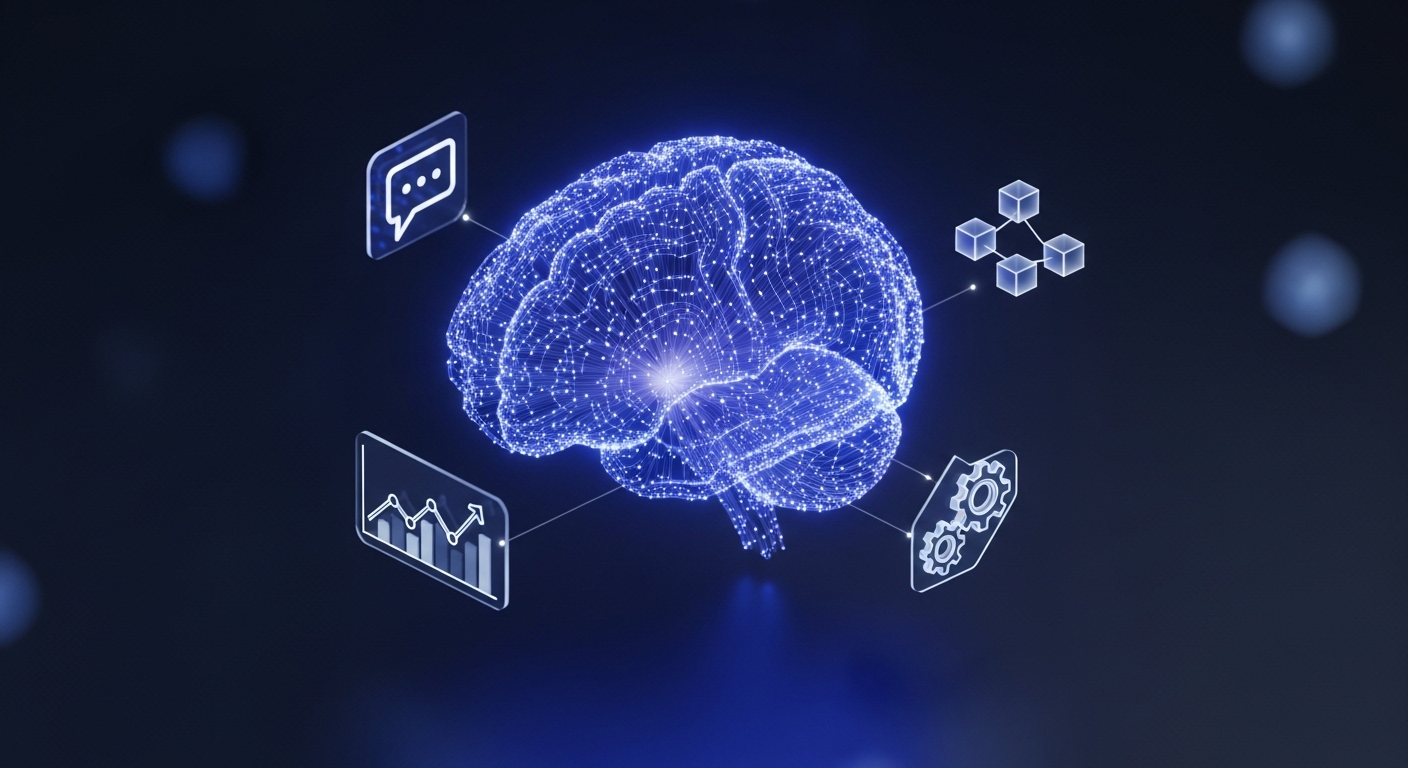
They demonstrated how effective AI agents can work by:
Speed:
A human being can address only one issue at a time, but an AI agent can address multiple issues simultaneously, providing as much as an additional $5,000 in revenue per hour based on the investor's return on investments. The high frequency of both buy and sell transactions that take place in the stock exchange, or the support provided to customers, results in milliseconds being the difference between making or losing money.
Accuracy:
Human beings become fatigued, are frequently distracted, and make mistakes. An AI agent will consistently adhere to all applicable rules; never miss a rule violation; and, as such, keep pace with all applicable time periods for completing submitted tasks.
Scalability:
It can take several months to hire and train ten analysts; however, the implementation of ten AI agents can be accomplished in a matter of hours. Additionally, the AI agents can operate 24 hours a day, seven days a week; therefore, they are free of fatigue or holiday restrictions. Companies that engaged in this trend early on (2024-2025) were able to significantly cut their costs by 40-60%, while also increasing process efficiency by 3-5 times.
According to McKinsey, AI agents can cut costs and greatly increase productivity at the same time.
Finally, AI agents are freeing people from mundane tasks so they can focus on more important things.
There are Three Main Types of AI Agents:
Chatbots: Automating Customer Interaction
The modern AI chatbot can understand normal spoken human language, interpret intent from users, and respond to users in the same way a person would.
Examples of usage include:
- First line support: Answering simple call center questions without the use of a live call center representative
- Gathering customer information and delivering hot leads to sales representatives
- Completing sales via messenger applications: Giving answers to questions, processing orders, and providing notification of status updates
Retail Case Study:
Integrating a chatbot into an online electronics store via telegram allowed the bot to answer customer questions, verify product availability, and recommend additional products to buy. The result was a 23% increase in sales as a result of considerably faster response time.
Virtual Assistants: Supporting Your Staff
Inside the walls of a business, virtual assistants drastically improve the speed of repetitive processes, provide critical information, and improve the communication/synchronization between different departments.
Examples of application include:
- HR: Automating onboarding processes and providing quick responses to frequently asked questions
- Finance: Tracking monthly spending limits, processing invoices
- Operations: Tracking open tasks and risks
Example: At a company with ~120 employees, a virtual assistant collects all reports and informs all assigned personnel. The time required to prepare reports decreased from approximately four hours to less than 15 minutes.
Robotic Process Automation (RPA)
These agents perform repetitive tasks relative to the software interface by filling out forms, copying information into multiple systems, generating reports to be sent to clients, etc.
Below is an example of how the various types of software robots and agents—RPA agents, intelligent analytical agents, and AI agents—are being utilized in existing business operations.
Robotic Process Automation (RPA) agents are automating various tasks within several industries:
- RPA agents are automating a portion of bookkeeping activities (i.e., processing invoices)
- RPA agents are automating a portion of logistics activities (e.g., updating order status)
- RPA agents are automating a portion of marketing activities (i.e., collecting advertising metrics)
As an example of a logistics company that automated its applications/processes with the use of an RPA agent, an RPA agent checks an address (for errors), calculates the cost of the shipping order, and generates the shipping order. The RPA agent reduced processing time from 8 minutes to 30 seconds.
Intelligent Analytical Agents (IAAs) work with large amounts of data; they identify patterns, predict potential future outcomes, and provide guidance.
Use cases of IAAs include but are not limited to:
- Cryptocurrency and Trading — using intelligent analytical agents to analyze on-chain metrics and news.
- Sales — using intelligent analytical agents to forecast and assess deal and risk.
- Marketing — using intelligent analytical agents to analyze marketing campaigns and optimize budgets.
ASCN.AI has developed our own intelligent analytical agent that produces reports of metrics and recommendations in ten seconds. The creation of the report is a complete data aggregation process that would be nearly impossible to perform manually. An example of this is the Falcon Finance product drop.
By implementing IAAs, companies save significant amounts of time converting raw data into actionable insights.
Examples of using AI agents in the sales and marketing areas:
AI Agents are automating the entire sales process. AI agents offer personalization to facilitate effective communication and forecasting throughout the sales process.
AI agents are providing companies with a database of prospective customers, qualifying those customers, providing 'hot' leads to the sales agent, customizing messages for those customers, and calculating the likelihood of a successful closing in addition to warning of potential risks related to a closing.
An example of this is a real estate agency that implemented an AI agent to respond to online inquiries. The AI agent helped to define a purchaser's budget, select appropriate properties, and schedule property viewings. By implementing the AI agent, the real estate agency increased its conversion rate from twelve percent to thirty-four percent.
In addition, AI is providing marketers with near real-time analysis and suggesting reallocating budgets or eliminating underperforming channels.
Artificial Intelligence (AI) is changing how companies work across all their departments. In the customer service department, AI agents can answer customers' first questions, complete frequent tasks, and allow human agents to complete the more complicated problems.
By using AI agents in customer service, companies eliminate the time customers spent waiting for a human agent to respond. Customers are provided with instant answers any time of the day or night; therefore, companies reduce the employees' workloads so that they can spend the majority of their time handling the more complicated matters.
A company that has implemented an AI agent to assist customers found that 68 percent of its customer service requests were solved by the AI without the involvement of a human employee. The time it took to respond to customers dropped from 12 minutes to 30 seconds, and customer satisfaction increased by 19 percent. According to Forrester, AI agents are reducing the time taken to respond to customers and increasing the loyalty of customers to businesses.
AI agents in the management and analytics departments will monitor performance using key performance indicators (KPIs) and provide alerts. They will assess historical performance and establish forecasts, identify potential risks, and provide advice regarding the management of those risks.
An example of the success of an AI agent in the management and analytics department was in a payment system where the company implemented an AI agent to review transactions. The AI agent was able to detect and stop 82 percent of fraudulent transactions within three months.
AI agents do not only inform users of an occurrence, but provide an explanation as to how or why it occurred and include tips on what the person can do going forward.
Companies will use AI agents in human resources (HR) and internal processes to automate many of their regular, routine tasks including onboarding new employees, answering frequent questions, and monitoring assigned tasks.
Technology and Integrating with Business Systems
NLP (Natural Language Processing) and Machine Learning
Agents can use NLP to comprehend human speech, as well as identify key terms and intentions while generating appropriate responses.
According to ACL (2023), NLP serves as the foundation of accurate comprehension of search requests.
Agents are also capable of utilizing Machine Learning to modify their behavior through experience, thus allowing them to become progressively more intelligent.
For example, ASCN.AI utilizes NLP, which is trained in Web3 terminology, to provide prompt responses to complex inquiries by aggregating on-chain metrics and social media analytics.
Integration with CRM/ERP/Other Systems
For an AI agent to be successful, it must interact with a variety of company systems:
- CRM - Access to Client cards, history, deals;
- ERP - Warehouse management; order processing; finances;
- Analytics - Repository of information collected from multiple sources;
- Communications - Interaction via telegram; email; instant messaging;
All integrations are completed via secure APIs with phased scaling and careful consideration of each interaction point.
Our area of expertise is ASCN.AI which provides users with a no-code editor to create Action Chains without requiring a programmer. For example, an agent utilizing Telegram, may check warehouse inventory via API; create a deal in the CRM; and send a confirmation to the client. All accomplished in less than 20 minutes!
When Choosing an Artificial Intelligence Agent for a Business; Considerations Should Be Made Based On
Selection Criteria
Specialization: Specialized options are usually more successful than those that are not; e.g., An agent that specializes in cryptocurrency will be more successful if they have access to on-chain data.
Current Access to Data.
Integration: Integration through APIs, webhooks, & connection will speed up the implementation period of your AI. Identify tools you will need to implement APIs/webhooks.
Transparent & Accessible Decision-Making Process Through Log Files.
$ Cost / Profit = Return on Investment
Any AI agent should be secure based on their encryption / access design.
Implementing the Solution
- Begin with a repetitive, distinct, easily measurable activity; ex) processing applications.
- Involve the Team, educate them on the benefits of using AI agents, & collect feedback from them.
- Set Performance Metrics - e.g., speed, accuracy, and satisfaction with.
- Iterate through this process—i.e., launch the AI agents, collect data on its activities and take action to improve it.
- Document Procedures and Policies.
- Plan the expansion of future processing to additional activities.
Case Studies and Successful Examples of AI Automation

Case #1: 10/11/2025 Flash Crash Profit
The cryptocurrency market crashed 20% during the overnight period of 10/10/2025 - 10/11/2025. The majority of these losses occurred during a period of 4 hours due to liquidations (the execution of buy/sell orders).
The exchange rate spread (the difference between the buy/sell price within a specific currency) ranged from a high of 5.0% (the low end of the exchange rate spread) to a high of 40% (the high end of the exchange rate spread) during this same period. Given that opportunities to track and close trades based on these types of spreads generally last less than five (5) minutes, there were extremely limited opportunities to do so manually.
Through the use of AI, ASCN.AI clients benefited from AI agents that tracked market prices on a 24/7 basis and reported back to the customer for tracking, opening and closing all trades automatically - i.e. no delay, no human error.
The average profit per customer for an overnight period was 8-12% of their total invested amount with an estimated profit potential between $500 - $15,000. The lightning-quick reaction from the agent was key.
Case Study 2: Falcon Finance drop of 1000 dollars for two questions.
Falcon Finance lost 70% in a day due to security issues. A user wanted an AI agent to answer two questions about the error and what short position to find because of volatility.
The agent was able to obtain on-chain and social data in 10 seconds and then provide a short position with a fixed stop and target. The user was able to make $1000 from his 5 thousand dollars of capital in only 8 hours.
Frequently Asked Questions (FAQ)
Is ChatGPT an AI agent?
No, ChatGPT is a large language model that generates text and cannot perform independent tasks or integrate.
Are AI agents the same as Siri and Alexa?
Yes, they are voice assistants that can perform commands, but have a limited capacity for independence.
In what way do programming assistants differ from AI agents?
Programming assistants assist in code, but do not represent a manager of a business process or decision-making process. While AI agents act independently.
Are large language models (LLMs) considered AI agents?
An LLM is the "brain" of an AI agent, augmented by other systems for integration, storing context, and executing actions.
Is it safe to provide information to an AI agent?
Generally, yes, if encryption and access restrictions are in place, and the platform is within certain security parameters.
Can I launch an AI agent?
Yes. The use of no-code platforms allows visual assembly and launch without programming.
How long does implementation take?
A simple agent can be built within 2-4 hours; more complex systems can take weeks.
How can I check the quality of the agent's work?
Setting metrics, analyzing logs, and periodic rule adjustments can be used.
Expert Opinion and Future of AI Agents in Business
"ASCN.AI, where I work, has been leading in this area for 4 years; coming from doubt in the beginning, to the point that it's impossible to function without AI today. The question now isn't whether to get AI; it's who can perform the implementation the quickest and best. Those who introduced an AI agent in 2024 saw their revenues increase by 2-5 times using the same number of employees."