



- Русский
- English
- Português
AI Agents for Online Schools: A Comprehensive Guide to Implementation and Learning Automation in 2026

“After testing 43 techniques for using AI Agents, we discovered that the big mistake companies make is thinking that all Neural Networks are just Chatbots. An agent completely replaces an entire department as an autonomous system. The distinction in Ed-Tech is critical: a Chatbot would just reply to requester, while an Agent will take an applicant through the entire process of becoming a graduate without ever needing any interaction with another human.”
AI Agents in Online Schools / Educational Projects
An AI Agent is an Intelligent Autonomous System based upon Large Language Models (LLMs) that perform their work without human prompting. Unlike traditional scripted Chatbots, Agents are proactive; by analyzing patterns of student behaviour and identifying when a student is having difficulty, they provide support before the student requests it. An AI Agent will function independently by managing emails, verifying submitted assignments, updating CRM software, and creating reports.
The technology that powers Agents is called RAG (Retrieval-Augmented Generation), which allows the neural network (NN) to use your unique knowledge repository (manuals, transcripts of webinars, FAQs) to provide answers from your School’s actual data instead of from the internet. With RAG, the Agent effectively becomes a personal assistant capable of performing functions related only to your course(s).
The primary purpose of an Agent is to increase the quality of support, while maintaining the same staff levels. One Agent can do the work of many Tutors by providing 24 x 7 responses to student questions; by demonstrating submitted assignments in real time; and by tracking and reporting student motivation.
As a Theory, the agent's goal is to scale Quality of Education without increasing Staff
As more students enroll in and attend Online Schools, the quality of support typically diminishes since no single tutor is able to effectively support more than 50-70 active students. If a tutor is responsible for more than 300 students, the amount of time it will take to provide support increases significantly; hence, completion rates decline from 60% to 30%. By hiring greater amounts of tutors, you are simply creating a linear scaling up of salaries, overhead and risk of burnout. This is not the case with AI agents, which can cope with thousands of students at the same time and do so without showing emotional fatigue.
With AI automating the grading of assignments, the process of grading homework time is reduced by a large margin. As homework grading accounts for the bulk of a tutor's time on a daily basis, an average 50-student class would spend anywhere between 8 and 15 hours of grading per day. There is no need to grade for most standard homework assignments or the majority of complex homework assignments once the assignment has been auto-graded by an AI agent.
Neural Network Processing of Homework
The AI agent processes homework through a series of sequential steps very quickly:
- Data Entry/Feed: The agent can accept text, PDF documents, photos (via OCR), or source code as the entry point for homework.
- RAG Analysis: This is the point at which the AI agent analyzes the student's work for relevance, structure, and accuracy against the course knowledge base.
- Verdict and Feedback: At this stage the AI agent can assign a grade and provide constructive (i.e. specific lesson timestamp) feedback on the student's work.
While there is wide variation in the amount of time it takes human tutors to complete the entire grading cycle based upon the type of assignment the student has submitted, on average, it can take between 10-30 minutes to grade a single homework assignment by a human tutor whereas the average time for the entire AI agent processing cycle is 5-30 seconds in length. This provides for a large increase in the number of students that an AI agent can process at one time.
For tests, the AI agent not only provides instant results to each student, but also provides customized recommendations based on the types of errors to be corrected. In addition, to confirm the correctness of the code submitted by the student, the AI agent validates the code in three stages: it validates syntax error (i.e. is the code written in an acceptable coding format?), it validates that the code was executed correctly (i.e. use execution APIs for all functions), and it also validates that the student has used an appropriate algorithm for completion of his/her project.
For essay-type responses as well as for open-ended text questions, the AI agent will perform multiple levels of validation including semantic analysis to ensure that every aspect of the question has been addressed; logical assessment of the flow; plagiarism detection; and correct terminology. The final result will include a set of specific recommendations for ways to improve; therefore, the student's experience will be positive, and learning will take place.
Immediate Feedback: Processing Errors and Suggestions
The speed of receiving feedback is fundamental to having students remain motivated to continue in their learning experiences. When students receive immediate feedback on a task, they can use this feedback to correct errors and then continue working on the task, keeping them engaged. An AI agent can break down a task's error immediately; therefore, students do not lose context and can continue working.
Why You Should Validate AI Results
AI agents are not perfect. They often misinterpret nontraditional solutions. Therefore, schools need to perform a monthly review process to ensure that their agents are correctly assessing student work. If the difference between the assessment of AI agents and teacher assessments is greater than 15%, the parameters for determining success must be changed. The continual evaluation process will lead to a normalized level of accuracy for AI agents.
How AI Agents Offer Students 24/7 Support
Many students work on assignments outside of regular business hours. An AI agent will respond to a student at 2 AM with an answer within five seconds of them asking the question, allowing them to keep their momentum and to find incorrect information.
"Personal Mentor" Work Environment
Unlike other support options that respond, AI agents use artificial intelligence (AI) to adapt to the user’s performance level in order for the student to achieve success in academic subjects that are appropriate for their age, experience, and course of study, while providing struggling students with additional opportunities to review their previous lessons.
The components of the AI agent framework:
- Knowledge Base (Brain) — RAG-Based Technology.
- LLM (Engine)
- Integration Tools (Connectors)
The RAG-based Knowledge Base consists of confirmed school materials, so the agent does not provide generic responses due to the data being dumped. Only verified, final documents should be used to allow for verification of reliability for sources of information.
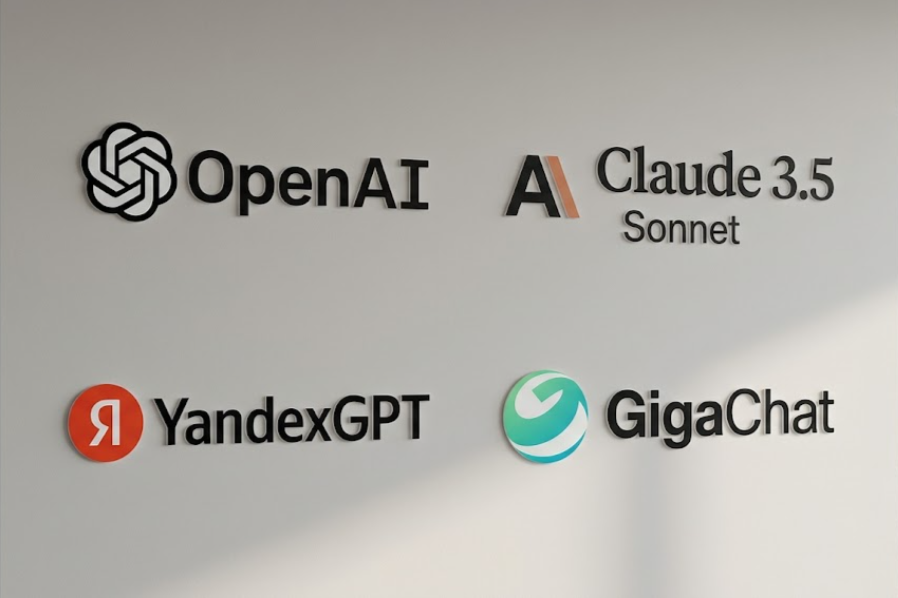
LLM models for consideration when selecting a model for education:
- GPT-4o: Known for its versatility and power; not inexpensive.
- Claude 3.5 Sonnet: Good model for long-form material & complex essays.
- YandexGPT/GigaChat: Local option (data remains within a jurisdiction) & is very effective at providing standard FAQ tasks.
Integration Tools: No-Code vs. API
No Code builders can provide the opportunity to develop an MVP in approximately 3–5 days but do not offer as much flexibility as the custom development option using APIs. Begin with No-Code as a proof of concept (MVP) prior to moving to customizing design/build development.
Economic Efficiency: ROI of AI Agent Implementation
| Expense Item | Before AI | After AI | Savings/Month |
|---|---|---|---|
| Tuitions (3 People) | 450,000.00 ₽ | 150,000.00 ₽ (1 Tutor) | 300,000.00 ₽ |
| Infrastructure/API | 0.00 ₽ | 65,000.00 ₽ | -65,000.00 ₽ |
| Support/Setup | 0.00 ₽ | 30,000.00 ₽ | -30,000.00 ₽ |
| Monthly Operating Expense | 450,000.00 ₽ | 245,000.00 ₽ | 205,000.00 ₽ |
| Total Annual Savings | 2,460,000.00 ₽ | ||
In addition to Payroll Savings, implementing AI Agents will likely increase Complete Rates for At-Risk Students 10% — 18%, which ultimately adds to the reputation of the School and Lifetime Value to the School.
Implementation Strategy: Quick Start
Don’t automate an entire process/system at once; start with an MVP.
- Select a Test Task/Pilot to launch the AI Agent: Example: Brainstorm and research FAQs from your Telegram Channels or just check if there are frequent testing requests.
- Clean the Knowledge Base: Verify and ensure all current processes & documents have been checked and are not contradictory.
- Once the bot is ready for the students, conduct Red Team Testing.
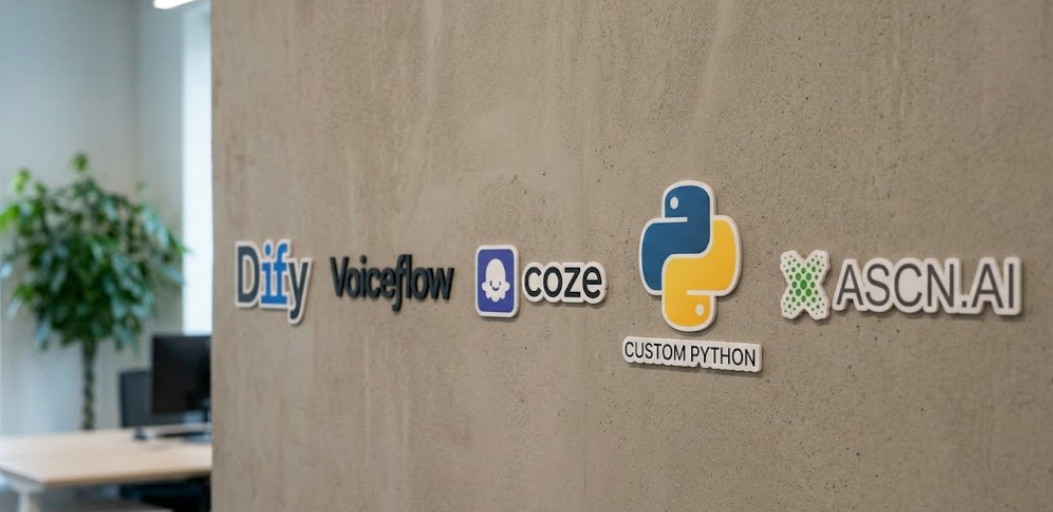
Top 5 Platforms to Build AI Agents
| Platform Name | Complexity | RAG Support | Features |
|---|---|---|---|
| Dify | Medium | Yes | Open Source & Multi-Agent Support |
| Voiceflow | Low | Yes | Visual Editor for Chat/Voice |
| Coze | Low | Yes | Excellent Message Integration/Free for Startups |
| Custom Python | High | Yes | Maximum Flexibility for Large Entity/School |
| ASCN.ai | Low | Yes | 100+ Template Available/Retail orders for CRM/LMS |
Responding to The Top 5 Most Frequently Asked Questions
How Difficult Is It To Train An Agent?
< 3-12 days to train from set-up to training agent to your knowledge base. Thereafter, to maintain the trained agent, update user’s documents when there has been an update of course/regulatory regulations.
How Do You Maintain Data Security?
For data sovereignty (strict); use of local models or domestic providers (e.g., Yandex/GigaChat); for other platforms, leverage data privacy policies with providers (e.g., OpenAI).
Will Agents Integrate with LMS Systems (e.g., GetCourse)?
Yes, both through API & Webhook Technology, the agent will receive Student Lists, Track/Monitor Student Progress, Post/Receive Grades Back to LMS/Platform (i.e., GetCourse).
What is the Difference Between a Specialized Agent and A ChatGPT System?
ChatGPT is a generic model and does not contain specialized education-related information; AI agents are trained on proprietary course data and are capable of performing additional functions (ex: emailing students, updating CRM's, etc.).